Anthony Rivardo
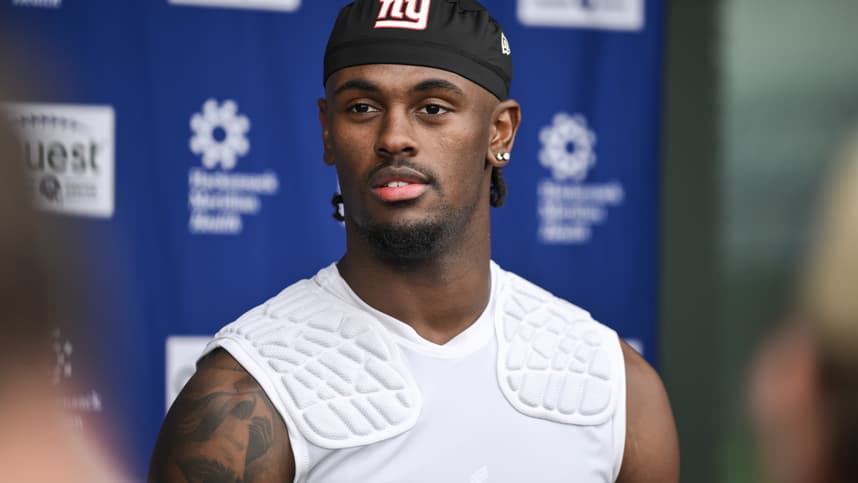
While Malik Nabers is the undisputed focal point of the New York Giants’ passing game (when healthy), the battle for the WR2 spot is quietly becoming a significant debate. The competition pits veteran deep threats Darius Slayton and Darnell Mooney against third-round rookie Malachi Fields, and the deciding factor isn’t speed or route-running—it’s the fundamental ability to secure the football.
For a Giants team that overhauled its receiving corps to provide Jaxson Dart with reliability, the staggering discrepancy in drop rates between the veterans and the rookie could be the smoking gun that leads to a change in the starting lineup.
The Reliability Gap: Slayton vs. Mooney
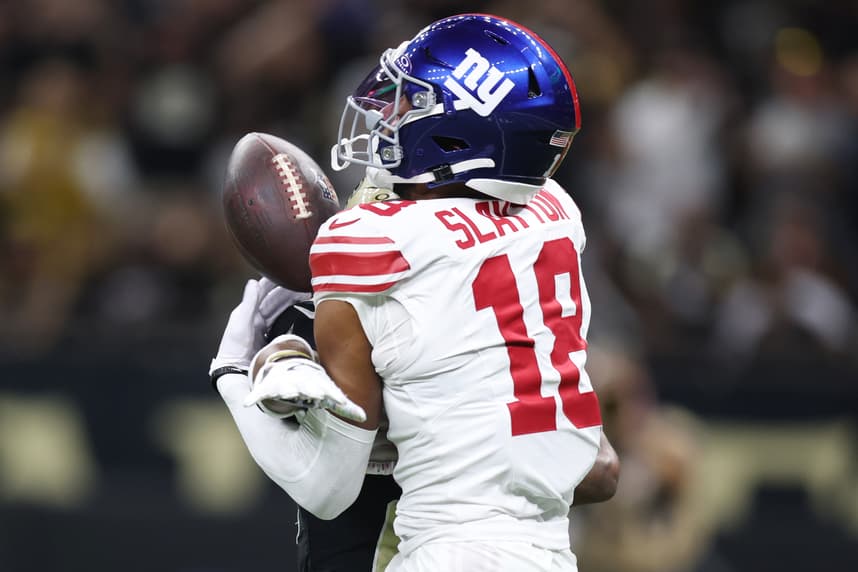
Darius Slayton has been a loyal servant to Big Blue, but his career-long struggle with consistency has reached a breaking point. Slayton currently carries a career drop rate of 11.5%, a figure that has consistently plagued his ability to become a true high-volume target.
In 2025, Slayton hauled in 37 receptions for 538 yards, but he was charged with 6 drops on just 60 targets, resulting in a disappointing 59.3 PFF receiving grade. Slayton’s tendency to leave plays on the field is becoming a liability that the coaching staff may no longer be willing to overlook in favor of his vertical speed.
Similarly, the Giants’ newly signed Darnell Mooney also dropped 6 passes on 70 targets in 2025. Mooney’s career drop rate of 6.9% is significantly lower than Slayton’s, but his 15.8% drop rate in 2025 was still alarming.
Malachi Fields: The Sure-Handed Rookie
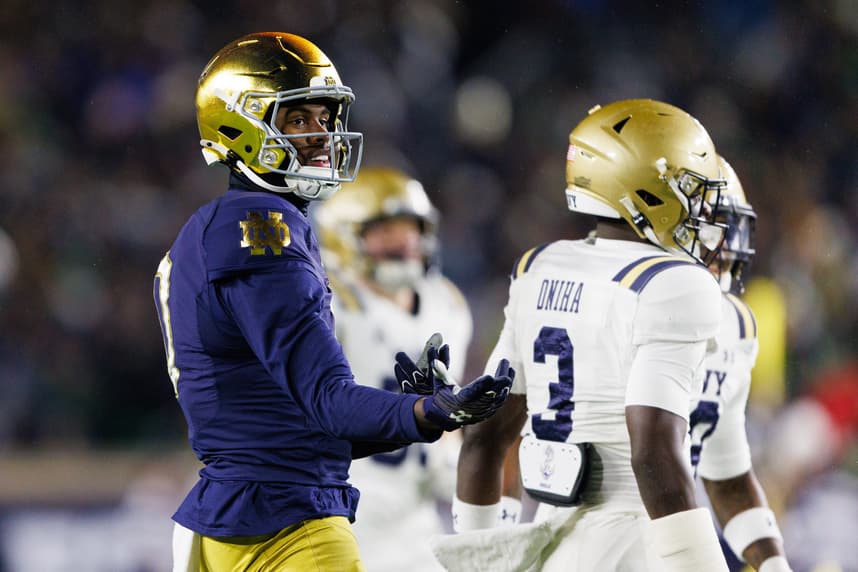
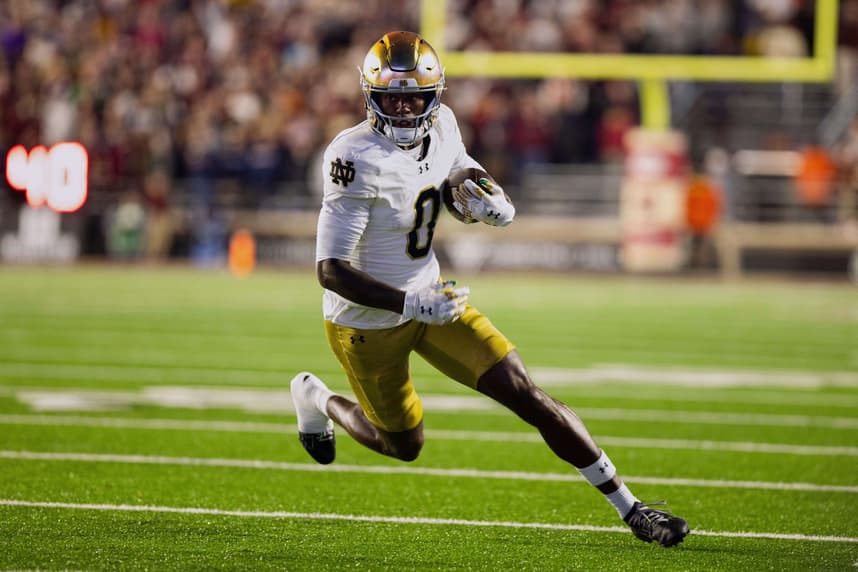
Enter Malachi Fields, the 6’4″, 222-pound physical outlier out of Notre Dame who provides the exact opposite statistical profile. Fields didn’t just bully defensive backs in the ACC and at Notre Dame; he caught everything within his massive wingspan.
In 2025, Fields recorded an elite 1.6% drop rate (h/t ESPN’s Jordan Raanan), dropping only one pass on 63 targets. Over his last two collegiate seasons, he was credited with only three total drops, proving that his 6’4″ frame is paired with elite ball security.
With a 74.8 PFF grade and a career-best 17.5 yards per reception last fall, Fields offers the big-play potential of Slayton but with the technical floor of a much more seasoned possession receiver.
The Giants Need Reliability at WR2
The battle for WR2 is ultimately about building trust with second-year quarterback Jaxson Dart. John Harbaugh’s philosophy demands efficiency on standard downs to set up the power-running game, and Fields’s ability to dominate contested catches (47.2% career contested catch rate) makes him the ideal receiver opposite Nabers.
By restructuring the offense to prioritize catch-point dominance, the Giants are signaling that “decent” is no longer enough. If Fields continues to showcase his 1.6% drop rate during training camp, Slayton’s tenure as the primary perimeter threat opposite Nabers could officially come to an end before Week 1.

More about:New York Giants