
 Alexander Wilson

The New York Giants opened free agency Monday by spending $88.3 million on three players, all on three-year deals. That’s the kind of aggressive spending John Harbaugh promised when he took the job, and it signals a clear philosophy: get younger, get better, and don’t wait for the draft to fix everything.
The Giants signed tight end Isaiah Likely ($40M), linebacker Tremaine Edmunds ($36M), and punter Jordan Stout ($12.3M) in rapid succession, addressing critical needs at positions where they’ve struggled for years. These weren’t splashy names that dominate headlines, but they’re smart signings that fit what Harbaugh and his coordinators want to do schematically. More importantly, two of the three are former Ravens who already understand the culture Harbaugh is trying to build.
Isaiah Likely: The Primary Weapon Jaxson Dart Needed
The Giants spent $40 million over three years to land Likely, making him one of the highest-paid tight ends in the NFL. That’s a massive commitment for a player who’s never been a full-time starter, but the production suggests he’s ready.
Likely spent four years behind Mark Andrews in Baltimore, never exceeding 60% of snaps despite elite efficiency. Over the past two seasons, he caught 76 passes on 99 targets with just two drops (2.0% drop rate). In 2024, he caught 49 of 65 targets for 603 yards and seven touchdowns, a 14.3% touchdown-per-catch rate showing legitimate red-zone upside.
His versatility is what matters. In 2025, he lined up in the slot on 54.6% of his snaps, inline on 27.1%, wide on 16.4%, and even took nine snaps in the backfield. That ability to align across the formation is exactly what Matt Nagy’s offense demands. Nagy built his system around moving Travis Kelce around and exploiting leverage against linebackers. Likely profiles as that weapon.
Greg Roman’s gap-scheme offense benefits from a tight end who can block inline and threaten seams on play-action. Likely’s 132 inline snaps show he’s comfortable contributing as a blocker, and Roman already knows how to maximize him after two years coaching him in Baltimore.
For Dart, Likely represents reliability. His 2.0% drop rate means when the ball is in his catch radius, it sticks. At $13.3 million per year, Likely is a bet on talent and scheme fit that could pay off immediately.
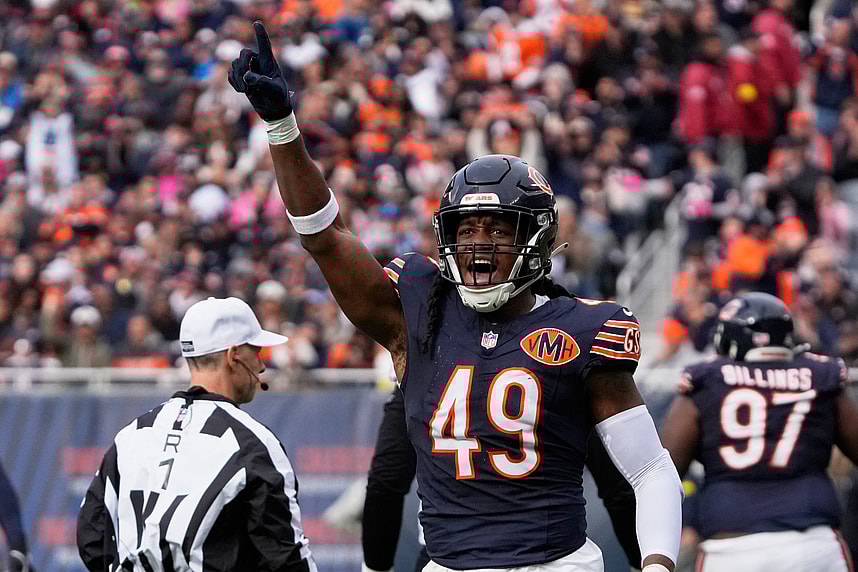
Tremaine Edmunds: The Run-Stopping Anchor Wilson Needs
The Giants paid $36 million over three years for Edmunds, spending $3 million more per year than what they saved cutting Bobby Okereke. That seems like bad math until you see what Edmunds brings.
Edmunds is 27 with eight NFL seasons. At 6-foot-5 and 250 pounds, he earned his best run-stopping grade of his career in 2025: 95 tackles, 7.9% missed tackle rate, 47 run stops. That’s exactly what the Giants need after ranking among the worst run defenses in football.
Dennard Wilson’s defense relies on linebackers who can set the tone physically and flow to the ball with speed. Wilson uses aggressive press coverage on the perimeter, which means linebackers must win at the line of scrimmage and fill gaps violently. Edmunds’ 6-foot-5 frame allows him to stack the line, and his athleticism (4.54 40 at 250 pounds) gives him sideline-to-sideline pursuit.
The coverage issues are real. Edmunds gave up 530 yards and four touchdowns last season. But pairing him with Ohio State linebacker Sonny Styles at pick five allows Wilson to deploy Edmunds as a downhill thumper while Styles handles coverage. Edmunds crashes the box without getting exposed in space.
As a green-dot linebacker who’s called defenses for eight years, Edmunds can quarterback Wilson’s scheme. At $12 million per year for a 27-year-old coming off his best run-defense season, it’s a reasonable investment.
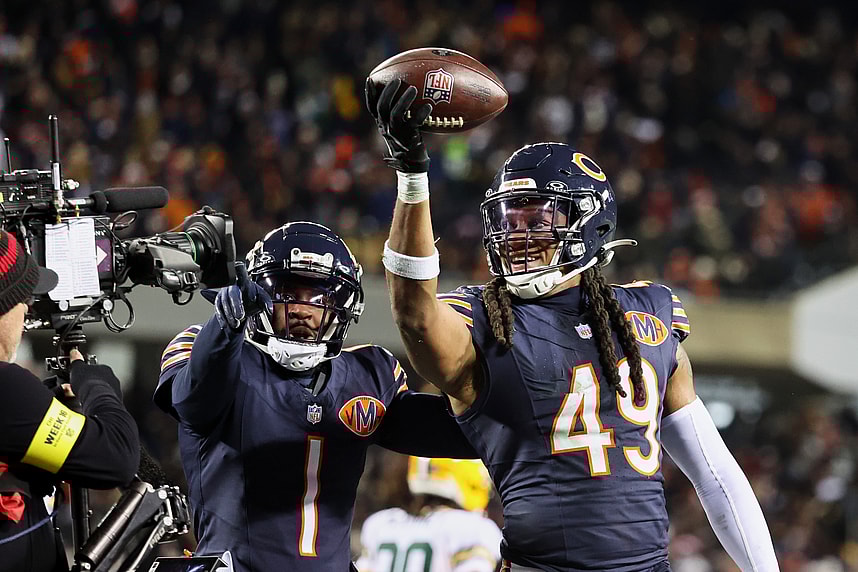
Jordan Stout: The Field Position Weapon That Wins Games
The Giants spent $12.3 million over three years on Stout, making him the highest-paid punter in the NFL at $4.1 million per season. That might seem excessive for a specialist, but punting wins games.
Stout was one of the best punters in football in 2025: 50.1 yards per punt, 44.9-yard net average, 26 punts inside the 20, just six touchbacks. That’s a massive upgrade over Jamie Gillan, who struggled with a 38.0-yard net average and just 17 inside-20 punts despite punting twice more.
A punt that pins an offense at their 15 instead of their 35 changes how defenses call plays. It forces conservative play-calling, creates turnover opportunities, and gives offenses shorter fields after stops. Stout gives Wilson the ability to play aggressive knowing punts will back offenses into difficult situations.
At $4.1 million per year, that’s value Harbaugh understands from Baltimore, where special teams were always a priority.
The Harbaugh Culture Play
All three signings share one thing: they understand what Harbaugh expects. Likely played for Harbaugh in Baltimore and knows the standards. Edmunds didn’t play for Harbaugh but comes from a culture of physical, disciplined football. Stout is a Harbaugh guy who punted in Baltimore’s special-teams-obsessed system.
In a locker room learning Harbaugh’s demanding culture for the first time, having players who already know what’s expected accelerates the transition. That familiarity matters when you’re trying to install a new identity and change losing habits.
The Giants spent $88.3 million on three players Monday, all on three-year deals that give them flexibility in 2027 if things don’t work out. But the structure of the deals suggests confidence. These aren’t short-term Band-Aids. These are building blocks for what Harbaugh is trying to construct.
Likely gives Dart a reliable weapon. Edmunds supports the run defense. Stout wins field position. None of them are splashy, but all of them address critical needs with players who fit the scheme and understand the culture. That’s how you rebuild.

More about:New York Giants
