
 Andres Chavez
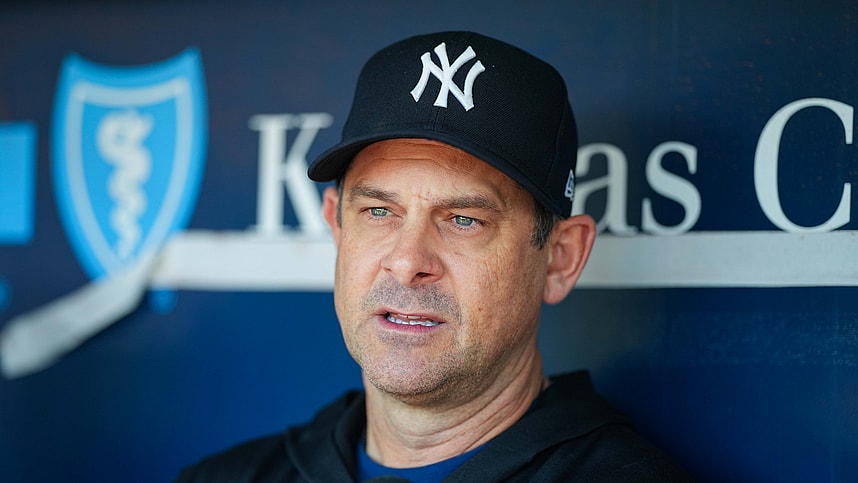
New York Yankees manager Aaron Boone discussed the state of his roster, and while he said it’s very good, he also acknowledged that it’s probably not finished and there will be some tweaks up until spring training. Meanwhile, we now know more about why the Yanks didn’t want Luke Weaver back. Freddy Peralta lurks as a potential trade acquisition, and he would definitely move the needle.
Yankees manager says team still has unfinished business in the offseason
The Yankees’ 94-win season still looms over the winter, both as proof of quality and a warning sign. On paper, this is a strong, deep roster that weathered a long season and won consistently. In practice, that win total masked structural questions that resurface every time the roster is pushed beyond comfort.
The early offseason moves—retaining Trent Grisham, Ryan Yarbrough, Amed Rosario, and exercising Tim Hill’s option—signal steadiness, not ambition. Useful pieces are back, but nothing yet has shifted the balance of power in the American League.
Boone thinks his roster is excellent, but also points out that it’s not ready. “I know we have a really good team right now,” the skipper said. “We have a lot of really good players on our roster — it’s probably not finished, there will be some tweaks up until spring training.”
With multiple starters sidelined to begin the year, the Yankees still lack a dependable innings-eater who can stabilize the staff early and set a tone. Yarbrough helps, but he doesn’t solve the problem. The bullpen, once a strength, feels thin for a team with championship aspirations, and the front office’s reluctance to meet market prices could linger into the season. Add in lingering outfield uncertainty, and the picture becomes clear: this is a good team, but not yet a complete one. The tension of the winter is whether patience becomes progress—or paralysis.
Why Yankees refused to offer Luke Weaver a single cent to stay
Luke Weaver’s departure wasn’t about dollars—it was about trust. Reports indicate the Yankees never made him an offer, not because of performance alone, but because of mounting frustration over persistent pitch-tipping issues. According to those inside the organization, Weaver repeatedly dismissed concerns that hitters were reading his delivery, even as opposing lineups sat on his pitches with alarming ease.
What ultimately sealed his fate was resistance to correction. Even after Gerrit Cole directly warned him that pitch tipping doesn’t resolve itself, Weaver delayed making changes until it was too late. By October, the damage had already been done, compromising a bullpen that could not afford mistakes. The Yankees’ decision to walk away underscores a broader philosophy: talent is meaningless without accountability. As the front office searches for bullpen help, the lesson is clear—they need relievers who listen, adapt, and execute when the margins disappear.
How acquiring Freddy Peralta turns the Yankees’ rotation into a World Series juggernaut
The Yankees’ rotation is full of promise, but it’s also unfinished. Injuries to Gerrit Cole and Carlos Rodon have created uncertainty at the top, even as Max Fried’s durability and efficiency have provided a stabilizing force. Behind him, young arms like Cam Schlittler have arrived faster than expected, offering electric stuff and real upside. The depth is real, and it may be enough to survive the regular season, but October demands something more decisive.
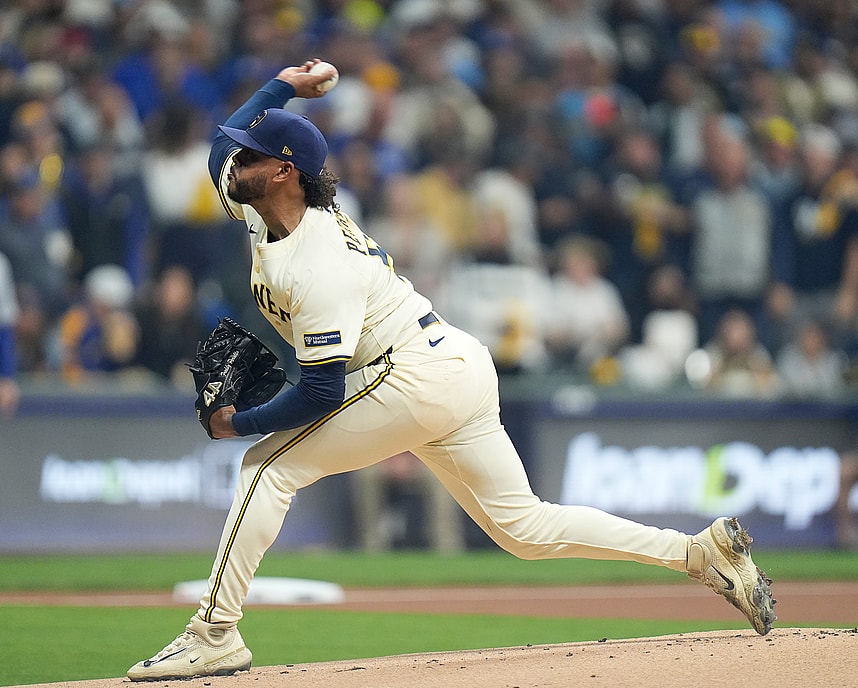
That’s where the idea of acquiring Freddy Peralta changes the equation. Coming off a dominant season and firmly in his prime, Peralta represents the type of bat-missing, tone-setting arm the Yankees currently lack. Pairing him with Fried would give the rotation balance and bite, while buying time for Cole and Rodon to return at full strength. The cost would be steep—likely involving top prospects and controllable arms—but this is the kind of move that transforms a talented staff into a postseason weapon. For a team built to win now, it’s the type of gamble that can define a season.

More about:New York Yankees
