Alexander Wilson
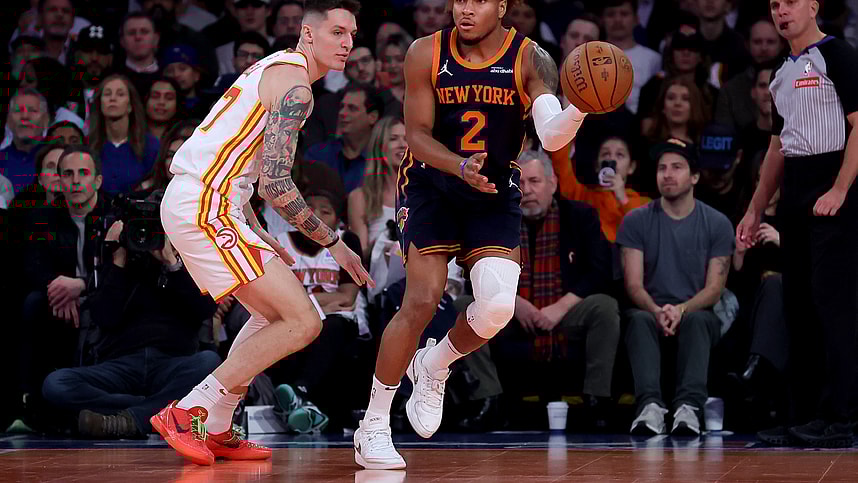
The New York Knicks have reached a critical point in their roster-building process. After signing both Landry Shamet and Malcolm Brogdon to non-guaranteed contracts, the front office now faces a hard reality: there’s only one veteran minimum slot left, meaning a trade or roster cut is inevitable. The question is who, among their young pieces, might be on the move.
McBride’s name comes up in trade talks
According to Stefan Bondy of the New York Post, there has already been buzz surrounding Pacôme Dadiet, Tyler Kolek, and Miles McBride. The most noise, however, has centered on Dadiet and McBride. While Kolek’s contract doesn’t free up much space, McBride’s situation is far more intriguing—and complicated.
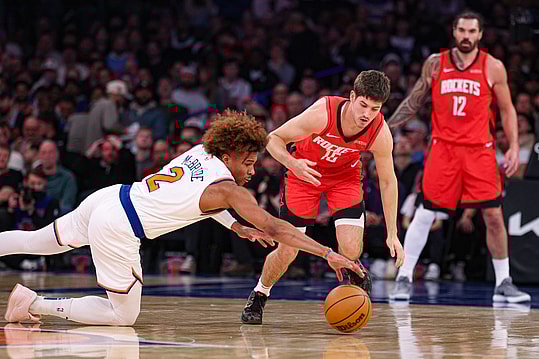
At just 25 years old, McBride is coming off a career-best season in some categories, averaging 9.5 points, 2.9 assists, and 2.5 rebounds per game. He played nearly 25 minutes a night, shot .406 from the field, and knocked down 36.9% of his threes. His efficiency dipped late due to nagging injuries, but the growth in his production and role was undeniable.
McBride is also on one of the most team-friendly deals in the NBA, entering the second year of a three-year, $13 million contract. For a Knicks team paying heavily into its core, that type of value is hard to come by.
Why moving McBride would sting
Trading McBride doesn’t just mean losing a reliable guard—it means moving on from a player who, at this stage, is arguably more valuable than both Shamet and Brogdon. Bondy notes that very point, and it’s difficult to argue otherwise.
Brogdon, while a former Sixth Man of the Year, has battled injuries and inconsistency over the past few seasons. Shamet, meanwhile, offers shooting depth but has never fully established himself as a rotation staple on a contending team. McBride, by comparison, is younger, healthier, and improving.
That makes the idea of dealing him feel counterintuitive. Yet from a business perspective, McBride could return real value—draft capital, additional flexibility, or even salary relief to keep the Knicks below the second tax apron of $207.8 million.
The extension question
Another factor complicating McBride’s status is his looming extension. Given the contracts already on New York’s books, it seems unlikely the Knicks will commit to him long-term. McBride will almost certainly seek a raise when he hits free agency, and the Knicks may not have the appetite to pay him starter-level money for a bench role.
In that light, the decision becomes a philosophical one: maximize McBride’s contributions now on a bargain deal, or flip him early to ensure value before his next contract.
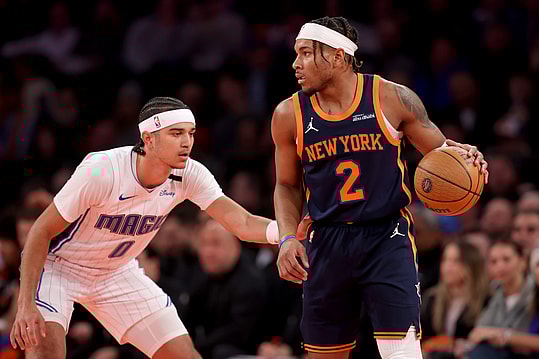
Other options on the table
Of course, McBride isn’t the only path forward. The Knicks could choose to move Pacôme Dadiet, a promising young prospect whose market hasn’t fully developed. Trading him now would mean selling low on a player with significant long-term upside.
Tyler Kolek is another option, but his contract provides little financial relief, limiting the incentive to deal him. That leaves McBride as the most valuable—and painful—trade chip on the board.
- NY Knicks’ Josh Hart propels team to clutch win over Celtics with bonkers second half
- The NY Knicks will need Mitchell Robinson at his best in the playoffs
- NY Knicks: Playing in Madison Square Garden is “appealing” to Bucks’ Giannis Antetokounmpo
A balancing act for Leon Rose
Leon Rose and the Knicks’ front office find themselves at a crossroads. Adding Shamet and Brogdon gives them veteran depth, but it comes at the cost of roster space. The decision will ultimately come down to whether New York prioritizes keeping a young, undervalued piece like McBride or cashing in on his market while strengthening flexibility for future moves.
For a franchise already pressing against the cap ceiling, every decision carries weight. And in McBride’s case, the choice could define how much staying power this roster really has.

More about:New York Knicks