Andres Chavez
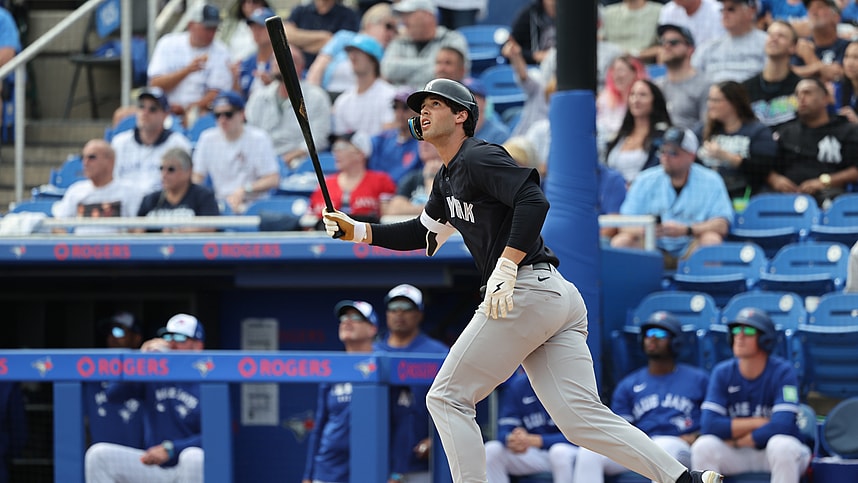
The New York Yankees have enjoyed watching Spencer Jones transform from a promising prospect into one of baseball’s most exciting young hitters.
Through the first half of 2025, Jones showed dramatic improvements in both swing path and consistent contact, unlocking his full offensive potential.
A breakout season that demanded attention
In Double-A, Jones was nearly unstoppable, producing a remarkable 185 wRC+ with 16 home runs and 10 stolen bases in 49 games.
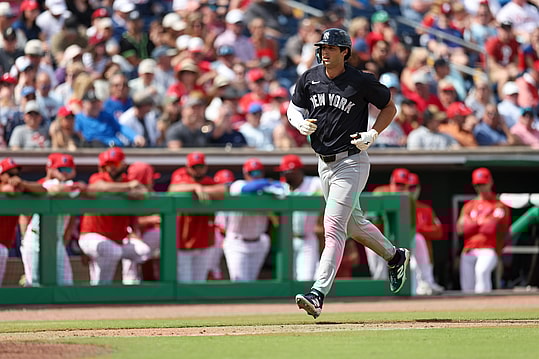
His ability to lift the ball consistently gave his power numbers a jolt, turning line drives into tape-measure home runs.
That dominance forced the Yankees to promote him to Triple-A, where he immediately carried over much of his offensive production.
In just 35 Triple-A games, Jones recorded 14 home runs, 15 stolen bases, and a robust 161 wRC+ at the plate.
His blend of speed and power at such a high level reinforced why many scouts see him as a future All-Star.
First signs of real adversity
But for all the brilliance, baseball eventually finds a way to humble even the most talented hitters in the game.
Since the start of August, Jones has fallen into his first real Triple-A slump, struggling mightily to find his rhythm.
Over his past 14 games, Jones has slashed an alarming .137/.246/.196 with a meager .442 OPS and just one home run.
That works out to a 24 wRC+, meaning he’s been 76 percent worse than the league-average hitter during that stretch.
While his strikeout rate of 29.5 percent is high, it’s not dramatically above his season average or career tendencies.
Instead, the bigger problem appears to be a dip in quality contact, leading to far fewer extra-base hits than usual.
Why the Yankees aren’t panicking
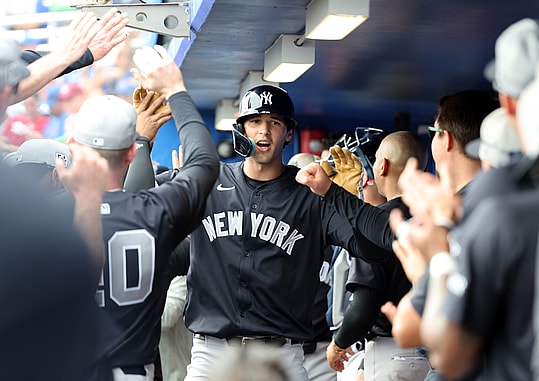
Ironically, the Yankees might be quietly pleased that Jones is experiencing his first genuine stretch of adversity in Triple-A.
With outfield depth relatively steady at the Major League level, they face no pressure to rush him to the Bronx.
Players like Jasson Domínguez aren’t even seeing regular action, giving Jones time to work through his struggles without outside urgency.
This slump provides him a controlled environment to test adjustments, face tough pitching sequences, and learn how to self-correct over time.
Every elite prospect eventually hits a wall, and the ability to break through it often defines long-term Major League success.
The learning curve toward stardom
It’s similar to a chess player losing a few matches — those losses force new strategies that ultimately sharpen their game.
Jones now has a chance to make those in-season adjustments that separate good players from truly great, durable professionals.
His combination of discipline, physical tools, and adaptability still makes him one of the most intriguing young hitters in the sport.
The Yankees envision him as a fixture in their 2026 lineup, possibly hitting alongside Aaron Judge in a fearsome middle order.
To get there, he’ll need to master the art of making counter-adjustments when pitchers exploit temporary weaknesses in his approach.
That process, though frustrating in the moment, could be the exact experience that completes his development into a polished MLB star.
READ MORE: Yankees might have chance to scoop up a historically dominant first baseman for almost nothing

More about:New York Yankees