Andres Chavez
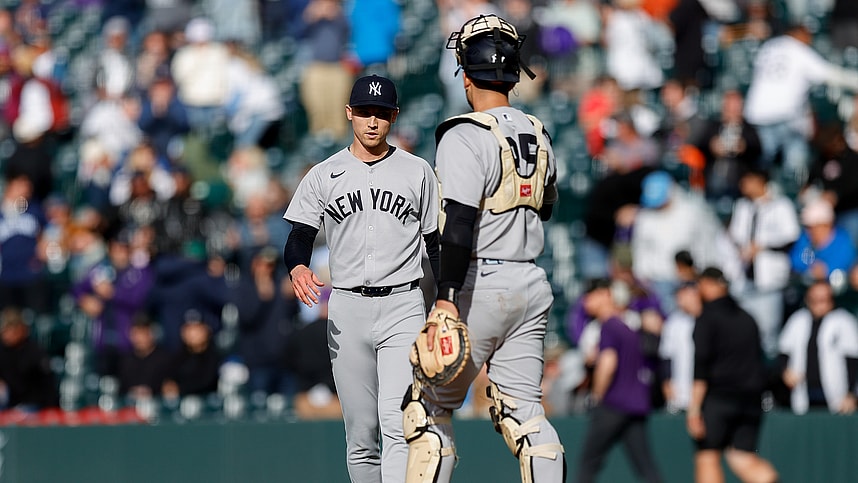
The New York Yankees showed up to Target Field on Monday night, but their bats seemingly stayed back in Boston.
In a lifeless 7-0 loss to the Minnesota Twins, the lineup managed only two hits, looking bewildered, beffudled, and lost.
The silence at the plate echoed through the stadium like a radio gone dead in the middle of a song.
The Toronto Blue Jays, on the other hand, beat the Tampa Bay Rays 2-1 and stretched their AL East lead to five games.
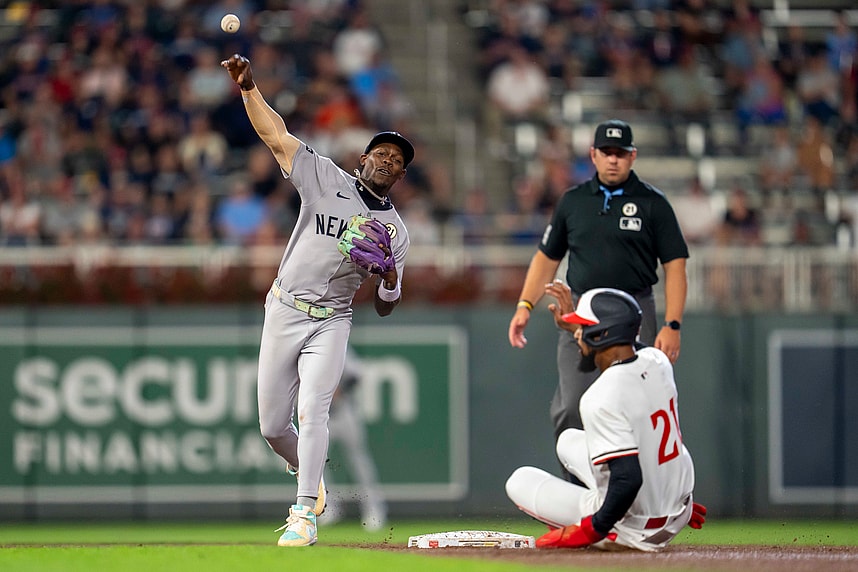
Yankees’ offense goes ice-cold in Minnesota
Minnesota’s Simeon Woods-Richardson, a young arm still carving out his place in the majors, sliced through the Yankees’ order with surgical precision.
Entering with a middling 4.58 ERA, he delivered the best performance of his career when New York could least afford it.
The Yankees watched fastballs blur past and sliders nip corners they couldn’t reach. They also couldn’t handle Woods-Richardson’s splitter.
Woods-Richardson tossed six scoreless frames, scattering two hits and three walks while fanning 11 bewildered Yankees.
His fastball carried late life, and his splitter repeatedly sent hitters lunging over their front foot.
He generated 16 whiffs overall, dominating a lineup that often thrives on power but flounders when contact is a necessity.
The Twins bullpen slammed the door after Woods-Richardson exited, allowing no hits over three innings and striking out three more.
In total, the Yankees struck out 14 times and drew only five walks, barely threatening across nine innings. It felt less like a slump and more like the bats were glued to their shoulders.
Luke Weaver’s unraveling becomes impossible to ignore
If there was one inning that broke the game open, it belonged to Luke Weaver, and it was brutal.
The veteran reliever, once a dependable bridge, imploded when the Yankees needed him to keep the deficit manageable.
He entered with the score just 2-0 and left after recording only one out, having surrendered five runs.
Weaver’s command evaporated almost instantly, and the Twins feasted on every mistake left over the plate. He yielded three hits and two walks, and the meltdown ballooned his ERA from 3.22 to 3.97 in a single night.
What had been a hiccup is starting to feel like a pattern, and the Yankees can’t ignore it any longer.
Relievers are supposed to steady the ship during turbulence, but Weaver instead capsized it entirely. The moment he cracked, Minnesota’s hitters swarmed like sharks smelling blood in the water.
For a bullpen already stretched thin, his struggles create ripple effects that can sabotage entire series.
Weaver has been one of Aaron Boone’s go-to arms, but his outings now inspire more unease than confidence.
With October closing in, the Yankees can’t afford to keep guessing which version of Weaver will show up. They need certainty—and right now, Weaver offers only questions.
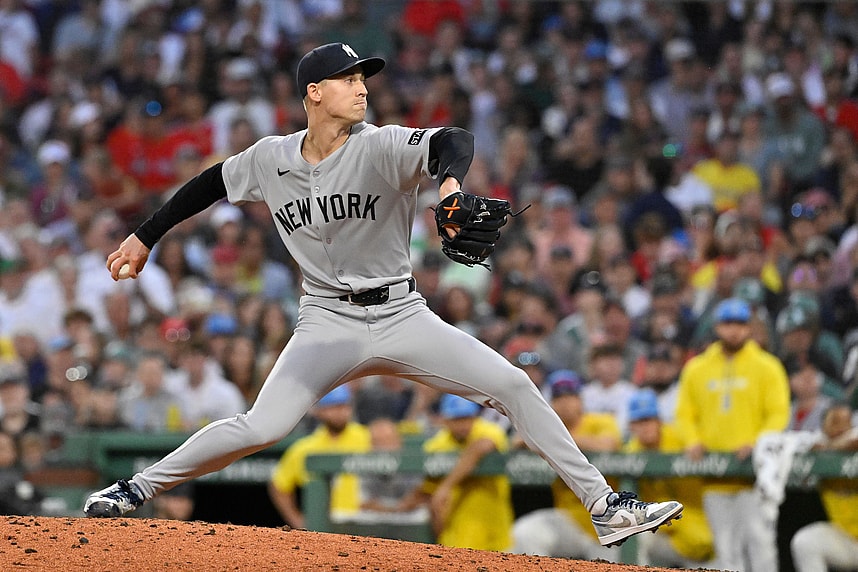
Carlos Rodon keeps dealing, but gets zero support
Lost in the wreckage of the night was another quietly strong performance from Carlos Rodon, who deserved a far better fate.
The left-hander logged six innings and allowed just two runs on five hits, walking one and striking out four. His ERA dipped to a tidy 3.11, a testament to how steady he’s been this year.
Rodon attacked the strike zone with intent and kept the Yankees in the game deep into the night, only to watch the offense vanish like mist in the outfield lights.
It marked his ninth loss despite pitching well enough to win most nights.
This season has quietly become one of Rodon’s best, and easily his strongest in pinstripes since joining the Yankees.
Yet without support, his brilliance fades into box-score footnotes. It’s like a painter crafting a masterpiece in a room with the lights off—no one gets to see it.
Rodon continues giving the Yankees a chance every fifth day, but that chance means little when the lineup stays dormant.
If New York intends to chase down the Blue Jays in the AL East, wasting Rodon’s starts simply isn’t an option.

More about:New York Yankees