
 Alexander Wilson
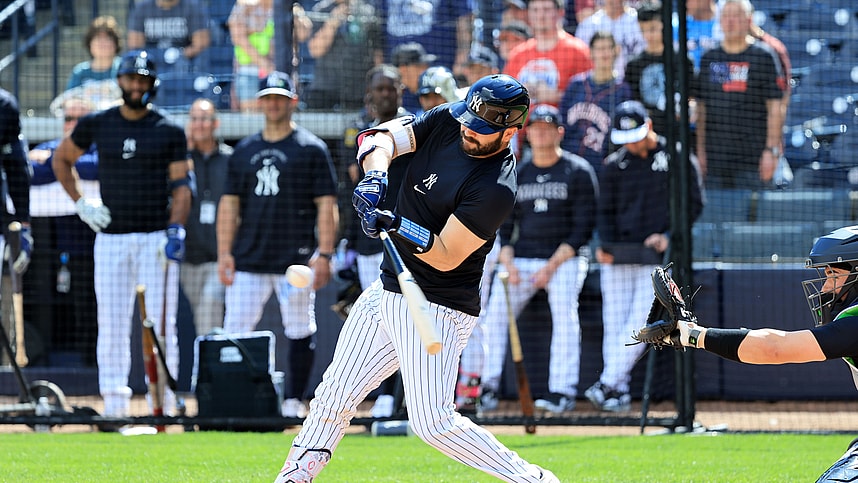
When Yankees catcher Austin Wells was climbing their minor league system, he was mostly known for his offensive upside and not his defense. However, the first three years of his major league career have been defined by his defensive quality, not his bat. In fact, he’s had only one above-average offensive season since making his MLB debut, which says a lot about where his value stands right now.
Last season, despite the fact that he hit 21 home runs, his batting average and on-base percentage plummeted. His plate discipline remains a serious concern, but if he manages to increase his ability to hit balls in the zone, he should be in a good spot. He has plenty of power to lift the ball across the right field wall in Yankee Stadium, but he whiffs a ton and struggles to make contact. Those are the primary issues standing in his path right now, but the Yankees know he’s capable of much more.
The ABS System Changes Everything
With the ABS system now in place for 2026, framing won’t be as critical for catcher defensive metrics, and that’s exactly what Wells has been known for over the past few seasons. “In 2025, Wells was a defensive wizard. He ranked in the 96th percentile for Framing, saving the Yankees roughly 12 runs simply by stealing strikes on the edges of the zone,” I wrote a few weeks ago. “His 95th percentile Fielding Run Value was driven almost entirely by this skill. However, with the robot umps taking over, framing is now an obsolete skill.”
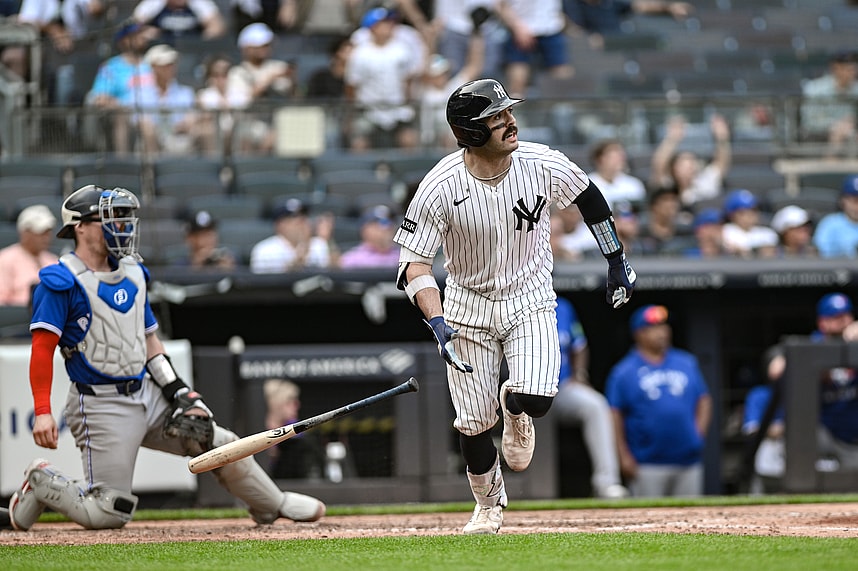
Wells’ defensive value was entirely built on his ability to manipulate the strike zone. His 96th percentile framing rank meant he was elite at presenting pitches to umpires, turning borderline balls into called strikes. That saved the Yankees 12 runs in 2025, a massive contribution that made his offensive struggles palatable. But with automated ball-strike technology eliminating human umpire judgment on balls and strikes, that advantage evaporates completely.
Without framing, Wells becomes a pedestrian defensive catcher. His 39th percentile pop time and 45th percentile blocks above average reveal a player who’s merely average at the traditional defensive aspects of catching. The Yankees are betting everything on his bat finally catching up to justify his starting role.
Boone Demands Better Plate Discipline
Aaron Boone has been direct about what he needs from Wells in 2026. “Better control in the strike zone, better swing decisions,” Boone said. That assessment cuts right to the core of Wells’ offensive struggles.
The numbers tell a damning story. Wells’ chase rate exploded from 25.5% in 2024 to 29.3% in 2025, dropping him from the 70th percentile to the 41st percentile among MLB hitters. When you’re chasing nearly 30% of pitches outside the zone, you’re giving pitchers a roadmap for how to attack you. The ripple effects were immediate and severe.
His wRC+ fell from 107 in 2024 to 94 in 2025, marking the difference between a productive offensive catcher and a below-average hitter. Over 448 plate appearances, Wells slashed .219/.275/.436 with 21 home runs and 71 RBIs. While the power output was respectable, his approach was all-or-nothing, and the underlying metrics suggest he was fortunate to even hit .219.
The Advanced Metrics Paint a Bleak Picture
Wells’ Baseball Savant profile reveals both his problems and potential solutions. His xwOBA sits at .294 (14th percentile) while his xBA is .214 (4th percentile), both abysmal marks that suggest his .219 actual batting average might have been generous. His 26.3% strikeout rate combined with just a 6.7% walk rate creates a recipe for offensive futility.
However, there are encouraging signs buried in the data. His 63rd percentile average exit velocity (90.6 mph) and 60th percentile barrel rate (10.2%) indicate the raw tools remain intact. When he makes contact, he can do damage. His 60th percentile hard-hit rate (45.2%) proves he’s not completely overmatched, and his 68th percentile bat speed (73.4 mph) suggests the swing itself isn’t the problem.
The issue is decision-making. Wells’ 29th percentile LA sweet-spot percentage (33.0%) and 17th percentile strikeout rate reveal a player who’s chasing pitches he can’t handle and missing hittable ones in the zone. His approach against different pitch types shows the problem clearly. Against fastballs, he hit .266 with a .357 wOBA, demonstrating he can handle velocity. But against breaking balls (.167 average, .248 wOBA) and offspeed (.181 average, .227 wOBA), he’s completely lost.
Career Trajectory Shows Regression
Wells’ three-year MLB career shows a concerning trend. In 2023, he debuted with a .229 average and .257 OBP across 75 plate appearances. In 2024, he improved to .229/.322/.395 with a 107 wRC+ across 414 plate appearances, earning Rookie of the Year finalist consideration. That version of Wells, who got on base at a .322 clip, is the player the Yankees desperately need.
Instead, 2025 brought massive regression. His .275 OBP was 47 points worse than 2024, and his offensive production dropped to 6% below league average. His defensive value through framing masked these struggles, but that safety net is gone. The Yankees have no clear backup plan with Ben Rice transitioning to first base full-time.
The Path Forward
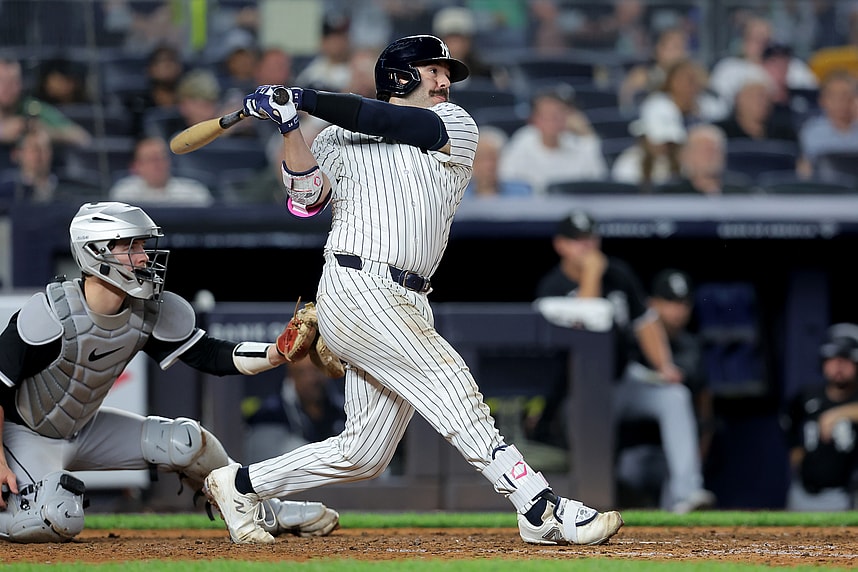
“The fix is simpler than most people think,” Andres Chavez of Empire Sports Media recently wrote. “Wells needs to shrink his zone, force pitchers to throw strikes, and eliminate the low-leverage swings that turned him into an easy out last season. When he stays within the strike zone and attacks pitches he can drive, his 60th percentile hard-hit rate shows he can do damage.”
The Yankees believe Wells can make these adjustments because they saw glimpses of it in 2024. His exit velocity and barrel rate prove the physical tools exist. The question is whether he can develop the plate discipline to consistently get pitches he can handle. Boone’s comments aren’t just manager-speak; they’re a clear directive that Wells’ tenure in the Bronx depends on offensive improvement.
Wells has time to prove himself, but the clock is ticking. With his defensive superpower legislated out of the game, his ability to survive in the batter’s box will determine whether he remains the Yankees’ long-term answer at catcher or becomes a cautionary tale about players whose value disappeared overnight due to rule changes. The talent is there. The discipline needs to follow.

More about:New York Yankees
