
 Alexander Wilson
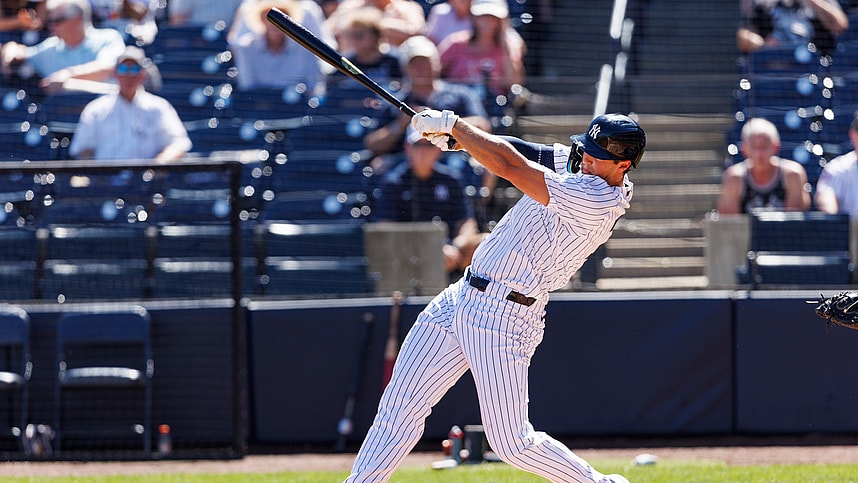
The New York Yankees made the move Spencer Jones was probably dreading all spring, optioning the 24-year-old outfielder back to Triple-A. For a player who’s been waiting years for an opportunity, it’s another spring ending in disappointment.
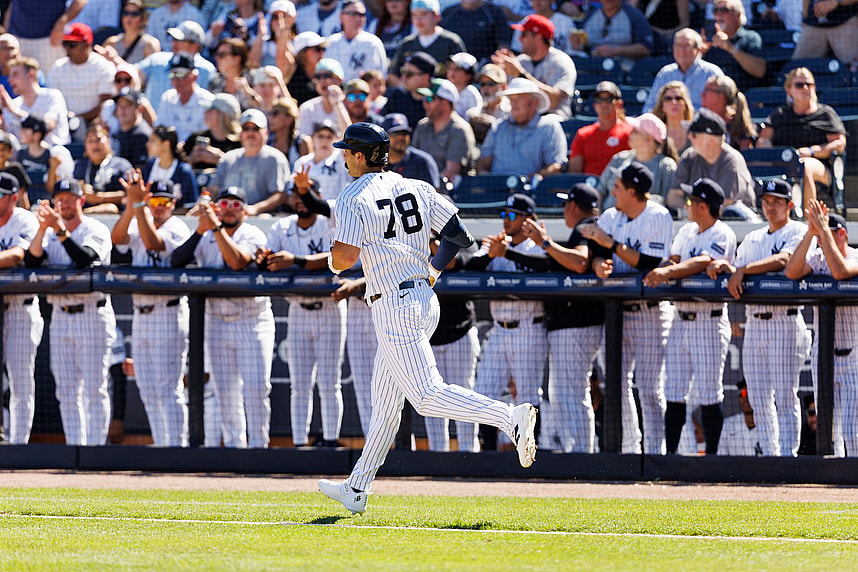
Jones put on an offensive show again, hitting .333/.455/.889 with three towering home runs, seven RBIs, three stolen bases, and a 225 wRC+. His strikeout rate dropped to 27.3%, a more reasonable range than the 36.6% he posted in Triple-A last year. But the Yankees aren’t buying it. Most of that production came against minor league-caliber pitchers.
Here’s the problem the Yankees refuse to acknowledge: at some point, they have to give Jones a chance, and they’re getting dangerously close to destroying his value and stunting his growth entirely.
The Ticking Clock Nobody Wants to Discuss
Jones turns 25 in May. That’s not ancient, but it’s no longer the age where teams salivate over raw tools. ESPN’s Jorge Castillo reported that Jones’ trade value has taken a nosedive: “The glaring shortcoming, combined with his age, resulted in him falling off recent top 100 prospect lists and his trade value sinking.”
The Yankees’ top outfield prospect has fallen off most top-100 lists entirely. The same player who hit 35 home runs and stole 29 bases last year can’t crack the industry’s consensus rankings. That’s alarming.
The Yankees are operating in a fantasy where Jones’ value remains static as long as he crushes Triple-A pitching. But the rest of baseball doesn’t work that way. Every month Jones spends in Scranton is another month closer to being viewed as a career minor leaguer. Every strikeout against journeymen is another data point suggesting his hit tool won’t translate.
If the Yankees wanted to trade Jones, they should have done it last summer when his value peaked. Now his trade value has cratered, and the Yankees only have themselves to blame.
Trapped By Their Own Roster Construction
Jones has nowhere to play. Aaron Judge isn’t going anywhere. Trent Grisham accepted a $22 million qualifying offer. Cody Bellinger is locked in for five years and $162.5 million. Even Jasson Dominguez is competing for the fourth outfield spot, and his defensive improvements have been encouraging.
Jones is blocked at every turn, and the Yankees’ solution is to send him back to Triple-A where he’ll get as many at-bats as possible. In theory, it makes sense. But in reality, Jones is about to play another season of meaningless baseball hoping for an opportunity that might never come.
“In my mind, this is the best organization to play for,” Jones said earlier in camp. “If opportunities come later, I think it’s for a good reason, and that’s because we’re trying to help the team win a World Series.”
That’s the patience the Yankees want to hear, but it’s also the kind of quote that makes you wonder how much longer Jones will keep saying it. He’s 24, 6-foot-7, can play solid defense in center field, and can run despite his size. He hit 35 home runs last year. At some point, those tools need to face top-tier talent, and as long as he’s in Scranton, that won’t happen.
The Yankees Need Him More Than They Think
Here’s what the Yankees seem to forget: Trent Grisham is on a one-year contract. All it takes is Giancarlo Stanton overextending on one swing for his elbows to be shot. Injuries happen, and when they do, the Yankees need power-hitting pieces ready for deployment. Jones is exactly that player, but his readiness is entirely theoretical until he proves he can hit major league pitching.
The Yankees are playing a dangerous game. They’re banking on Jones maintaining his value while refusing to let him face the competition that would prove his worth. They’re worried about his strikeout rate against minor league arms but won’t give him the chance to sink or swim against legitimate big league stuff.
Jones needs to face elite velocity. He needs to see premium breaking stuff. He needs to experience what it’s like when pitchers execute instead of hanging sliders middle-middle. None of that happens in Scranton. The longer the Yankees wait, the more they risk turning a legitimate prospect into a cautionary tale about organizational paralysis.
The Yankees made a calculation this spring: Jasson Dominguez’s defensive improvements and contact-oriented approach made him the safer bet for the fourth outfield spot. That’s probably the right call. But in the bigger picture, the Yankees are running out of time with Spencer Jones, and every day that passes makes it harder to justify what they’re doing to his career.
At 24, going on 25, with his trade value already sinking and his prospect ranking disappearing, Jones is stuck in purgatory. The Yankees believe they’re being patient. The rest of baseball thinks they’re wasting an asset. Both things can be true.

More about:New York Yankees
