Anthony Rivardo
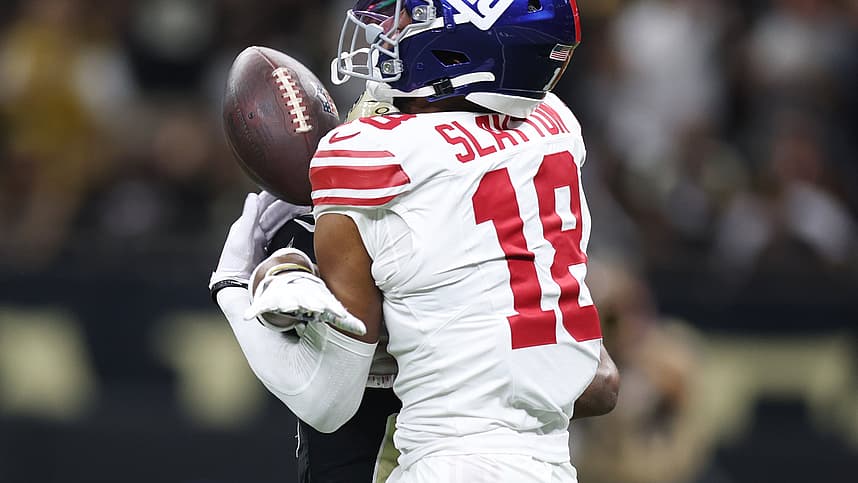
Darius Slayton has outlived three regimes, a half-dozen quarterbacks, and every offseason prediction that the Giants were finally done with him. He keeps producing, and the Giants keep finding reasons to bring him back. The structure of his current contract, paired with a receiver room getting younger and cheaper around him, suggests 2026 is the year that streak runs out.
Slayton is not going anywhere in 2026. The way his deal is structured, though, points the goodbye toward 2027.
The contract that sets the clock
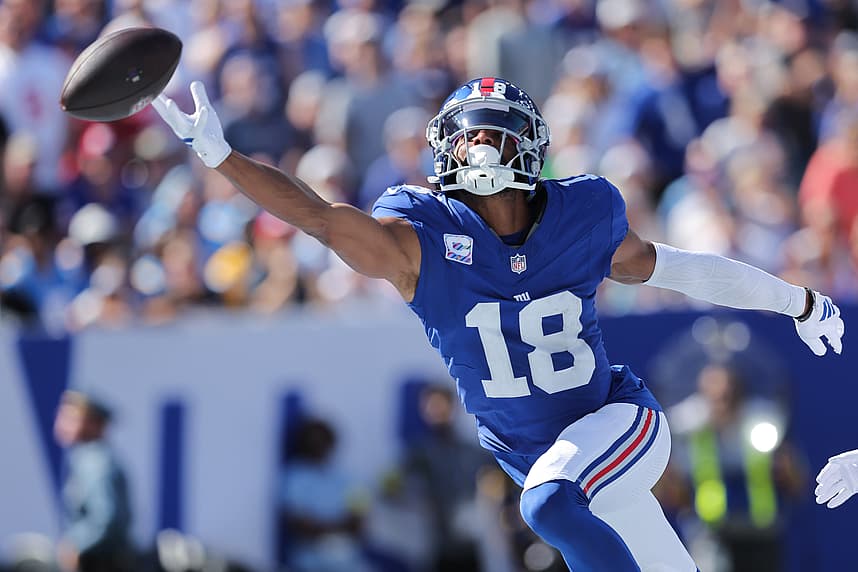
Slayton re-signed in 2025 on a three-year, $36 million deal with $22 million guaranteed and a $9 million signing bonus, per Spotrac. His 2026 cap hit sits at roughly $15.9 million with a dead-cap figure of about $15.75 million, which makes moving on this year financially painful.
The exit ramp opens in 2027. That season carries a $12.99 million cap charge with far less dead money attached. The Giants can release Slayton in the 2027 offseason for $9.99 million in savings with just a $3 million dead cap charge. In plain terms, the Giants structured this contract so that 2026 is the season Slayton has to prove he belongs over the cheaper options behind him, because walking away gets easy the moment it ends.
| Slayton’s deal | 2025 | 2026 | 2027 |
|---|---|---|---|
| Cap hit | $6.25M | $15.9M | $12.99M |
| Realistic to move on? | No | Costly | Clean |
A Giants WR room that no longer needs him
The bigger threat to Slayton is the depth chart. Malik Nabers is the unquestioned WR1 when healthy, and the Giants added Darnell Mooney to take over the slot role vacated when Wan’Dale Robinson signed with the Titans. Behind them, New York stacked the room with minimum-deal veterans, signing Odell Beckham Jr. and JuJu Smith-Schuster after a June workout, plus holdovers like Jalin Hyatt fighting for snaps.
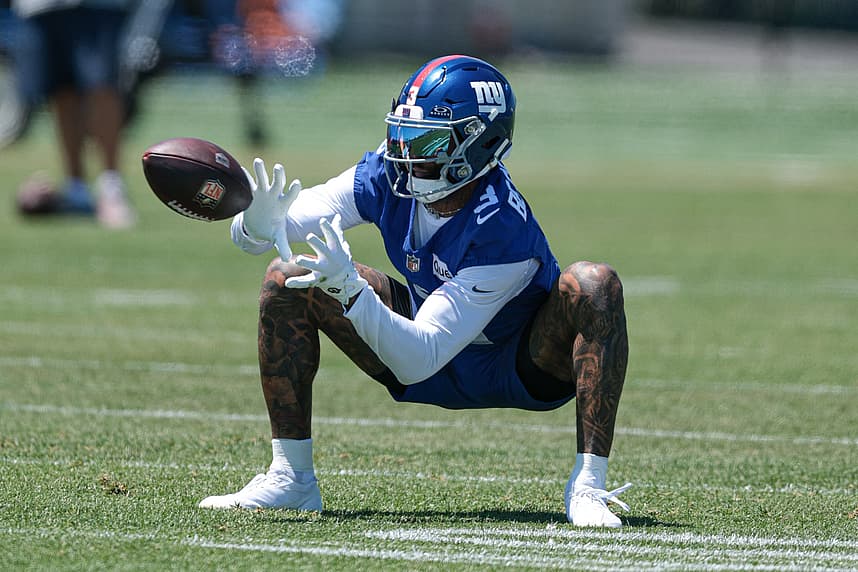
Slayton’s value has always been his deep speed and his year-to-year reliability. Few Giants receivers stick around long enough to be called dependable. The catch is that reliability is easiest to replace when a team is paying league-minimum prices to find it, and the Giants are doing exactly that across the back half of the room.
What he still offers
None of this means Slayton is finished. With Nabers working back from a knee injury and Slayton himself reportedly managing a sports hernia this spring, the Giants need his proven production more than the surface-level roster math suggests. A healthy Slayton is still the most accomplished vertical threat on the roster outside of Nabers, and a passing game leaning on a recovering star and a group of minimum-salary veterans cannot afford to undervalue a known commodity.
Slayton is simultaneously the receiver the Giants count on most in the short term and the one the contract is built to phase out.
The likely ending
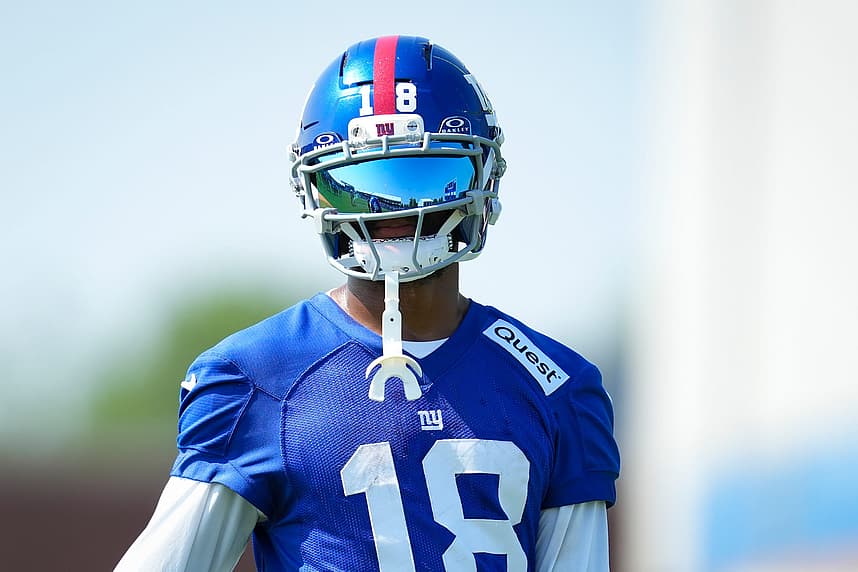
The smart read is that Slayton plays a meaningful role in 2026, then becomes a cap casualty or trade chip in 2027 once the dead money clears and the younger receivers establish themselves. He has beaten this projection before, which is the only reason to hesitate before writing it down.
For now, Slayton remains what he has always been for the Giants: the receiver they keep trying to move past and keep needing anyway.

More about:New York Giants