
 Alexander Wilson
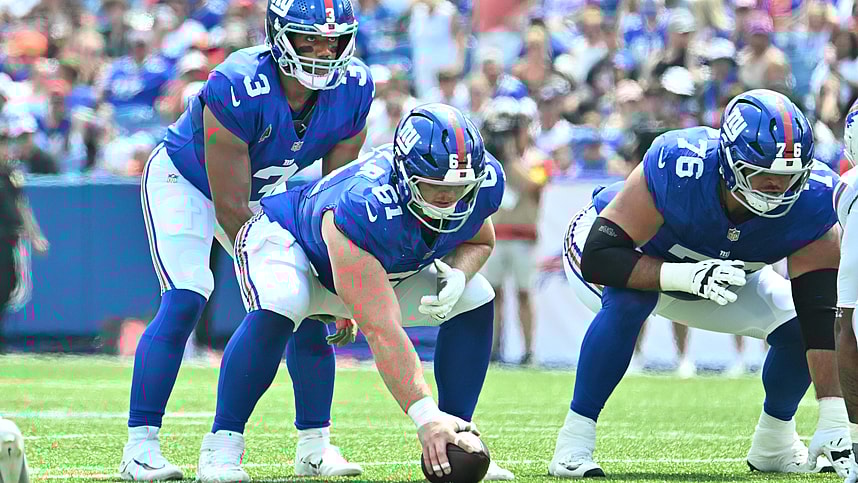
The New York Giants are still searching for answers with former second-round pick John Michael Schmitz anchoring their offensive line.
Once praised for his football IQ and leadership qualities, Schmitz has yet to prove he can consistently handle NFL-level defensive fronts.
A rocky start to 2025
Week 1 against the Washington Commanders highlighted many of the same issues that plagued Schmitz throughout his sophomore season.
He surrendered two pressures and offered little push in the run game, leaving the Giants’ interior line vulnerable against stronger linemen.
This performance followed a 2024 campaign where he gave up 28 pressures and six sacks across 983 offensive snaps — concerning numbers.
When defenders line up across from him with superior size and strength, Schmitz is often overmatched and pushed off his spot immediately.
The physical mismatch problem
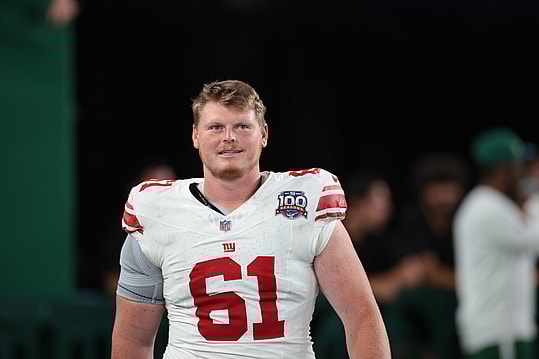
At just 26 years old, Schmitz still has time to grow, but his frame limits how much better he can realistically become.
Against power-heavy defensive tackles, he’s consistently walked back into the pocket, collapsing protection and forcing hurried decisions from quarterbacks.
His size deficiency makes him reliant on technique and positioning, yet even that hasn’t been enough to mitigate the power gap.
Like an undersized chess piece in the wrong position, he often looks out of place when the Giants need him most.
Daboll’s defense and organizational patience
Head coach Brian Daboll has stood by Schmitz, emphasizing his intelligence, preparation, and effort, but patience can only stretch so far.
The Giants’ offensive line has been one of the team’s most glaring weaknesses, despite years of draft capital and free-agent spending.
Instead of stability, they’ve ended up with patchwork solutions and inconsistent play, leaving Daniel Jones and now Russell Wilson under constant duress.
It’s not just a matter of one struggling center — it’s an indictment of the front office’s inability to develop linemen.
The bigger offensive line picture
The Giants have poured resources into their line, but most investments haven’t translated into dependable long-term contributors across positions.
Schmitz represents both the problem and the larger frustration: heavy investment without the corresponding development required to turn potential into production.
At this point, labeling him a backup-caliber center feels more accurate than trying to justify his status as an NFL starter.
That raises uncomfortable questions about what the Giants truly have in their offensive foundation and how they’ll fix it moving forward.
Looking toward next season
Schmitz is still under contract for another season beyond 2025, but that shouldn’t guarantee him a starting role automatically.
Adding legitimate competition through free agency or the draft will be necessary if the Giants plan to turn this unit around.
The team simply can’t continue rolling out subpar performers and hoping incremental improvements will solve a long-standing organizational failure.
For now, Schmitz remains the starter, but the Giants must confront reality soon — he looks more like depth than a cornerstone.

More about:New York Giants
