Anthony Rivardo
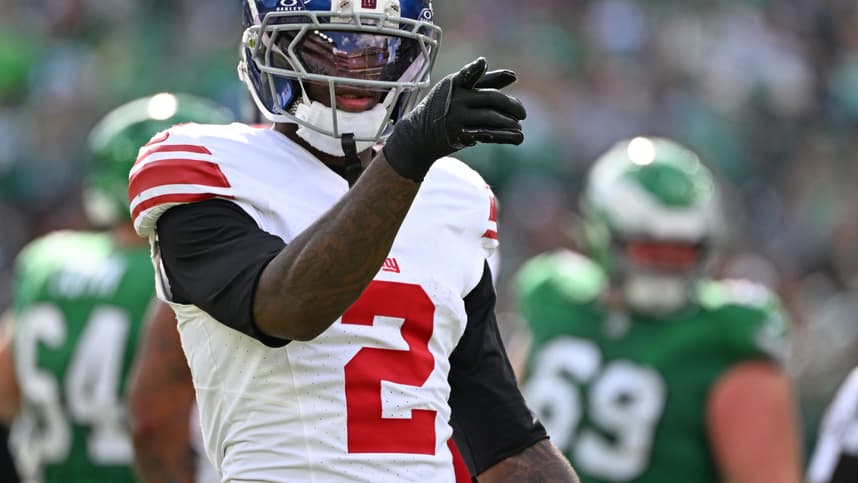
The narrative surrounding former first-round pick Deonte Banks has deteriorated rapidly, shifting from a potential CB1 as a rookie to a bona fide draft bust in year three of his career. After the Giants made the easy financial decision to decline his $12.63 million fifth-year option for 2027, the Maryland product finds himself buried on the depth chart.
He is no longer considered one of the Giants’ starting boundary defenders, buried at CB3, CB4, or potentially further down on a depth chart that features Paulson Adebo, Greg Newsome II, and rookie standout Colton Hood.
Yet, completely writing off the 25-year-old before training camp might be a mistake. With new defensive coordinator Dennard Wilson installing a radically different coverage philosophy, Banks has been handed a legitimate baseline scheme to spark a career resurrection in 2026.
The Sinking of a First-Rounder
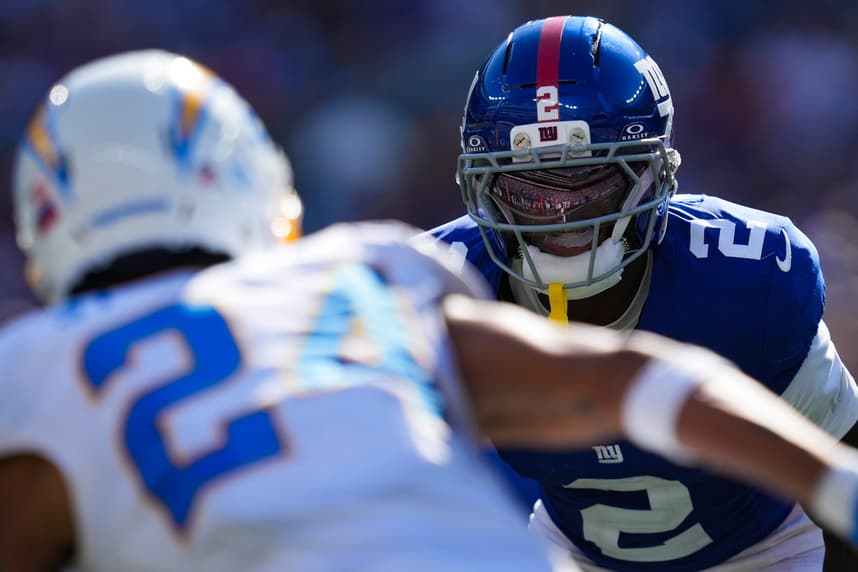
To understand how Banks plummeted from starting every single game of his first two NFL seasons to getting benched under Shane Bowen last year, look no further than his catastrophic 2025 metrics.
Banks finished his third season with a brutal 42.4 overall PFF defensive grade, ranking a dismal 112th out of 114 qualified NFL cornerbacks. Opposing quarterbacks posted a ridiculous 149.7 passer rating when targeting him in coverage, routinely exposing his absolute biggest technical flaw: a complete inability to get his head turned around to make plays on contested catches.
The overhaul of the secondary room—including the arrival of Newsome and drafting Colton Hood—was a direct consequence of Banks surrendering 26 completions on limited defensive snaps.
The Dennard Wilson Press-Zone Lifeline
However, Dennard Wilson’s defensive scheme offers a structural safety net for Banks’s mechanical limitations. Wilson’s system focuses on calculated pressure, heavy press, and spatial zone coverages, which favor boundary corners like Banks, who have strength, speed, and physicality in their toolbox. It’s easy to forget that Banks was an athletic anomaly coming out of college, scoring a 10.00 relative athletic score (RAS).
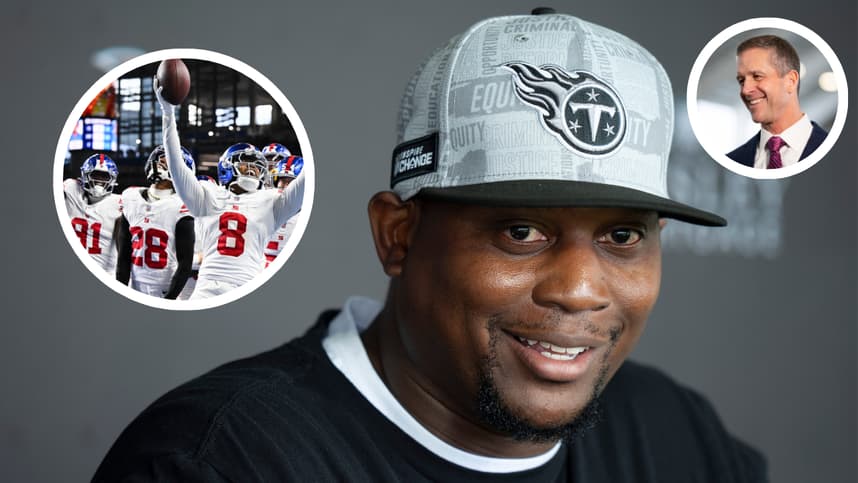
Wilson’s scheme is the antithesis of ex-DC Shane Bowen’s scheme. Bowen’s scheme had the Giants’ cornerbacks playing soft, lining up coverage seven yards off the line of scrimmage, and playing man coverage at a higher rate than nearly any other team, while blitzing at a below-average rate. That was a recipe for disaster for Banks, whose calling cards in college were press-coverage and zone reaction abilities, while his biggest weaknesses were off-coverage and ball skills while trailing in man.
Instead of asking defenders to run blindly downfield in trail-man or play with massive off-man cushion, Wilson operates a heavy shell that allows corners to be incredibly physical at the line of scrimmage while keeping the football directly in front of their eyes.
This eliminates the need for Banks to constantly play catch-up with his back turned to the quarterback, allowing him to use his natural closing speed and elite length to break downhill on standard short-to-intermediate routes.
The Special Teams Spark and Roster Path
If Banks is going to fight his way back into a prominent defensive rotation, he can carry significant momentum from his late-season special teams breakthrough.
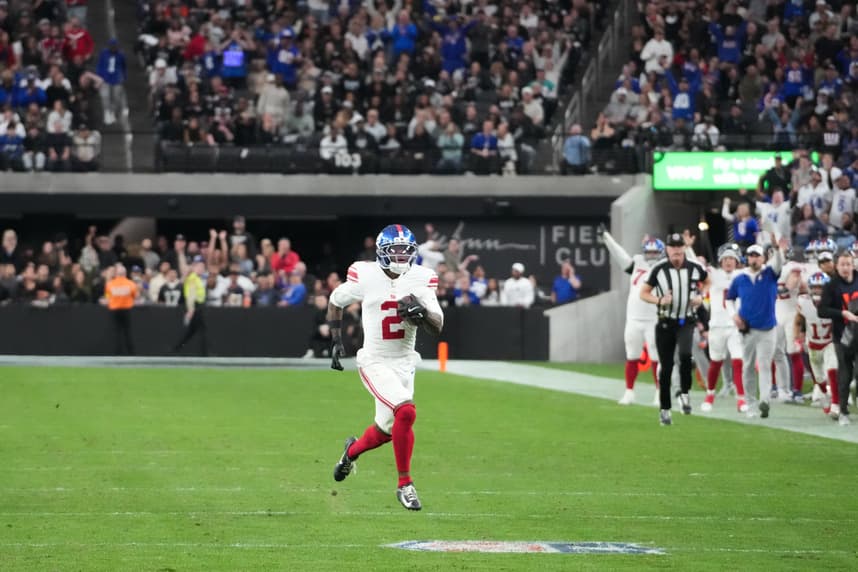
Last season, the cornerback flashed elite potential as a kick returner, compiling 622 return yards on 19 attempts for a stellar 32.7-yard average. His crowning achievement was a spectacular 95-yard kickoff return touchdown against the Raiders in Week 17, proving his sub-4.4 speed is completely intact when he plays with confidence. Banks earned second-team All-Pro votes as a return specialist in 2025.
With John Harbaugh demanding ultimate physical discipline across all three phases, Banks’s special teams value guarantees him a roster baseline while he works to develop in Wilson’s scheme.
Banks has been a strong performer at OTAs
It’s early in the Giants’ offseason training, but Banks has been one of the team’s standout performers this spring. Although the team is only working out in shorts and t-shirts (the pads don’t come on until training camp), there is still plenty that can be learned about a cornerback’s coverage abilities in these OTA practices. And, according to the practice reports published on Giants.com, Banks’s coverage has been tight this spring.
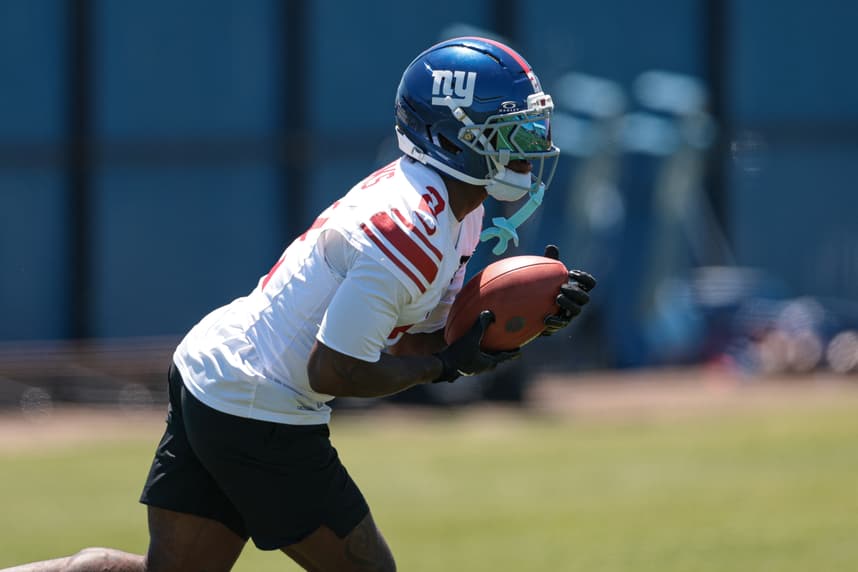
“Deonte Banks put together a strong performance during Wednesday’s practice,” Matt Citak wrote on Giants.com. “It started with some sticky coverage on a deep pass up the sideline, where the young corner was able to force an incompletion. Banks then ran it back with another forced incompletion deep down the field in the final period of team drills.”
OTAs have come to an end, but they serve as a potential step in the right direction for Banks. Next up will be mandatory minicamp, another opportunity for Banks to continue building on a strong spring in this new scheme. Then, training camp will kick off later this summer, and that’s when the competition will intensify. That is when Banks will have a legitimate opportunity to prove his worth to this coaching staff and earn some playing time when the pads come on.

More about:New York Giants