Andres Chavez
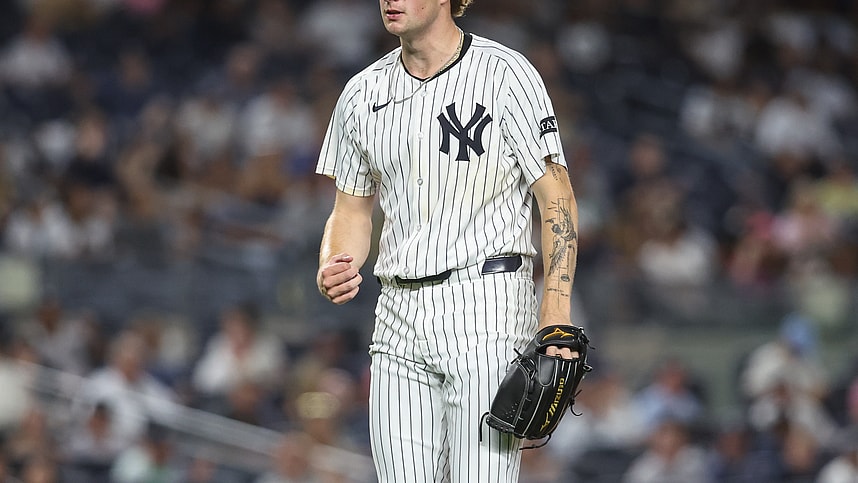
A radar gun doesn’t tell the whole story, but every so often it delivers a hint of what’s coming. When Cam Schlittler first started popping 100 on stadium screens in Double-A Somerset, it felt like a fun little subplot in a long Yankees season. Nobody was circling him as a future October starter. Nobody was sketching out rotation plans around a 24-year-old who still hadn’t spent a full year above A-ball. Yet the fastball kept jumping, the poise kept sharpening, and a few months later the New York Yankees were handing him the ball in games that actually mattered.
It’s rare for a pitcher to rewrite his scouting report in real time. Schlittler didn’t just tweak his projection. He blew it up. What was supposed to be a moderate-ceiling arm suddenly became a foundational piece of the Yankees’ future, the kind of surprise that shifts how a front office thinks about the next six months, not just the next six days.
A Breakout Built on Power and Polish
Schlittler’s first big league run didn’t feel like a cameo. It felt like the start of something. A 2.96 ERA as a rookie is impressive on its own, but the way he got there mattered even more. Triple-digit heat from both the four-seam and sinker. A cutter that can either nip a corner or jam a handle. A curveball with enough shape to get him out of trouble. And every so often, the sweeper, thrown just enough to linger in hitters’ heads.
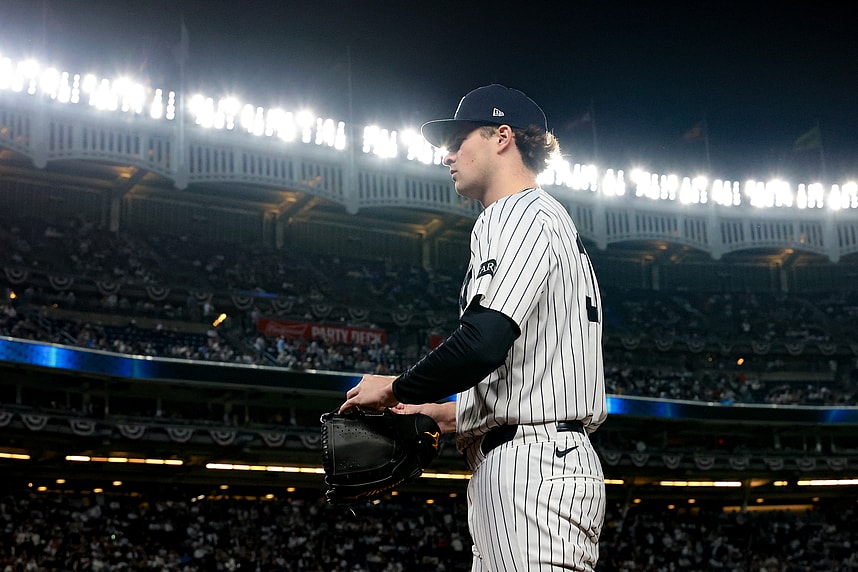
Righties, predictably, had a miserable time. He walked only 3.00 per nine against them and kept most of their damage limited to soft fly balls or defensive swings. Lefties were another story. The command wavered, the misses crept arm-side, and the walk rate jumped to 4.40. That’s not a crisis, but it’s a gap the Yankees knew they couldn’t ignore.
The Missing Piece the Yankees Want Him to Find
Every young power pitcher reaches the same crossroads. The league adjusts, scouting reports tighten, and the hitters who struggled with velocity start looking for anything they can spoil. Schlittler lived in those long, grinding at-bats more often than he wanted. Yankees pitching coach Matt Blake could see the pattern forming.
Blake put it plainly: Schlittler needs a pitch he can bury. Not a show-me pitch. Not something pretty for a clip on social media. A real offspeed weapon that moves away from lefties and forces weak contact before the count gets complicated.
That’s why this offseason has become a laboratory. According to Gary Phillips of the New York Daily News, the Yankees are steering him toward a changeup, though the splitter remains loosely on the table. The priority isn’t velocity separation alone. It’s command. It’s shape. It’s figuring out how to avoid what Blake calls “the foul ball war,” the trap young pitchers fall into when their stuff is electric but a little too hittable in the wrong spots.
Why a New Pitch Could Change Everything
You don’t often hear a team talk about building an early-season staff around a pitcher who opened the previous year in Double-A. The Yankees aren’t saying that because they have no other options. They’re saying it because they believe his next leap is coming.
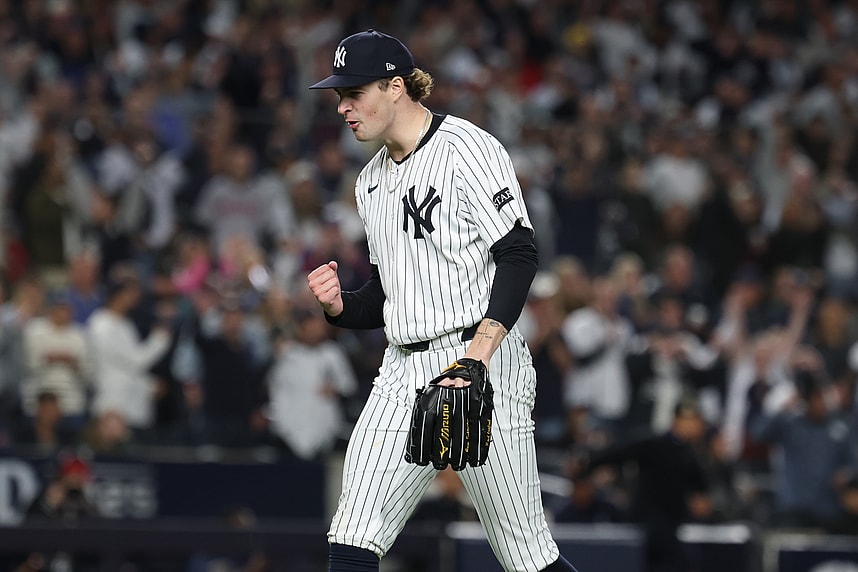
A reliable offspeed pitch would allow Schlittler to attack lefties instead of working around them. It would give him a way to conserve pitches and extend starts. It would make the fastball play even louder, force hitters to respect something softer beneath it, and give the Yankees more flexibility with how they deploy their bullpen behind him.
If he finds that pitch, even a league-average version of it, the ceiling moves again. Suddenly he isn’t just a breakout story. He’s a problem for the American League.
And if he nails it? The Yankees might have discovered their next frontline arm without ever meaning to.

More about:New York Yankees