
 Alexander Wilson
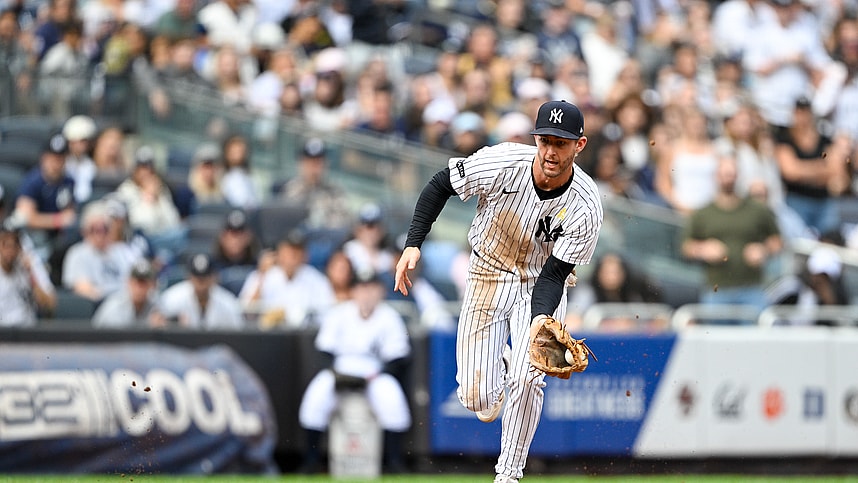
The New York Yankees have already punched their ticket to the postseason and find themselves tied atop the American League East. Still, the job isn’t finished. One more win paired with a Toronto Blue Jays loss would secure them a first-round bye, sparing them the unpredictability of the Wild Card. The Yankees have played their most complete baseball of the season down the stretch, but one glaring issue remains: Ryan McMahon’s bat has gone cold at precisely the wrong time.
A struggling trade acquisition
When the Yankees dealt for McMahon at the trade deadline in late July, the hope was that his left-handed bat could inject some consistency into the lineup. Instead, his offensive performance has cratered. In 51 games with New York, McMahon is slashing just .199/.297/.311 with three home runs, 17 RBIs, and a 75 wRC+, meaning he’s been 25% worse than the average major league hitter.
Before leaving Colorado, McMahon wasn’t exactly tearing the cover off the ball, but his .217/.314/.403 line with 16 homers in 100 games at least showed flashes of power. That power has all but disappeared since putting on pinstripes, and it’s raised questions about how much the Yankees can realistically expect from him in October.
Defense saving his value
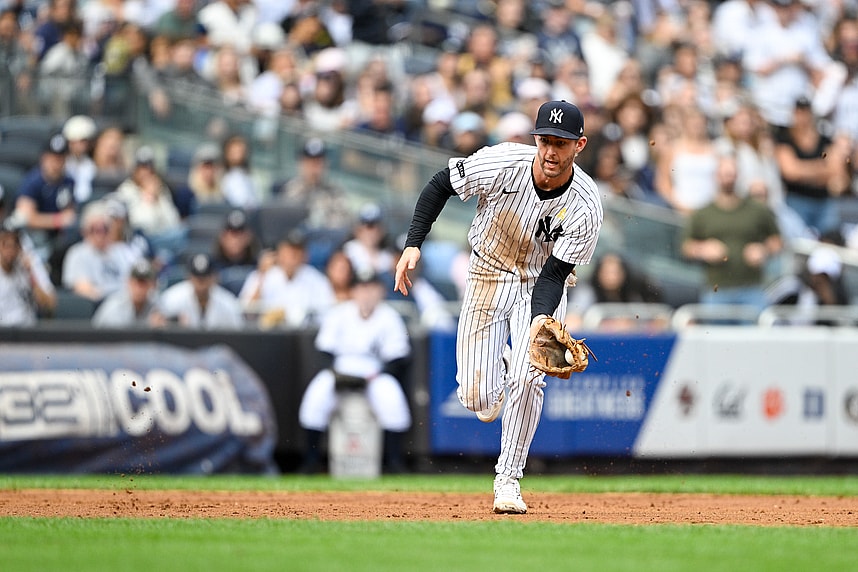
Where McMahon has more than earned his keep is on defense. At third base, he has been everything the Yankees hoped for and more. Over 414 innings at the hot corner, McMahon has posted a .969 fielding percentage with five defensive runs saved and two outs above average. For a team that had been patching together third base with Oswald Peraza and Jorbit Vivas, his steady glove has been a game-changer.
In many ways, McMahon’s defense has been his saving grace. It’s not unlike a quarterback who struggles throwing deep but controls the game with short passes and decision-making — he may not wow the crowd with highlight plays, but he delivers the security a team can rely on.
Advanced metrics offer some hope
Despite his disappointing results, McMahon’s underlying metrics suggest the story isn’t so simple. His average exit velocity ranks in the 95th percentile, and his hard-hit rate is in the 89th percentile. When he connects, the ball jumps off his bat as well as nearly anyone in baseball.
The problem is getting that contact in the first place. McMahon whiffs on 35.1% of his swings and strikes out nearly one-third of the time at 31.9%. That swing-and-miss tendency has sabotaged his ability to translate raw power into production, and it’s something the Yankees will almost certainly address during the offseason.
Looking ahead to October
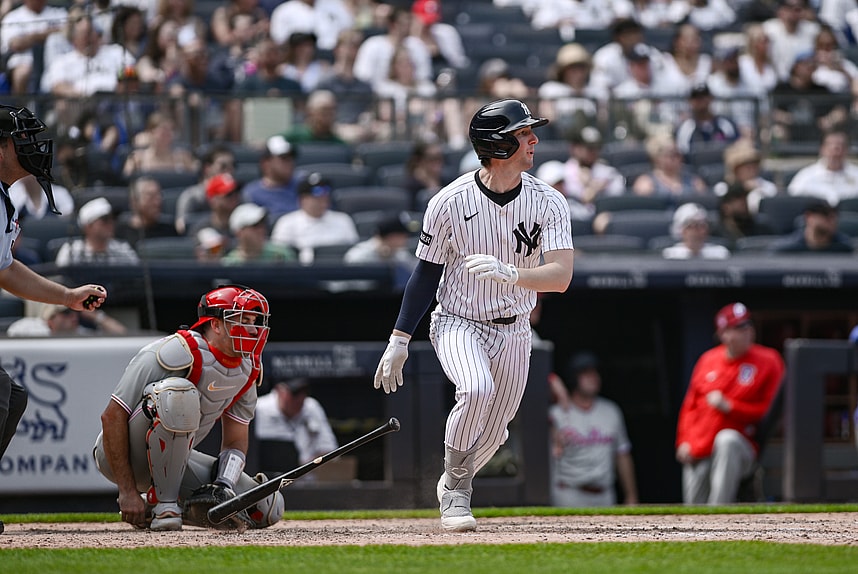
For now, the Yankees don’t need McMahon to turn into a middle-of-the-order slugger. With Aaron Judge carrying the offense and Ben Rice emerging as a dangerous bat, what they need from McMahon is timely hitting and continued excellence at third base.
He’s under contract through 2028 at $15 million annually, so the organization has time to work on mechanical adjustments. Midseason tinkering isn’t usually wise, and the Yankees seem content to wait until the offseason for deeper fixes.
As the postseason begins, McMahon’s role is clear. Provide Gold Glove-caliber defense, make pitchers work when he’s at the plate, and deliver in big moments when the opportunity arises. If he can do that, the Yankees will gladly live with the shortcomings in his stat line.

More about:New York Yankees
