
 Andres Chavez
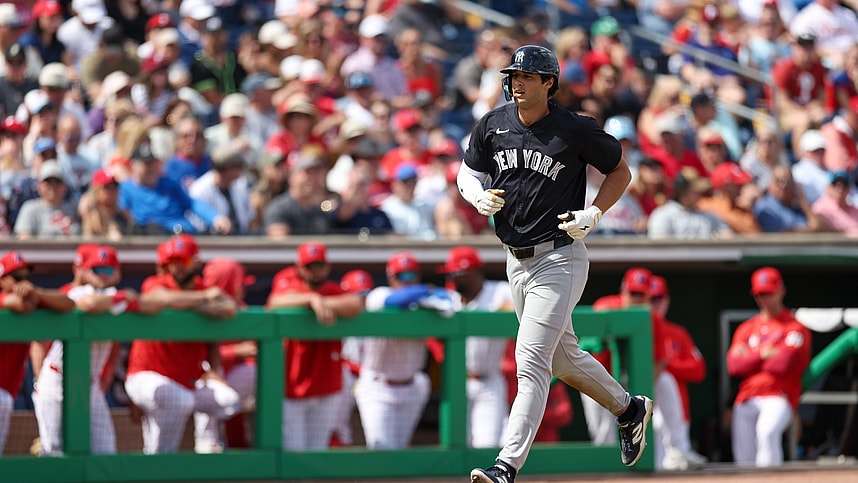
The New York Yankees have an outfield logjam heading into spring training, with Trent Grisham and Cody Bellinger returning after strong 2025 campaigns alongside Aaron Judge and Giancarlo Stanton. The depth chart is so crowded that Jasson Domínguez might open the season in Triple-A Scranton. But I’m convinced the most intriguing story in Tampa isn’t about who makes the roster—it’s about Spencer Jones obsessing over stolen bases despite crushing 35 home runs last year.
Jones spoke to media on Monday about his spring priorities, and his answer reveals everything you need to know about why this kid is different. “I think the biggest thing for me this spring is to focus on the little things that I do well: hitting the ball, playing good defense, and stealing bases,” he said, per SNY.
When pressed about Aaron Boone’s comments regarding offseason adjustments, Jones mentioned working on his swing—standard prospect stuff—before adding something that caught my attention: “It’s just a couple of minor things, but I think they’ll pay off this season.”

That last part? He’s talking about basestealing mechanics. A 6-foot-7, 235-pound masher who hit 35 bombs with a 153 wRC+ between Double-A and Triple-A last year is grinding to steal more bags. That’s not normal.
The Power-Speed Profile Nobody Saw Coming
Here’s what the front office is banking on: Jones swiped 72 bases over the last two seasons while maintaining elite power production. In 2025 alone, he went 29-for-35 on steal attempts—an 82.9 percent success rate that would’ve ranked seventh in the majors if he’d been in the big leagues. For context, that’s better than Elly De La Cruz’s 79 percent success rate over the same span, and De La Cruz is built like a gazelle, not a power forward.
The Yankees aren’t just developing a slugger who can run. They’re developing a legitimate five-tool threat who happens to strike out in 35.4 percent of his plate appearances. That strikeout rate is ugly, no question, but let’s talk about what Jones is doing right instead of obsessing over the swing-and-miss that every evaluator already knows about.
Why Basestealing Obsession Matters More Than Strikeout Rate
The tape doesn’t lie—Jones has elite first-step explosiveness for his size, and his jump timing improved dramatically in 2025. Only six caught stealings in 35 attempts tells me he’s reading pitchers better and understanding situational leverage. When a power hitter refines baserunning instincts at this level, it fundamentally changes how opposing managers deploy their defenses and when they’re willing to pitch around him.
I’m watching a player actively expand his toolkit instead of relying on raw power alone. Every offseason, Jones works on turning inside pitches and lifting the ball—that’s expected developmental work. But focusing spring training energy on perfecting his secondary leads and jump mechanics? That’s a player who understands the modern game rewards multi-dimensional threats more than one-trick sluggers.
The Outfield Math Works in Jones’ Favor
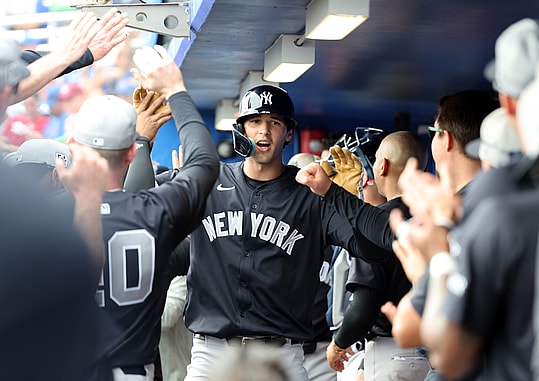
Yankees fans panicking about Domínguez potentially starting in Scranton are missing the bigger picture. Grisham and Bellinger are signed for 2026, sure, but Jones’ developmental timeline doesn’t require him to crack the Opening Day roster. He needs consistent Triple-A at-bats to refine his plate discipline before he forces the team to make decisions.
Here’s where it gets interesting: The Yankees’ outfield depth creates competition that accelerates development rather than blocking it. Jones knows he needs to be undeniable by June if he wants serious consideration. That pressure forces him to obsess over details like basestealing efficiency and defensive routes instead of coasting on raw power production.
A 24-year-old Jones who hits 30-plus homers, steals 20-plus bases, and plays competent defense in right field becomes a cost-controlled cornerstone worth $15-20 million annually on the open market. That profile doesn’t exist if he’s just another power-hitting strikeout machine.
Cashman knows this. The player development staff knows this. And judging by Jones’ comments about focusing on “the little things,” he knows it too. The strikeout rate will always run higher than league average—I’m not delusional about that—but elite baserunning and improving defense turn him from a DH-only liability into a legitimate everyday outfielder who forces opposing pitchers into impossible decisions if he can make enough plate discipline and contact gains.

More about:New York Yankees
