
 Ryan Garcia
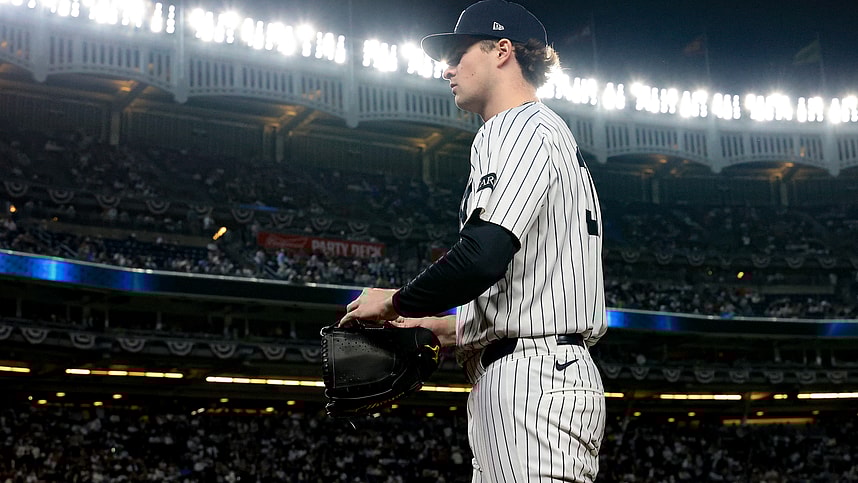
When it was announced that Clarke Schmidt would need surgery after tearing his UCL, the Yankees were swept out of first place by the Blue Jays, calling up Cam Schlittler in need of a miracle.
The team didn’t avenge those sweeps, but they did get more than they could have ever expected when they turned to someone who began his season in Double-A.
He pitched to a 2.96 ERA in the regular season and a 1.26 ERA in the postseason, but he did so in a manner that’s much different from how modern-day pitchers are dominating.
Instead of throwing a bunch of breaking balls or offspeed pitches, Cam Schlittler is throwing over 80% fastballs thanks to a three-fastball mix that has made him impossible to slug against.
READ MORE: The Yankees should avoid extending breakout outfielder in free agency
Cam Schlittler’s Fastball Triforce Could Make Him the Yankees’ Next Ace
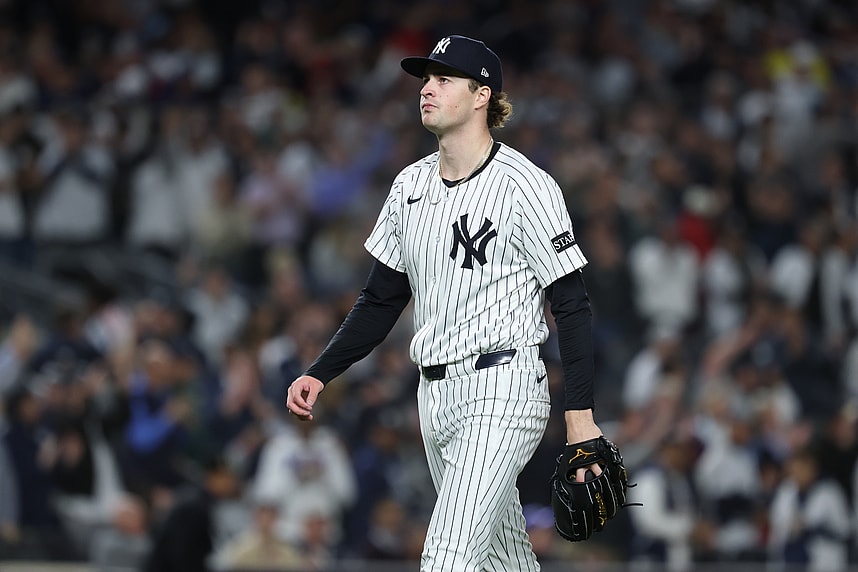
Cam Schlittler opened the season with just one fastball, a mediocre four-seamer in both shape and velocity that projected to become a below-average pitch in the big leagues.
A massive velocity spike and the addition of a cutter in April would lead to a surge that caught the Yankees’ attention to the point that he reached the big leagues in early July.
He had toyed around with a two-seamer, but that pitch truly came to life after his promotion, holding batters to a .278 SLG% witha 23.3% Whiff% in the regular season.
Those three fastballs made up over 80% of his pitch usage throughout the season, developing a fastball triforce that dominated in the postseason.
In regular and postseason play, batters hit just .201 with a .290 SLG% against his three fastballs, but how can someone get by throwing mostly fastballs?
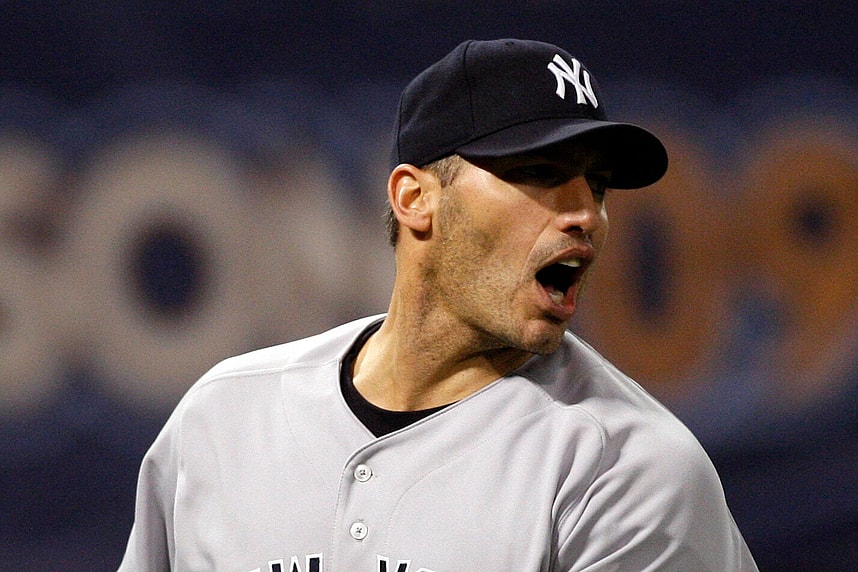
Andy Pettitte was notorious for throwing three different fastball shapes and relying on them heavily especially late in his career, throwing almost 60% fastballs during the Pitch Tracking Era (began in 2008).
That was despite having poor velocity even relative to late-2000s standards, and it boils down to how effective those pitches are at keeping hitters off-balance.
Being that deceptive was considered a necessity for aging pitchers or guys without much juice in their fastballs, but starters in this league with elite velocity are also learning that craftsmanship at a much younger age.
Gavin Williams and Brayan Bello produced much better ERAs in 2025 while adopting a more effective three-fastball mix, while frontline aces like Yoshinobu Yamamoto and Garrett Crochet used more cutters and sinkers.
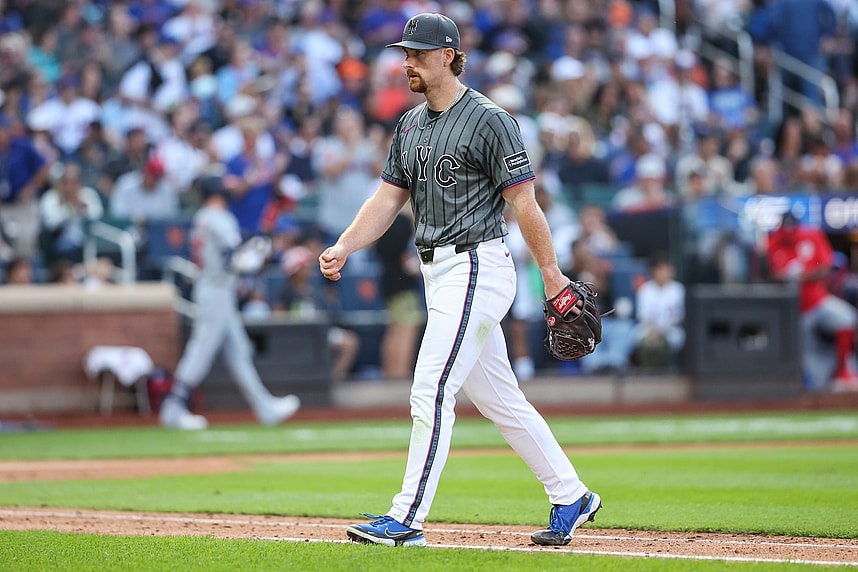
Mets’ top pitching prospect Nolan McLean looked like the best pitcher in baseball for eight weeks, featuring three different shapes of his own.
Where I believe there’s separation between Cam Schlittler and those pitchers is that almost all of them featured either two or all three of those fastballs in the year prior, the Yankees’ rookie only had his four-seamer entering this year.
His fastball usage increased from 82.7% to 88.7% come playoff time, as Schlittler knew by relying on those firm shapes he could keep hitters from generating any kind of slug against him.
Schlittler held batters to a .269 SLG% and issued zero walks, making him virtually impossible to score against while facing two teams that have crushed Yankee pitching all year.
The ability to spin fastballs with three different shapes can prove to be impossible for hitters to handle when they’re coming in at 98-100 MPH, since even slight variations in movement can cause weak contact or a whiff.
We also saw his sinker and cutter get more of the spotlight compared to his four-seamer as the season carried on, leading to his dominance in the postseason as he wasn’t nearly as predictable as one would expect.
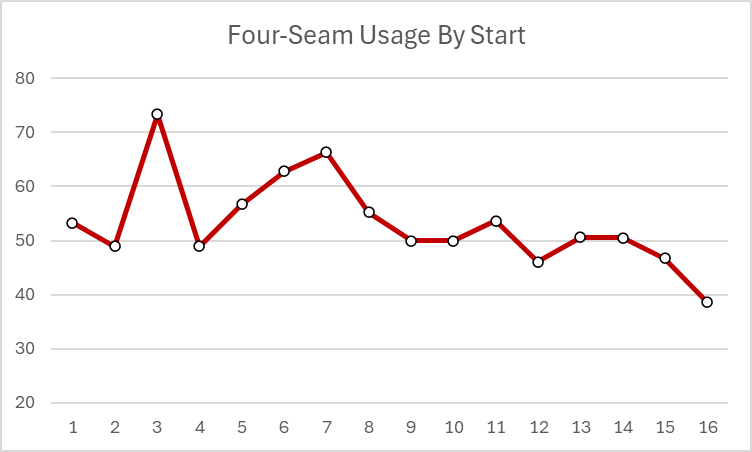
In his first 8 starts, Cam Schlittler had a 4.22 FIP with a 58.2% usage rate on the four-seamer, but over his final eight starts of the regular/postseason, he threw that pitch 48.3% of the time with a 2.50 FIP.
The four-seamer has been more effective over this stretch because the cutter and sinker make it harder for hitters to pick up when he’s going to throw a high heater for a whiff.
With a 28.1% K% to go with a 6.5% BB%, Schlittler has been able to just pound the zone repeatedly with velocity, not worrying about hitters being able to get out in front to crush it since they have to protect for different flight paths.
If he can look like the pitcher we saw in the final two months of the season, the Yankees might have an ace in Cam Schlittler and his incredible fastball package.

More about:New York Yankees
