
 Andres Chavez
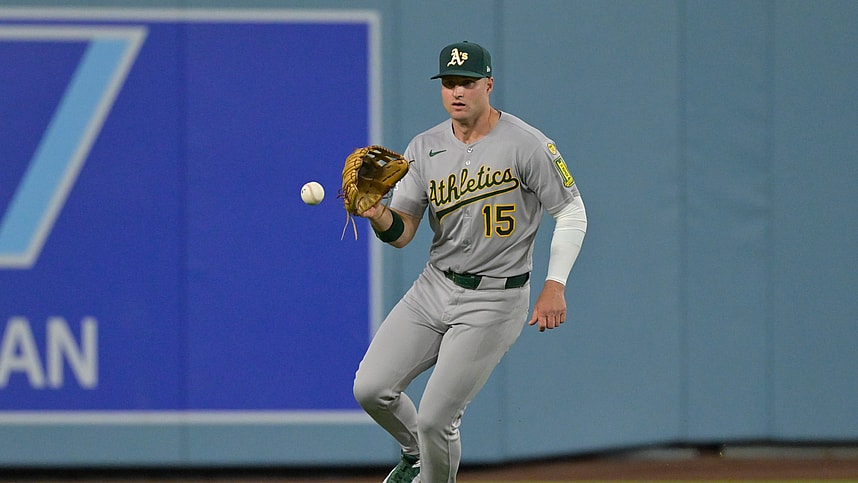
Monday’s minor league agreement with Seth Brown isn’t the kind of signing that moves the needle for the New York Yankees. It is not flashy. It is not a depth chart shaker. But it is exactly the kind of quiet move they have made a habit of exploring when they believe there is usable value hiding just beneath the surface.
Aram Leighton of Just Baseball reported the move.
Brown, now 33, comes with a résumé that is both familiar and oddly easy to overlook. Over parts of seven major league seasons, all but a brief stop spent with the Athletics, he owns a .226/.292/.419 slash line and a perfectly average 100 wRC+. Average matters here. For a player signed to a minor league deal, league-average offense with power upside is not nothing.
Why the Yankees Took the Call
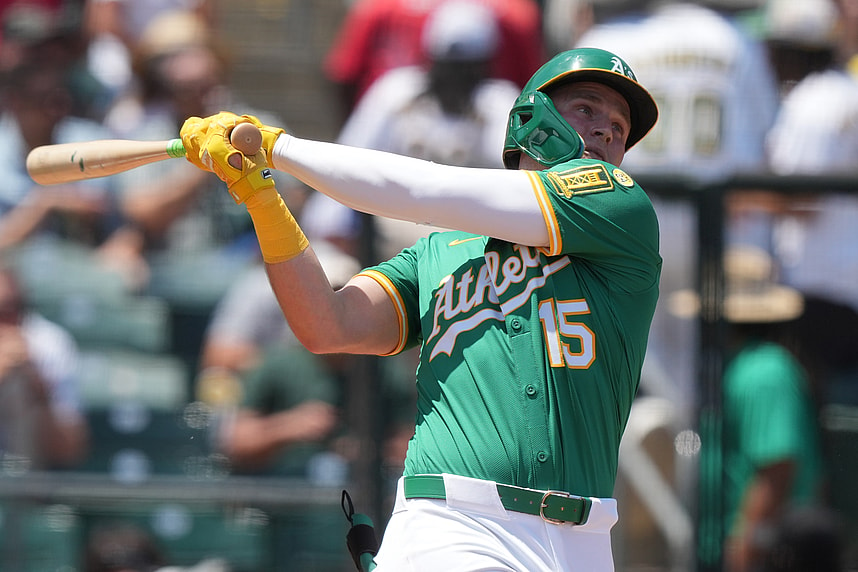
The Yankees are always scanning for low-cost bats who can run into a fastball and change a game with one swing. Brown has done that before. Twice, in fact. He reached the 20-homer mark in both 2021 and 2022, seasons that showed his power is not theoretical or limited to Triple-A box scores.
Last year never really gave him a chance to build momentum. Brown appeared in just 38 major league games in 2025, all with the Athletics, before injuries and roster math closed the door. The emergence of Nick Kurtz and an increasingly crowded A’s lineup pushed Brown to the margins. He was designated for assignment on May 23, accepted a minor league assignment, then landed on the injured list in mid-June with tennis elbow. By early July, he was released.
Arizona took a look shortly after, signing him to a minor league deal. Brown responded by hitting .291/.381/.544 across 26 Triple-A games, good for a 118 wRC+. It still was not enough to earn a call-up. Opportunity can be as important as performance, and the Diamondbacks simply did not have one to give.
What Brown Still Does Well
For all the contact issues that come with Brown’s profile, the power is real. His career slugging percentage sits north of .400 for a reason. He lifts the ball, he pulls it with authority, and he does damage against right-handed pitching. His career 108 wRC+ versus righties is the number that jumps off the page for the Yankees, a team constantly looking for platoon advantages and matchup-driven bench pieces.
Brown cannot hit lefties. That is not changing at this stage of his career. But the Yankees do not need him to. If he hits right-handers, he has a lane.
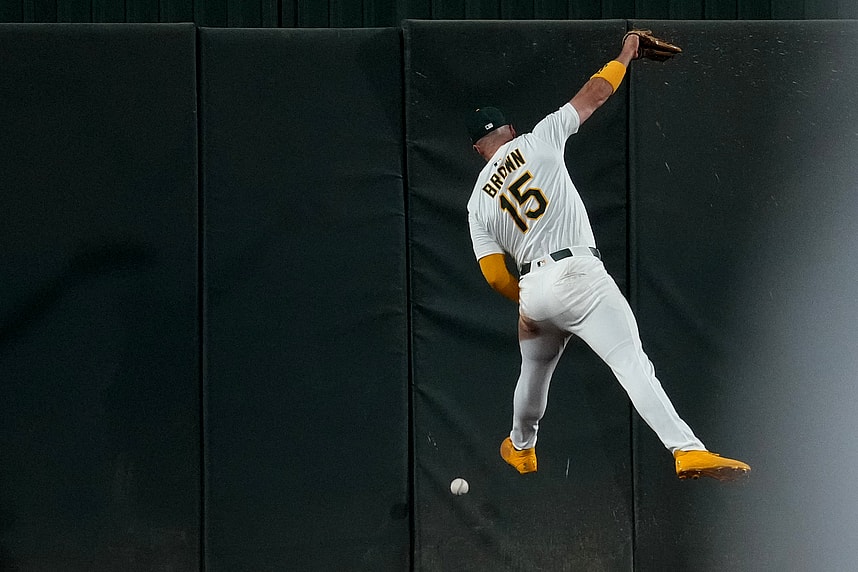
Defensively, expectations should be modest. Brown is not a plus glove. Still, he can cover first base and both corner outfield spots, and in a pinch, he can stand in center field without the whole thing falling apart. For a depth signing, that flexibility matters.
How He Fits Into the Bigger Picture
This is not a move designed to push a top prospect or signal a philosophical shift. It is insurance. It is Triple-A depth with a chance to become more. The Yankees know how long a season is, and they know how often they have dipped into Scranton for help that was never part of the original plan.
Brown profiles as a bench bat who could be useful against right-handed pitching or a first call-up if injuries pile up. If nothing else, he gives the Yankees a left-handed power option waiting in reserve, one who has already proven he can survive at the major league level.
These signings rarely make headlines in January. Sometimes they never matter at all. But every so often, one sticks, and the Yankees have learned that value does not always announce itself loudly. Sometimes it shows up on a minor league deal, quietly waiting for the right at-bat.

More about:New York Yankees
