
 Andres Chavez
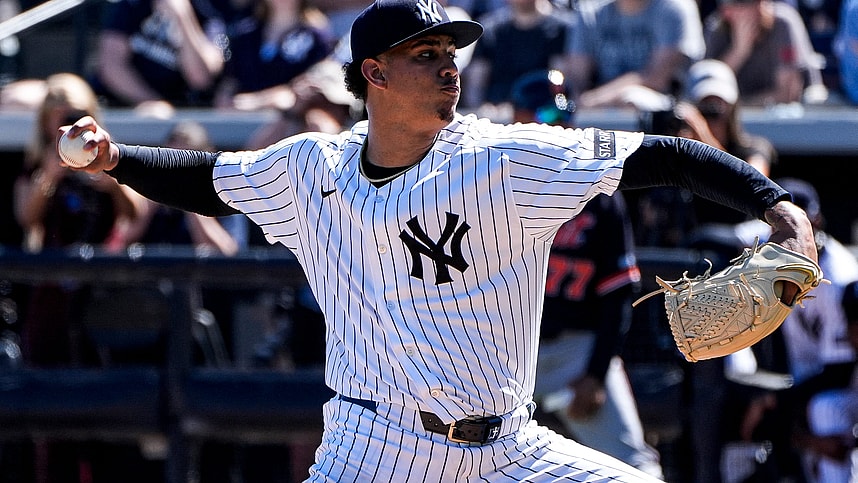
The thing about velocity like Carlos Lagrange’s is it doesn’t whisper. It screams. When a kid can pump 102–103 with carry and extension, you don’t project a role — you imagine dominance, you picture October, you see hitters walking back to the dugout muttering to themselves.
And that’s why this whole starter-versus-reliever debate around Carlos Lagrange already feels like the kind of Yankees problem teams pretend not to have. Too much arm. Too much upside. Not enough certainty.
The Yankees know exactly what they’ve got
Inside the organization, nobody’s confused about the ceiling. A power fastball, a slider that misses bats, and the kind of frame that suggests innings if the strike-throwing shows up. That’s frontline starter DNA, not middle-inning filler.

But baseball isn’t played in scouting reports, it’s played in the zone. Lagrange’s 5.74 walks per nine in Double-A last season hang over the conversation like a neon warning sign, even if he still shoved his way to a 3.22 ERA in 78.1 innings.
That’s the fork in the road. Big arms can survive wildness in the minors. In the majors, they get punished fast and publicly.
Matt Blake didn’t shut the door — he cracked it open
When pitching coach Matt Blake floated the bullpen possibility to Chris Kirschner of The Athletic, it wasn’t lip service. It sounded like a staff already gaming out scenarios.
“If he can stay as a starter, there’s huge value in that. But if there’s a need in the bullpen, I’m sure it’s a conversation that, as a group, we’re going to have to have. I think we’d like to have him start as long as possible and then pivot when necessary. It’s definitely something that’s percolating in the background as far as where does this guy help us the most and what timeline is that?”
That’s not theory. That’s roster math.
The Yankees don’t operate in a vacuum. If the rotation stays healthy and locked in by mid-summer, they’re not going to let a 103-mph arm sit in Scranton just because the long-term vision says “starter.”
History says the bullpen path works — at least at first
This isn’t new territory for the New York Yankees. They’ve done the power-arm bullpen bridge before, and it’s often the fastest way to introduce a volatile weapon to the majors without letting command issues spiral into five-inning disasters.
A two-pitch monster plays differently in relief. Velocity ticks up. The strike zone shrinks mentally. Hitters get one look and pray. Suddenly that walk rate matters less because the outing is 18 pitches instead of 95.
You can almost see it already — Lagrange entering in the seventh, scoreboard buzzing, fastballs at 104, wipeout slider, two strikeouts and a weak grounder. Fans lose their minds. Twitter declares him the next late-inning weapon before he’s even unpacked his locker.
And honestly? That version of Lagrange might help the 2026 Yankees more than the theoretical future ace.
The truth nobody likes saying out loud
Starting pitchers are more valuable. Everyone knows it. But pennant races aren’t won by theoretical value — they’re won by who gets outs in August and October.
If Lagrange throws strikes this year, the conversation dies and he keeps starting. Simple. If he doesn’t, the bullpen isn’t a demotion, it’s the express lane to the Bronx.
Either way, the Yankees aren’t worried. They’re holding a live grenade of an arm and figuring out where it explodes best.

More about:New York Yankees
