
 Andres Chavez
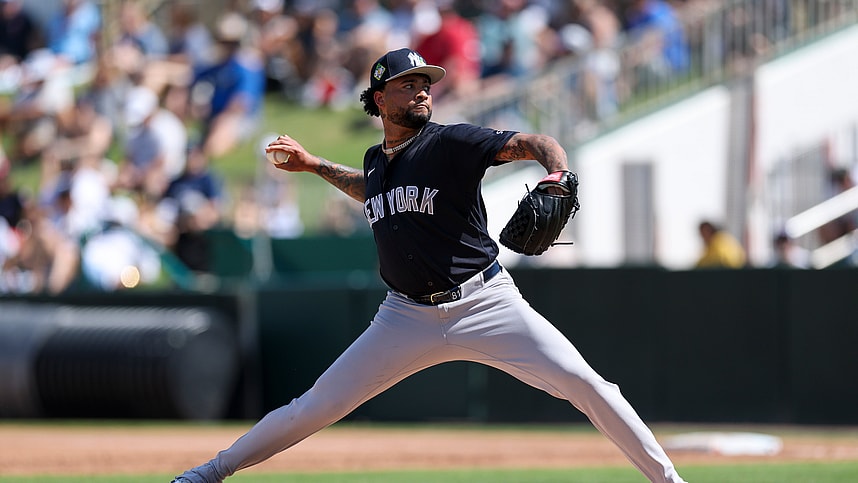
The early months of a baseball season often feel like a laboratory where pitchers tinker with their mechanics under the Florida sun, hoping the chemistry is just right before the games actually matter. For Luis Gil, this spring has been less about radical experimentation and more about rediscovering the North Star of his pitching identity: the strike zone.
On Tuesday, the New York Yankees right-hander took the mound in the Grapefruit League and provided a performance that felt like a steady hand on the steering wheel, dominating a Philadelphia Phillies lineup that featured several regular starters.
The Rhythm of the Zone
Over 3.1 innings of work, Gil was the definition of efficient aggression. He allowed two runs, though only one was earned, scattering four hits while striking out four. However, the statistic that shines brightest in the box score is the zero in the walk column.
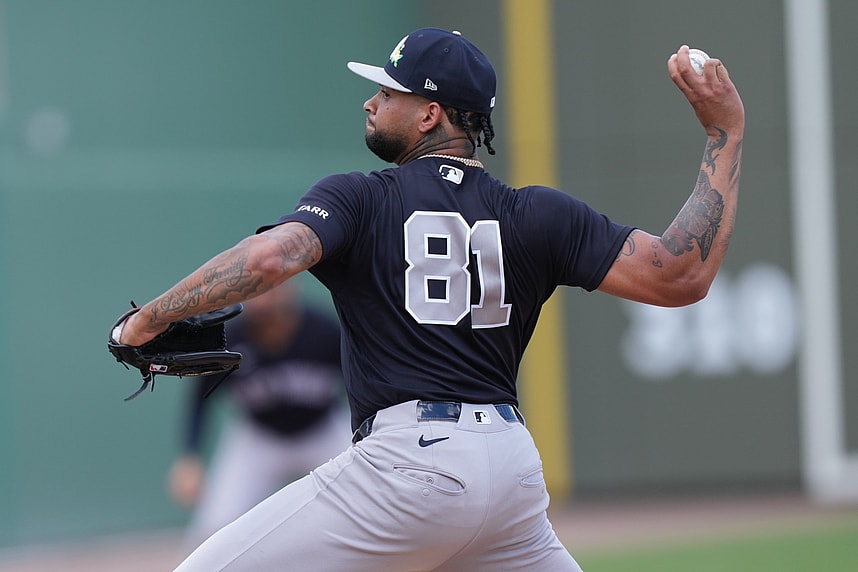
For a pitcher whose primary hurdle has often been a self-inflicted tug-of-war with his own command, a clean sheet in terms of free passes is a massive developmental victory. It brings his spring ERA down to a tidy 2.38, a number that reflects a pitcher who is no longer nibbling at the edges but is instead daring hitters to do something with his best stuff.
Gil is currently a man chasing his own shadow, specifically the version of himself that captured the American League Rookie of the Year Award in 2024. That season, defined by a 3.50 ERA and 171 strikeouts, set a high-water mark that he is eager to surpass. As Gil told Bryan Hoch through interpreter Marlon Abreu: “I would probably say, ‘Break my own records from 2024 and keep improving. Whatever those numbers are, if I’m able to break those, I’ll be happy with those. … I think we’re trending in the right way, and I feel like we’re getting close.”
Mechanics and Velocity
The raw tools remain as loud as ever. Even on an afternoon where his fastball didn’t necessarily generate the usual swings-and-misses, the velocity was impossible to ignore. The heater averaged 95.5 mph and reached as high as 97.3 mph, a velocity profile that sits well ahead of where he expected to be at this stage of the calendar.
If his fastball is the heavy hammer, his secondary pitches are the scalpels he is learning to use with more precision. He looked particularly comfortable with his slider and found moments to flash a changeup that kept the Phillies’ hitters from sitting exclusively on the hard stuff.
This progress is vital because 2025 felt like a step backward in the dark. Despite a respectable 3.32 ERA last year, the foundation was shaky; his control began to erode, his strikeout rate dipped, and he struggled to find his footing during the high-pressure environment of the postseason.
Coming into this year, the goal was to sharpen the tools that had grown dull. “What you’re looking for at this time of camp is, you want to sustain the velo,” Gil explained. “I’m happy. I feel that I keep getting better, stronger and sharper. You’re seeing the results of all the hard work.”
The Road to Opening Day
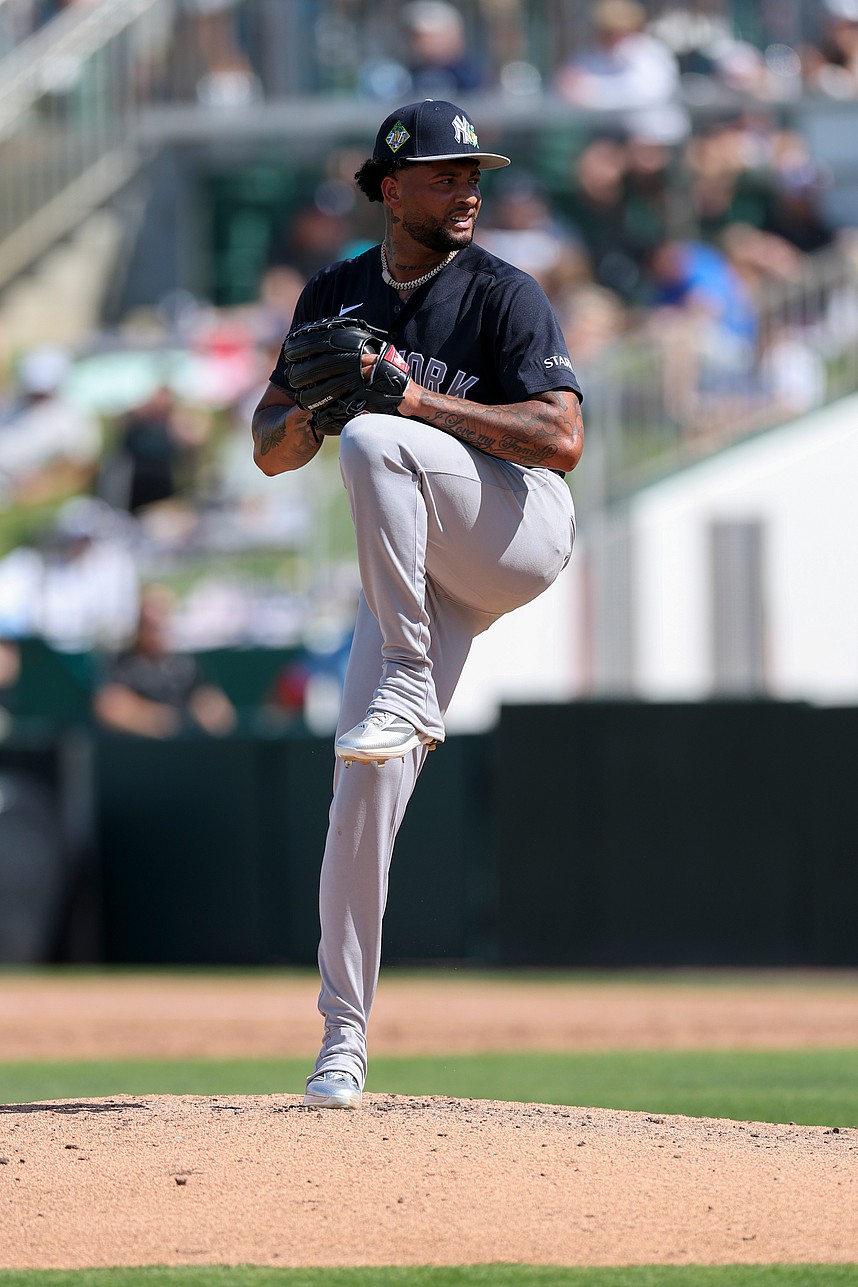
The most encouraging takeaway from his 11.1 innings this spring is the ratio of 15 strikeouts to just three walks. It suggests a pitcher who has stopped fighting himself. As Gil puts it, attacking the zone is the singular focus that makes everything else possible.
While spring training stats are often written in disappearing ink, the Yankees are hopeful that this version of Gil—one who keeps hitters honest with a mix of power and precision—is the one that shows up when the lights get brighter in April. The potential for an improved Gil is there, provided the swing-and-miss element of his fastball returns.

More about:New York Yankees
