
 Alexander Wilson
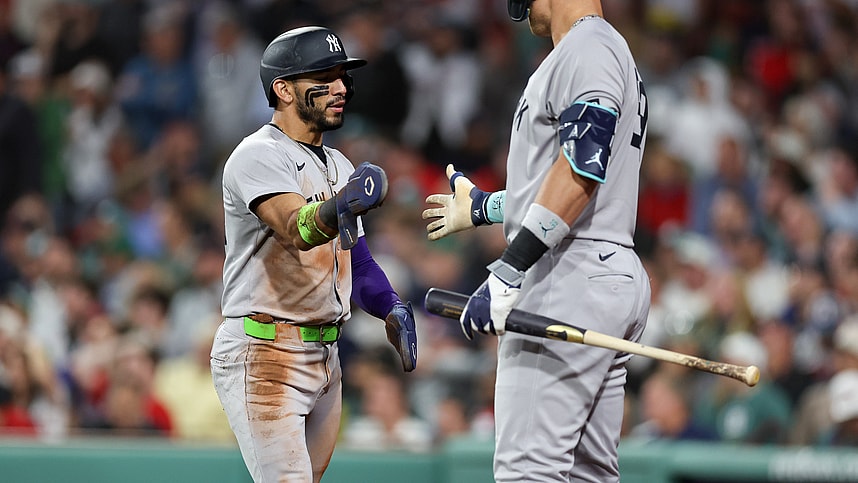
The Yankees have been working diligently to help several offensive players refine their batting stances to support growth this offseason. Prospects like Spencer Jones have been changing up their stance. Ryan McMahon, a veteran, is also trying to create more balance in his base to improve his contact rates and plate discipline, but Jose Caballero is working on something very specific.
The Yankees’ super utility man had such a low bat speed in 2025 that it didn’t even qualify in a specific percentile. Instead, it was among the worst in Major League Baseball, which is why Caballero spent his entire offseason focusing on fixing this critical weakness.
Look, when your bat speed is so bad that Baseball Savant just says “NOT QUALIFIED” instead of giving you a percentile ranking, you know you’ve got work to do. That’s embarrassing for a major league hitter, and Caballero knew it. So he did something about it.
The Driveline Baseball Solution
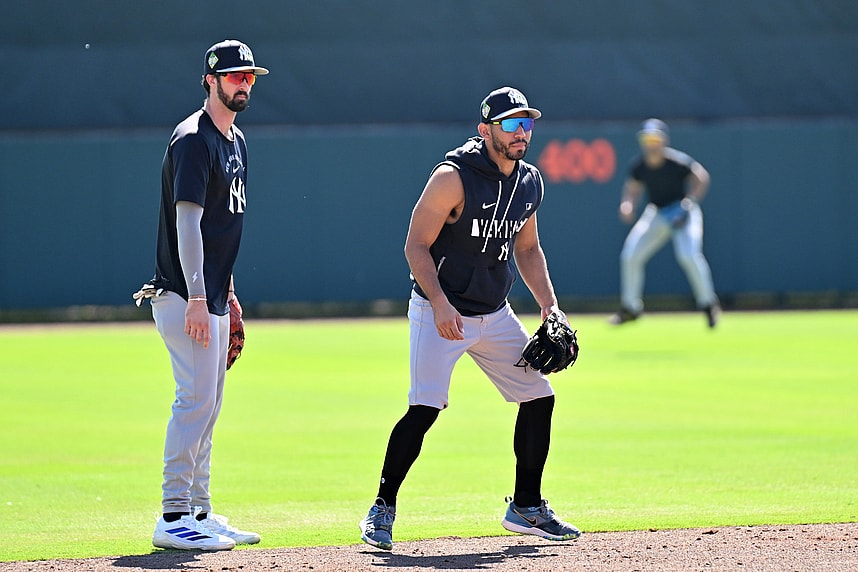
“Much of Caballero’s offseason training was focused on increasing his bat speed. He also spent some time working at Driveline Baseball in Tampa,” Brendan Kuty and Chris Kirschner reported in The Athletic. That decision to work at Driveline wasn’t random. The data-driven facility has become the go-to destination for players trying to unlock measurable improvements in their swing mechanics.
And the early returns? Pretty encouraging. Caballero smashed a solo homer on Sunday against the New York Mets in the Yankees’ third preseason game of spring training, offering a glimpse of what improved bat speed could mean for his overall offensive profile.
“He said his goal is to improve his average bat speed to 71 mph this season, which would have been a shade under last year’s MLB average (71.7 mph) but much higher than Caballero’s 2025 mark (69.1 mph),” per The Athletic. That 1.9 mph jump might not sound like much, but when you’re talking about bat speed, those marginal gains can have massive downstream effects on your entire offensive game.
The Ripple Effect of Better Bat Speed
Here’s what makes Caballero’s bat speed improvement so potentially transformative: it doesn’t just help him hit more home runs. Faster bat speed creates a ripple effect across multiple aspects of his offensive profile, and his Baseball Savant percentiles from 2025 show exactly where he needs help.
His 6th percentile average exit velocity (86.0 mph) was brutal. His 9th percentile hard-hit rate (30.6%) meant he was making weak contact constantly. His 23rd percentile barrel rate (5.9%) showed he rarely squared up pitches for maximum damage. All of these numbers are directly correlated to bat speed. Get the bat moving faster through the zone, and suddenly you’re hitting the ball harder, more frequently, and with better quality of contact.
The Athletic noted that his average exit velocity last year was among the lowest in MLB, though it was better than 2024 (83.7 mph). That’s the encouraging part. He’s already shown he can improve this metric by roughly 2.3 mph in one season. If the Driveline work adds another 2-3 mph of exit velocity on top of that, you’re looking at a completely different hitter.
Where Caballero Already Excels
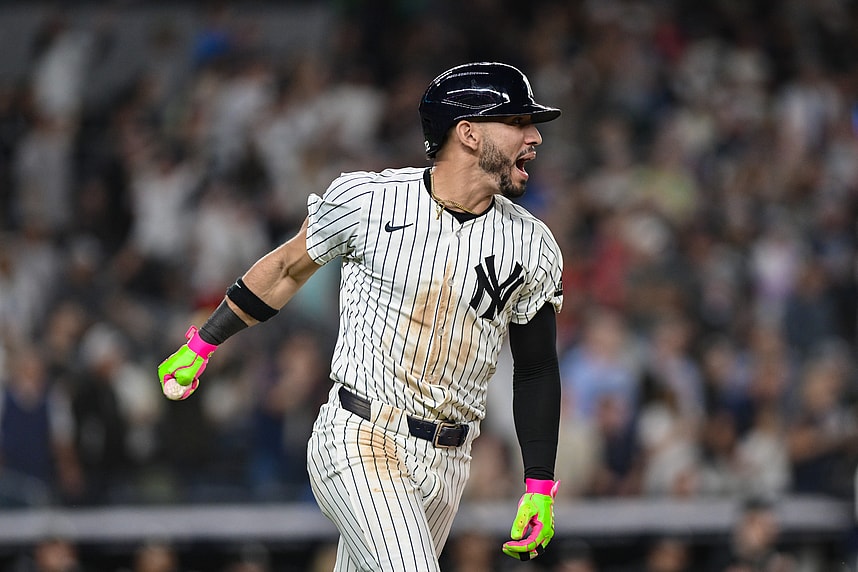
The frustrating thing about Caballero’s bat speed problem is that everything else is already there. His 92nd percentile baserunning run value (4 runs) proves he’s elite on the basepaths. His 90th percentile range (6 outs above average) and 73rd percentile fielding run value (3 runs) demonstrate he’s a genuinely good defensive player. His 73rd percentile sprint speed (28.3 ft/sec) confirms the athleticism.
Last year, he hit .236/.339/.347 with five homers and 49 stolen bases across Tampa Bay and New York. Those are fine numbers for a utility player, but they don’t tell the whole story. In 40 games with the Yankees after the trade deadline, Caballero was legitimately elite. He hit .266/.372/.456 with a 134 wRC+, a 14.7% walk rate, and just an 18.9% strikeout rate.
His plate discipline improved drastically over that small sample, and the Yankees are desperately trying to maintain at least an average level of offensive output from him. His ability to steal bases (92nd percentile baserunning) and play good defense makes him an everyday-caliber player. They just need him to make more frequent contact and hit the ball harder, and speeding up his bat is the best way to achieve those results.
The Shortstop Opening
The timing of Caballero’s bat speed improvements couldn’t be better. With Anthony Volpe sidelined until at least May following labrum surgery, Caballero has a legitimate shot at stealing the shortstop job even after Volpe returns. If he can maintain something close to his post-deadline production (.266/.372/.456) while adding a bit more pop from improved bat speed, there’s no reason he shouldn’t keep the position.
His 90th percentile BB% (12.7%) shows he already has excellent pitch recognition. His 71st percentile LA sweet-spot percentage (36.5%) proves he knows how to get the ball in the air. The missing piece has always been the bat speed to drive those well-struck balls with authority. If Driveline helped him unlock even 70-71 mph average bat speed, that could be the difference between being a useful utility player and a legitimate everyday shortstop.
Sunday’s home run against the Mets is just one swing in February, but it’s an encouraging sign that the offseason work is translating to game action. The Yankees need Caballero to be more than just a speedy defensive replacement. They need him to be a credible offensive threat who can hold down shortstop for two months and potentially beyond. If his bat speed keeps improving, that’s exactly what they might get.

More about:New York Yankees
