
 Alexander Wilson
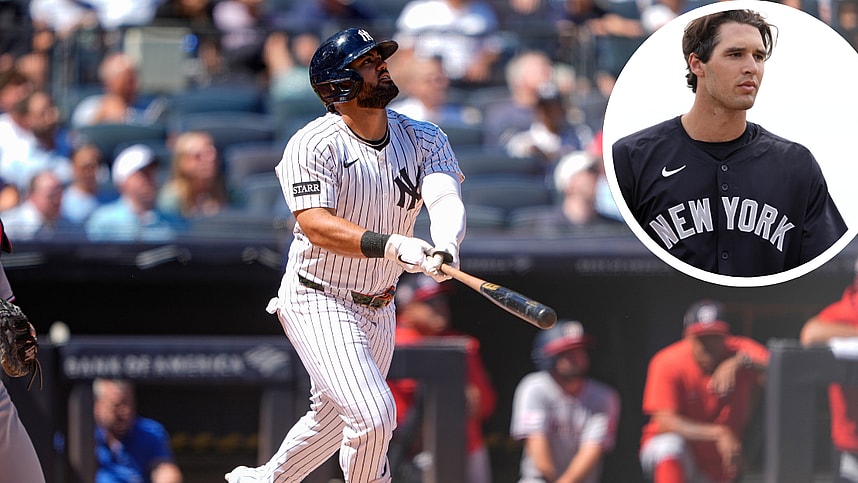
I’m convinced Jasson Dominguez is heading to Triple-A to start the 2026 season, and honestly, it’s the right call for everyone involved. The 23-year-old Yankees outfielder isn’t being demoted because he can’t play. He’s being sent down because the roster math doesn’t work, and more importantly, because he needs daily at-bats against left-handed pitching to fix the glaring hole in his game. This is the most critical year of Dominguez’s career, and sitting on the bench watching Cody Bellinger, Trent Grisham, and Aaron Judge take at-bats isn’t going to develop him into the player the Yankees need.
Here’s the uncomfortable truth: Dominguez is a switch-hitter in name only right now. From the left side, he looked like a legitimate everyday player in 2025, batting .274 with a .768 OPS in 325 plate appearances against right-handed pitching. That’s real production. But from the right side? The story collapsed. He hit just .204 with a .569 OPS in 104 plate appearances against lefties, turning him into a platoon bat for a team that desperately needed versatility during a tight playoff race.
The Platoon Problem That Kills His Roster Value
Dominguez is like ordering a Swiss Army knife and getting a really sharp butter knife instead. You wanted versatility and multiple tools, but what you got is useful in one very specific situation and basically useless everywhere else. That’s where Dominguez sits right now. The Yankees need a fourth outfielder who can hit left-handed pitching, play competent defense, and provide flexibility across multiple positions. Dominguez checks exactly one of those boxes.
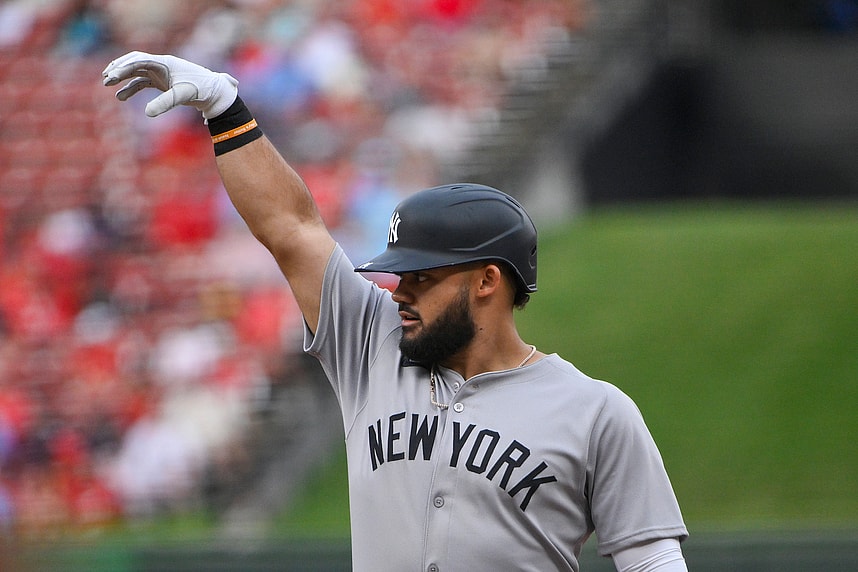
The Statcast profile tells part of the story. His 80th percentile baserunning run value (2 runs above average) and 84th percentile sprint speed show elite athleticism. The 85th percentile hard-hit rate (49.6%) proves he can generate impact when he connects. But the 3rd percentile range in left field (-9 OAA) and the massive platoon splits (.274 vs RHP, .204 vs LHP) make him impossible to trust as an everyday player right now.
Aaron Boone acknowledged the development gap after Dominguez’s first at-bats against lefties this spring. “I think it’s mostly an experience-level thing where, a young man that’s missed a fair amount of time in his development coming up through the system, the biggest thing that suffers from that is the right side because you don’t face a lot of lefties,” Boone said. “So I’m hoping it is something that continues to improve over time as he gets more opportunities.”
The Defense Isn’t Getting Better, and That’s Fine
Let’s be real about Dominguez’s defense. It’s not good, and it’s probably not going to get drastically better. His 3rd percentile range (-9 OAA) in left field last season wasn’t a fluke or a small sample size issue. The Yankees moved him from center field to left field specifically because his defensive limitations were exposed against better competition. Even in left field, which is supposed to be the easiest outfield position in Yankee Stadium, he looked lost at times.
But here’s the thing: I don’t care if his defense stays below average. What I care about is whether his bat can become good enough to carry him despite the defensive shortcomings. If Dominguez can develop into a .270 hitter with 25-homer power from both sides of the plate, the Yankees will live with him being a liability in the outfield. Nelson Cruz made a Hall of Fame-caliber career doing exactly that.
The power metrics are already there. His 85th percentile hard-hit rate (49.6%) and 63rd percentile average exit velocity (90.6 mph) show he can do damage when he squares up a baseball. The 43rd percentile barrel rate (7.0%) is lower than you’d like, but it’s not prohibitive for a 23-year-old who missed significant development time with Tommy John surgery in 2024.
Triple-A Is the Only Move That Makes Sense
The Yankees’ outfield is completely blocked. Judge in right field, Bellinger in center, Grisham in left. That’s $55 million in committed salary before Dominguez’s name even enters the conversation. The fourth outfield spot is going to Oswaldo Cabrera or another utility piece who can provide defensive flexibility and hit from both sides of the plate. Dominguez doesn’t fit that profile right now, and sitting on the bench collecting dust isn’t going to fix his approach against left-handed pitching.
Triple-A Scranton is where Dominguez needs to be. He can get 500-plus plate appearances, face left-handed pitching regularly, and work on his outfield reads without the pressure of a playoff race hanging over every mistake. The Yankees aren’t giving up on him by sending him down. They’re investing in his development by giving him the reps he desperately needs.
Boone has been clear about the plan, even if he won’t say it outright. “I think what gets lost sometimes is that last year was his age-22 season. And he very much held his own,” Boone said in February. “And while he’s still a work-in-progress defensively, I think he’s showing signs he still has a chance to be a really good player in this league.”
The Trade Value Recovery Plan
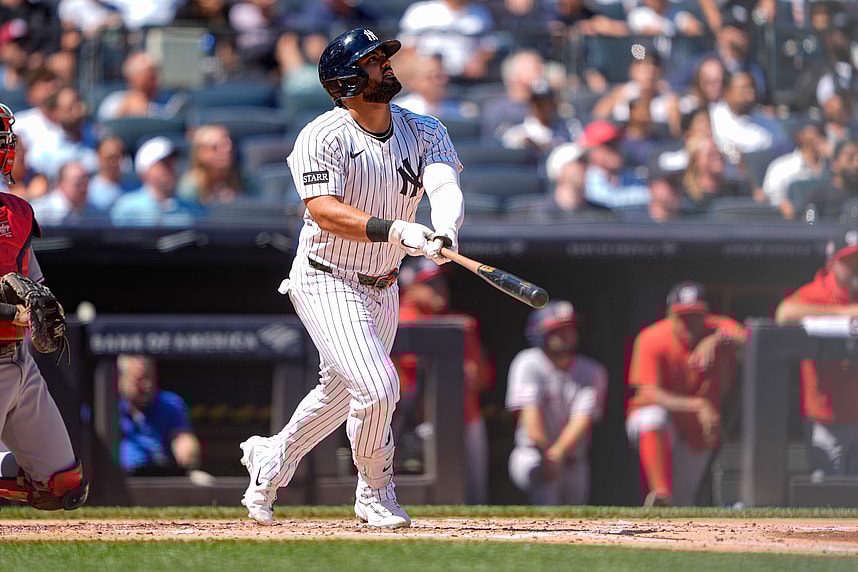
Here’s my projection: Dominguez starts the season in Triple-A, dominates for two months (.280/.350/.500 with improved metrics against lefties), and forces his way back to the Bronx by June when injuries or underperformance create an opening. If he can show dominant production from both sides of the plate at Triple-A, his trade value recovers significantly. Right now, the Yankees would be selling extremely low on a former top-10 prospect. A strong first half in Scranton changes that calculation entirely.
The ceiling is still there. The 80th percentile baserunning, the 84th percentile sprint speed, the 85th percentile hard-hit rate. Those tools don’t disappear. What needs to happen is refinement: better pitch recognition against lefties, improved routes in the outfield, and more consistent barrel contact. All of that requires at-bats, not bench sitting.
This is Dominguez’s make-or-break year. If he can show he’s a legitimate switch-hitter with 25-homer power and playable defense, the Yankees have a building block for the next decade. If he can’t, he becomes a left-handed platoon bat with trade value as a change-of-scenery candidate. The next six months will tell us which version we’re getting.

More about:New York Yankees
