
 Alexander Wilson
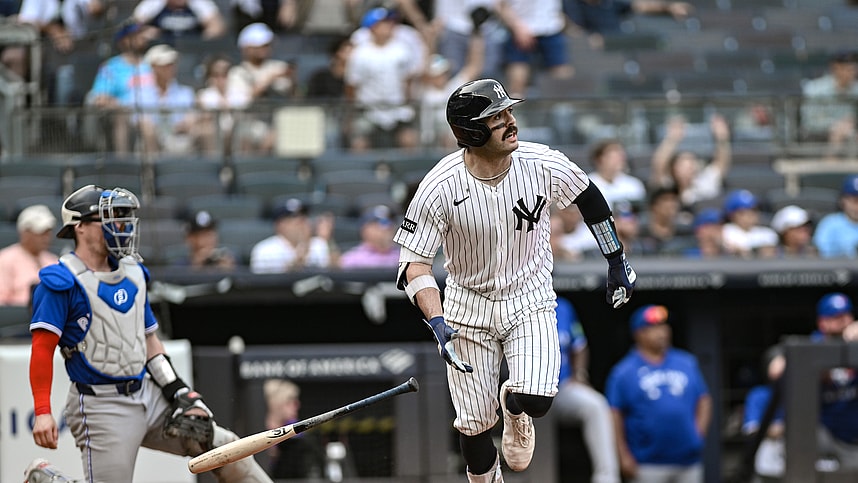
The New York Yankees beat the Boston Red Sox 5–3 on Saturday afternoon, but the story wasn’t entirely positive. Austin Wells, the team’s starting catcher, had a nightmare at the plate, striking out in all four of his at-bats. For a player once viewed as an offensive spark, Wells has quickly reverted back to being a liability in the batter’s box.
Offensive struggles piling up
Wells’ slump has been glaring against Boston. He now has six strikeouts to open the series, a stretch that highlights his inability to make consistent contact. His strikeout rate sits in the 21st percentile at 26% on the season, an alarming figure for someone who was expected to develop into a reliable offensive contributor.
Through the season, Wells is hitting just .210/.267/.437 with 21 home runs and a .704 OPS. While the power is real, the lack of plate discipline overshadows the occasional long ball.
Since the All-Star break, his regression has been even more striking, with a .625 OPS and a slugging percentage dipping below .400. For context, that’s production more in line with a defensive backup than a player who was supposed to be part of the Yankees’ future core.
Defensive excellence still holding value
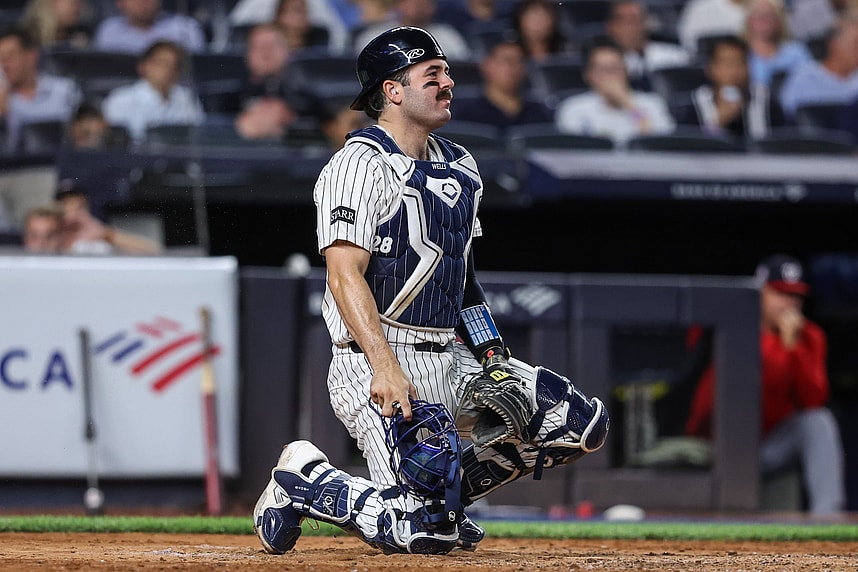
If not for his defense, Wells might already be on the bench permanently. Behind the plate, he’s been one of the best in baseball this season, credited with seven catcher framing runs and producing one of the top strike rates in the league. His ability to steal strikes has provided a boost for a pitching staff that needs every edge it can get.
This defensive strength has kept him in the lineup, even as his bat has disappeared. Catchers who can control games with their framing and presence behind the dish are rare, and the Yankees clearly value Wells’ impact in that regard.
Ben Rice forcing the issue
Still, the Yankees haven’t been blind to Wells’ offensive shortcomings. Ben Rice has earned more opportunities at catcher in recent weeks, largely because his bat offers more upside in an offense that’s searching for balance. Wells’ struggles are giving the Yankees little choice but to mix and match at the position, a strategy that reflects the growing urgency as the postseason chase heats up.
This is where Wells’ inconsistency becomes such a problem. On one hand, the Yankees can’t afford to take his defense out of the lineup. On the other, they also can’t ignore the black hole his bat has become, particularly in games where every at-bat carries weight.
The path forward for Wells
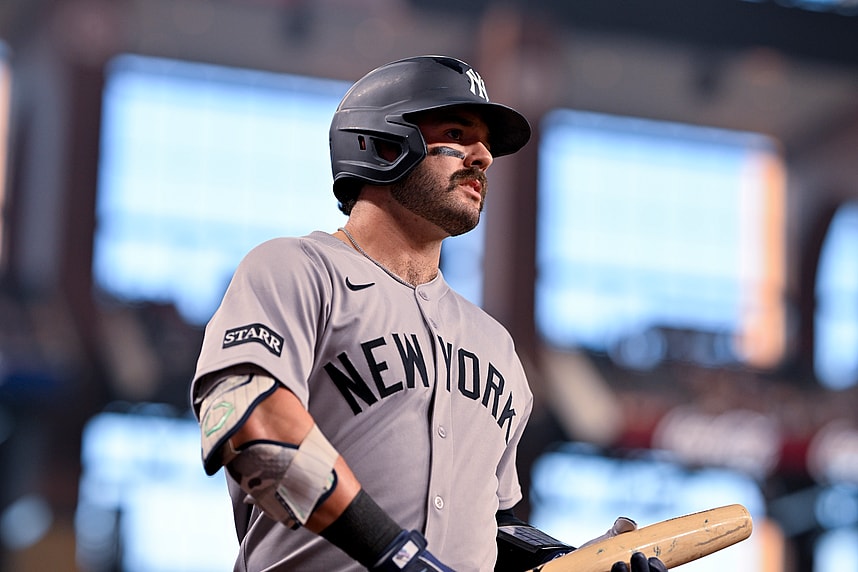
For Wells, the solution comes down to plate discipline. He’s chasing too often, expanding the zone and getting caught flailing at pitches he has no business swinging at. Until he develops a sharper eye and cuts down the whiffs, his offensive numbers will remain below average.
Baseball is often described as a game of adjustments, and Wells now finds himself at that crossroads. His defensive work keeps him relevant, but unless his approach at the plate changes, he risks being remembered as the glove-first catcher who never found enough consistency with the bat.

More about:New York Yankees
