Alexander Wilson
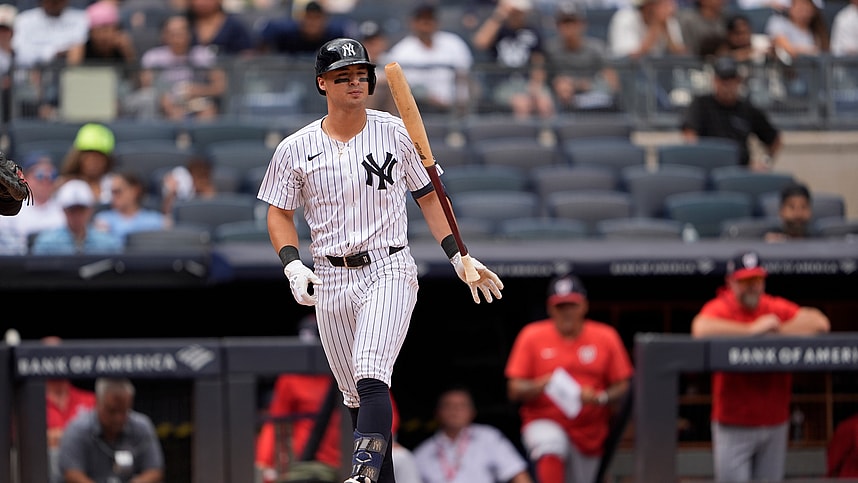
With the New York Yankees officially locked into the Wild Card round this week, manager Aaron Boone faces one of his trickiest lineup choices. The shortstop position is suddenly in flux, with Anthony Volpe battling through injury and inconsistency, while Jose Caballero has surged since arriving at the trade deadline.
It’s a classic postseason dilemma: trust the young cornerstone who delivered last October, or ride the hot hand in Caballero.
Volpe fighting through injury and inconsistency
Volpe, just 24 years old, was expected to build on his rookie campaign, but a partially torn labrum in his throwing shoulder has clouded his second season. At the plate, he’s managed a .211/.271/.392 slash line with 19 home runs and 72 RBIs, good for an 83 wRC+. That production leaves him 17 percent below league average, a tough pill to swallow for a player once projected as a two-way star.
Defensively, Volpe hasn’t been his usual reliable self either. His -6 outs above average suggest real struggles in range and consistency, though he has recently stabilized with three defensive runs saved. The numbers paint a picture of a player grinding through pain and mechanical issues, trying to give his team everything while at less than full strength.
Caballero brings speed, contact, and defense
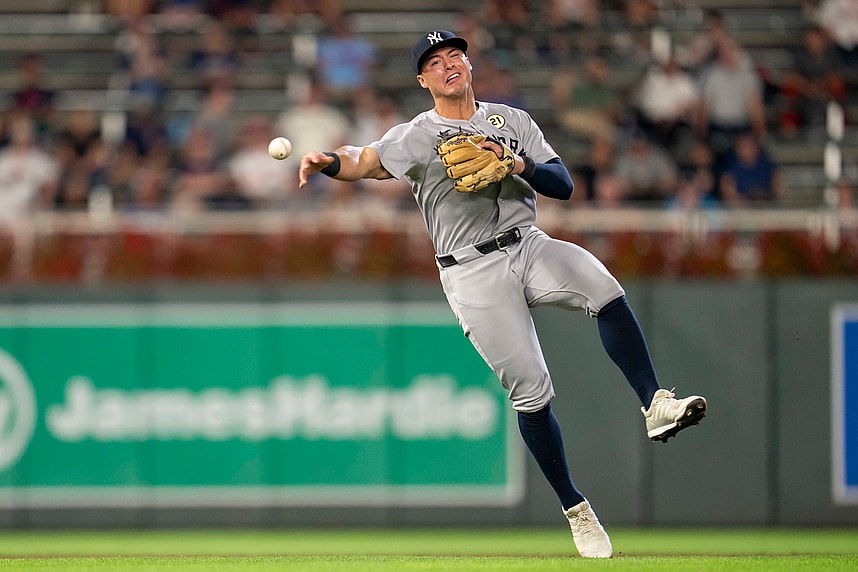
On the other side, Jose Caballero has made an immediate impact. In just 39 games with the Yankees, the 29-year-old is hitting .269/.370/.462 with three homers, nine RBIs, and a stellar 134 wRC+. His patient approach and ability to put the ball in play have lengthened the Yankees’ lineup in ways Volpe hasn’t consistently provided this season.
But Caballero’s greatest weapon is his speed. Since joining New York, he’s swiped 14 bases, complementing the 34 he stole earlier with Tampa Bay. In an October environment where manufacturing runs often decides games, Caballero’s ability to pressure pitchers and defenses alike becomes a massive asset. Defensively, he has also provided steady work in the infield, making him a dependable option.
Boone’s looming choice
The decision is not just about numbers, though. Boone has to weigh Volpe’s playoff pedigree. Last October, the shortstop had big moments that showed his ability to rise to the occasion under pressure. That postseason experience counts for something, especially when dealing with the energy and scrutiny of Yankee Stadium in October.
Still, the leash could be short. Boone may give Volpe the first crack at shortstop but won’t hesitate to pivot if the offense sputters. Caballero’s form makes him too valuable to keep on the bench for long, particularly if Jazz Chisholm’s wrist injury lingers into the Wild Card round.
Tests on Chisholm came back negative, but his absence from Sunday’s regular-season finale leaves questions about his immediate availability. Should he miss time, Caballero would likely slot in at second base, opening another wrinkle in Boone’s plans.
Balancing loyalty and pragmatism
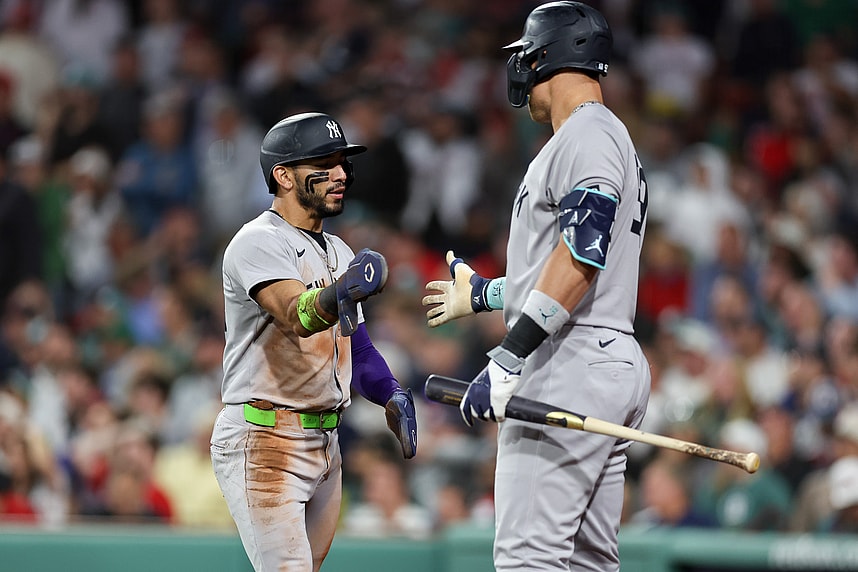
The Yankees’ decision at shortstop mirrors the broader challenge of playoff baseball: balancing loyalty to established players with the pragmatism required to survive elimination games. Volpe represents the long-term future, a potential franchise cornerstone. Caballero, meanwhile, offers a spark right now — a player whose speed, contact skills, and defense could be the difference in a razor-thin postseason series.
The Yankees don’t have the luxury of time. One bad game can shift an entire October narrative. And Boone must decide whether to trust Volpe’s pedigree or Caballero’s momentum when the stakes are at their highest.

More about:New York Yankees