
 Andres Chavez
The number jumps off the page first. Twenty-five million dollars per year is no small commitment, even in a winter where prices feel like they reset every morning.
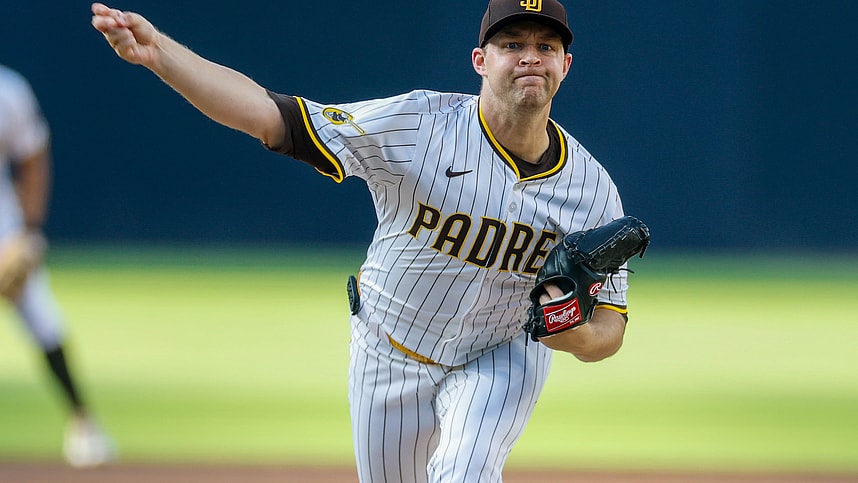
Late Thursday, the San Diego Padres made their choice official, re-signing Michael King to a three-year, $75 million deal that comes with opt-outs after both 2026 and 2027. It is the kind of contract that tells you exactly how the Padres view King right now, and how confident he is in what comes next.
For the New York Yankees, it is also a reminder of what they once had, what they wanted, and what they didn’t push for.
Michael King’s Rise Changed the Conversation
King’s time in New York never screamed future frontline starter. He was valuable, versatile, trusted, but rarely spotlighted. Over five seasons with the Yankees, he logged 115 appearances, only 19 of them starts, and posted a tidy 3.38 ERA across 247.2 innings. He did a little of everything, often without much fanfare. The potential was always there, though.
San Diego changed the framing entirely.
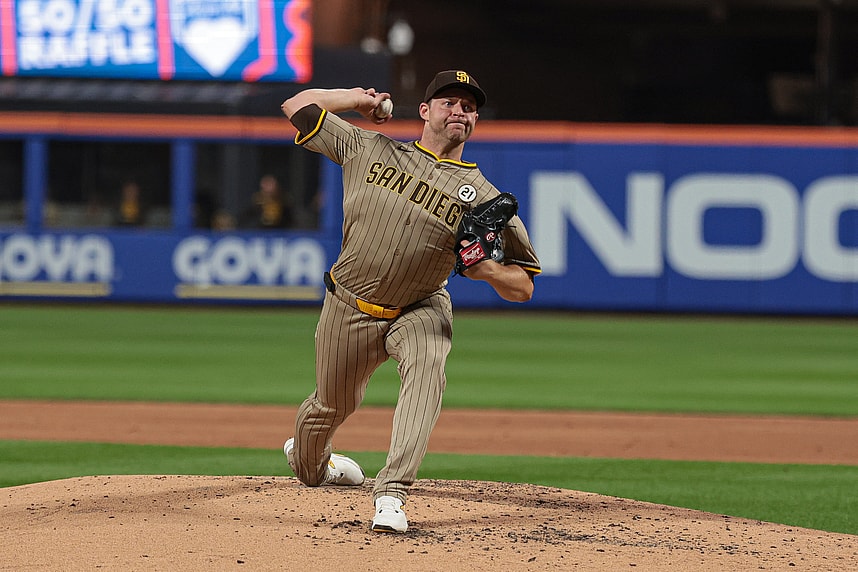
In two seasons with the Padres, King became a full-time starter and looked comfortable doing it. Forty five starts. A 3.10 ERA. Two hundred seventy seven strikeouts. He missed bats consistently and handled a starter’s workload without blinking. The transition did not just work. It unlocked something.
That context matters when evaluating this contract. The Padres are paying for the pitcher King has already become, not the one he might turn into. The opt-outs reflect that confidence on both sides. If King keeps trending this way, he can reenter the market twice with leverage and youth still on his side.
Why the Yankees Watched From the Sidelines
Jon Heyman reported Friday that the Yankees did not make an offer to King and have other targets in mind.
It’s not that the Yanks weren’t interested. It is far more likely they were monitoring the market, saw where the numbers were headed, and stepped away before committing to a formal bid. That is not indifference. That is valuation.
The Yankees know King better than almost anyone. They also know what $25 million per year does to roster flexibility, especially when opt-outs can complicate long-term planning. That calculation does not mean King is not worth the money. It means the Yankees chose to spend it elsewhere.
Rotation Reality Is Driving Everything
Here is where the tension lives.
Gerrit Cole, Carlos Rodon, and Clarke Schmidt are all expected to open the season on the injured list. That is not a theoretical concern. It is the current state of the Yankees rotation. Adding a pitcher like King would have stabilized innings, reduced early-season strain, and bought time.
Instead, the Yankees are choosing patience or perhaps ambition.
Among their reported targets are Cody Bellinger, who is seeking a seven-year deal, and Japanese star Tatsuya Imai, whose price tag could land between $150 and $200 million. Those pursuits signal a front office still swinging for ceiling rather than plugging immediate holes.
That strategy carries risk. It also carries upside.
A Deal That Clarifies Both Sides
For the Padres, re-signing King sends a clear message. They believe his breakout is real, sustainable, and central to their competitive window. For the Yankees, passing clarifies their priorities even if it frustrates fans staring at an injured rotation.
Michael King’s story is not about regret or missed chances. It is about timing, development, and the different paths teams take to solve the same problem.
The Yankees will need arms. They know it. The question now is whether their chosen alternatives can match the reliability they just watched lock itself into a Padres uniform.

More about:New York Yankees
