
 Alexander Wilson
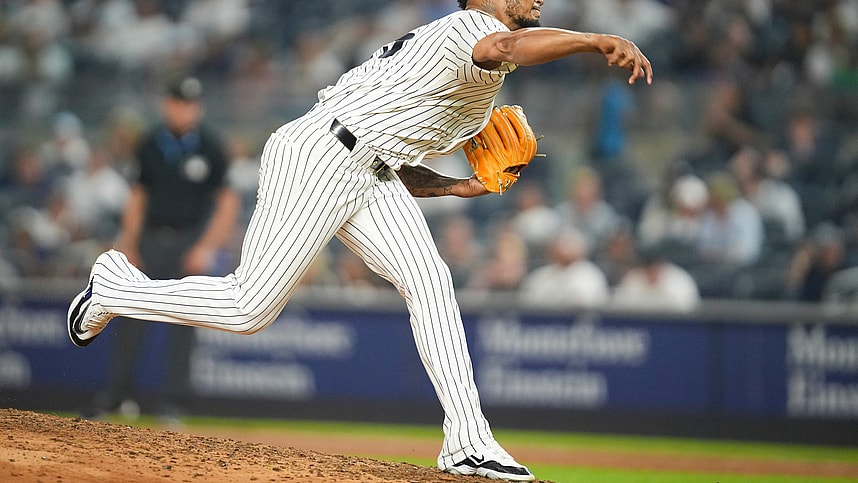
When the New York Yankees acquired flamethrower Camilo Doval at the trade deadline, the expectation was simple: become a dominant late-inning force.
Instead, the 28-year-old has stumbled out of the gate in pinstripes, leaving fans and coaches searching for answers behind the dip.
Doval was supposed to help stabilize a bullpen that needed more high-leverage reliability, yet he’s looked far from the pitcher they envisioned.
Strong past, rocky present
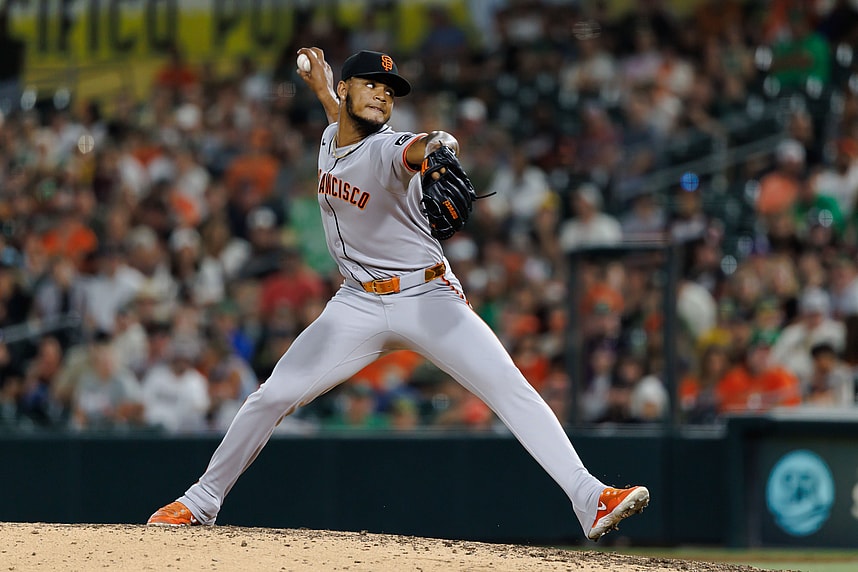
With the San Francisco Giants, Doval pitched to a 3.09 ERA across 46.2 innings, establishing himself as a premier late-game option.
He consistently kept hitters off balance with overpowering velocity and a devastating slider that regularly finished at-bats with authority.
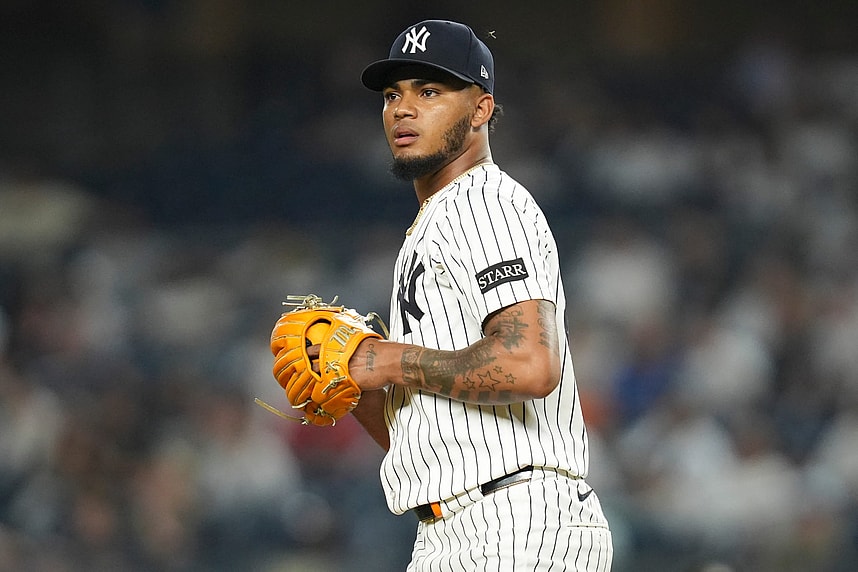
But since arriving in New York, the script has flipped. Over 7.1 innings, his ERA has ballooned to an alarming 7.36.
The strikeouts remain present, but his walks and home runs allowed have spiked, erasing much of the confidence his stuff normally commands.
The command problem
The concerning part isn’t Doval’s raw arsenal — his fastball still touches the upper 90s, and his slider retains its sharp bite.
The issue has been command, particularly with his fastball location. He’s falling behind in counts and putting himself in danger.
Opposing hitters are capitalizing, and even when he induces ground balls, the free passes have created unnecessary traffic on the bases.
His walk rate sits at 13.4%, ranking in the second percentile league-wide — a glaring red flag for any late-inning reliever.
Encouraging metrics offer some hope
It isn’t all doom and gloom, though. Doval’s ground ball rate with the Yankees is a staggering 73.9%, well above his norm.
That suggests hitters still aren’t squaring him up consistently when he executes pitches, but lapses in control magnify his mistakes.
His slider, when located, remains a wipeout pitch, capable of finishing hitters in key moments and generating swing-and-miss chances.
The Yankees aren’t questioning the talent; they’re questioning his ability to string together consistent command and limit unnecessary baserunners.
A mental battle as much as a physical one
What stands out most is the likelihood that Doval’s struggles aren’t purely mechanical — they’re psychological.
Pitching under the bright lights of Yankee Stadium is a unique challenge, and not every player adapts quickly to the pressure.
Doval’s arsenal suggests he should thrive, but confidence and rhythm are fragile commodities for any reliever adjusting to new surroundings.
Every outing becomes a test of resilience, and until he proves he can stack strong appearances, doubts will linger.
The long-term view
The Yankees didn’t acquire Doval for a few weeks of work; he’s under team control until 2028.
That means there’s time for him to recalibrate, refine his approach, and return to the form that made him so coveted.
The coaching staff will likely emphasize simplifying his approach, pounding the strike zone, and trusting his natural stuff to carry him.
One strong outing could flip the momentum, but each stumble makes the adjustment period harder for both the player and team.
The path forward
For now, manager Aaron Boone must balance patience with urgency. The Yankees can’t afford meltdowns in games that matter.
Doval doesn’t need to be perfect immediately, but he does need to show progress — confidence-building appearances where command holds.
- The NY Yankees’ last hitter in the lineup could be one of their most dangerous
- Yankees 7, Giants 0: Good news and bad news from a brilliant opener
- Yankees reveal Opening Day lineup to face Giants
Against a rival like the Boston Red Sox, his recent outing — two hits and an earned run — only heightened concerns.
The Yankees hope those bumps are temporary, not defining. Because if he regains form, Doval could still be the bullpen weapon they desperately envisioned.

More about:New York Yankees
