
 Alexander Wilson
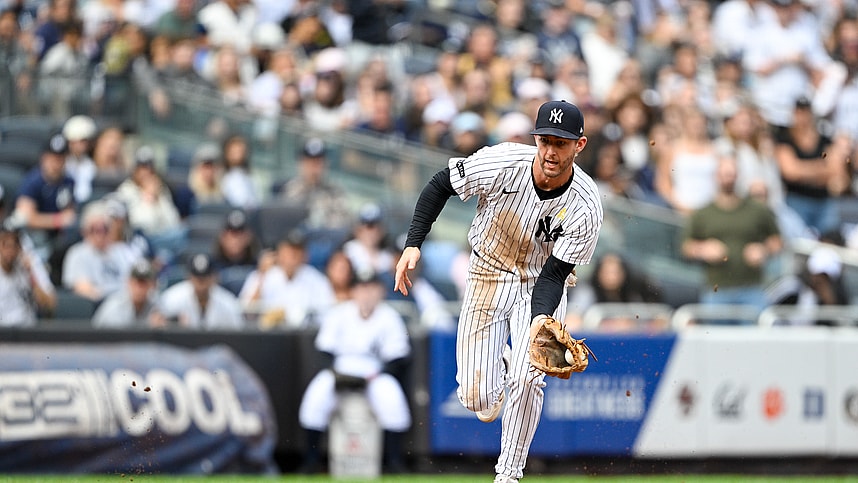
Let’s just say it plainly. Ryan McMahon is hitting .077 with a 29 wRC+, meaning he has been 71 percent worse than the average major league hitter through eleven games. He has a -0.3 WAR to start the year. His strikeout rate ranks in the 3rd percentile. His defense, which was supposed to be the whole point of acquiring him, has produced -2 outs above average. The New York Yankees are 8-3 and winning in spite of him rather than with him, and that needs to change or the front office is going to have a serious conversation about what $32 million over the next two seasons is actually buying them.
The Numbers Are Not a Fluke
The hard-hit rate gives McMahon defenders something to hold onto, and I get it. A 98th percentile hard-hit rate is not nothing. When he makes contact, the ball moves. The problem is that the contact is not happening often enough to make any of that matter, and his Statcast page tells the story clearly. He ranks in the 10th percentile in whiff rate and the 3rd percentile in strikeout rate. That means out of every hundred qualified hitters in baseball, 97 of them are making contact more frequently than McMahon is. Elite exit velocity on the balls he does hit is genuinely exciting right up until you realize he is swinging through more pitches than almost everyone in the sport.
Aaron Boone believes there’s value under the hood, but it’s a rusty car with a one-trick engine.
“Mac’s a good major league hitter. It’s 10 games in, okay? He’s scuffling right now, but the reality is, the last three games, he’s been on base four times too, with walks and hits and big at-bats. We want him to improve even who he’s been obviously in his career, and he’s off to a slow start right now, but a number of our guys are, as well. He’ll get it rolling and trust that he will, especially against some of these good right-handed matchups.”
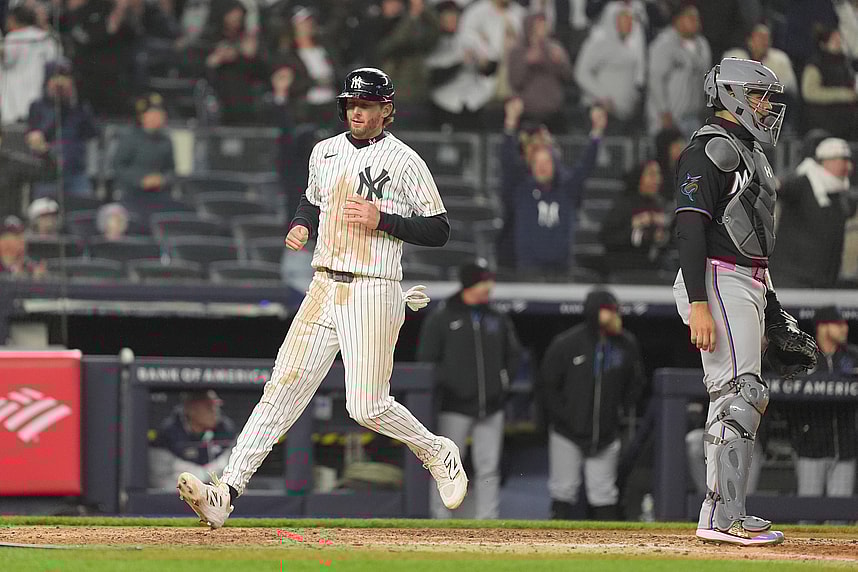
The walk rate at 21.2% looks encouraging on the surface, but walks generated by a hitter who is not threatening the baseball are worth considerably less than walks earned by a hitter pitchers genuinely fear. McMahon is getting walks partly because pitchers can pitch around him without much consequence. When you combine a 39.4% strikeout rate with a .077 batting average, what you have is a hitter who is not punishing pitchers for throwing strikes either.
The Coors Effect Is a Real Concern
Something that does not get discussed enough is the stadium adjustment McMahon is dealing with. He spent his entire career, nine seasons, in Colorado, where Coors Field inflates offensive numbers in ways that no other ballpark in baseball can match. Hitters who produce at average or slightly below-average rates in Denver frequently look below average or worse when they move to neutral or pitcher-friendly environments.
McMahon’s career numbers in Colorado versus the road tell part of this story. His best offensive seasons coincided with years when he was getting significant time at home. The Yankees were acquiring a player whose raw metrics always looked better than his road production suggested, and now he is playing every game on the road by comparison. The stance adjustment was supposed to address the contact issues. Through eleven games, it has not.
That does not mean the adjustment cannot work eventually. Mechanical changes take time to become automatic, especially against major league pitching. But the Coors discount was a legitimate concern when the trade was made last July, and at this point it has to be part of the honest evaluation of what the Yankees got.
What the Yankees Actually Need
Third base does not have to be a black hole in this lineup. The Yankees have Aaron Judge, Cody Bellinger, Ben Rice, and Giancarlo Stanton capable of carrying significant offensive weight, and they have been doing exactly that. But a starting third baseman hitting .077 with a -0.3 WAR is not neutral. He is actively hurting the team in close games where lineup construction matters, and the bottom of the order has been consistently unproductive through the first two weeks of the season.
Amed Rosario’s two-homer performance Tuesday against Oakland showed there is a viable alternative when the matchup calls for it. Rosario is not an everyday solution, but he has demonstrated real value against right-handed pitching with a career .800 OPS in that split. If McMahon cannot start producing something resembling adequate offense over the next three or four weeks, Aaron Boone will have to get creative with how he constructs the third base side of his lineup rather than continuing to pencil in a player who is currently one of the least productive hitters in baseball.
The Bigger Picture
McMahon has two years and $32 million remaining after this season. Sitting him is not going to make that contract disappear, and dealing him would require the Yankees to eat significant money while getting very little in return for a player who is currently performing this poorly. They are stuck with him in the short term, which makes the internal solution, a genuine offensive turnaround, the only realistic path forward.
If the swing adjustment kicks in and the strikeout rate drops to a manageable level, everything else about his profile is functional. The defense should return to Gold Glove form. The hard contact will produce results when the whiffs stop. But that if is doing a lot of work right now, and the calendar is not standing still.

More about:New York Yankees
