
 Ryan Garcia
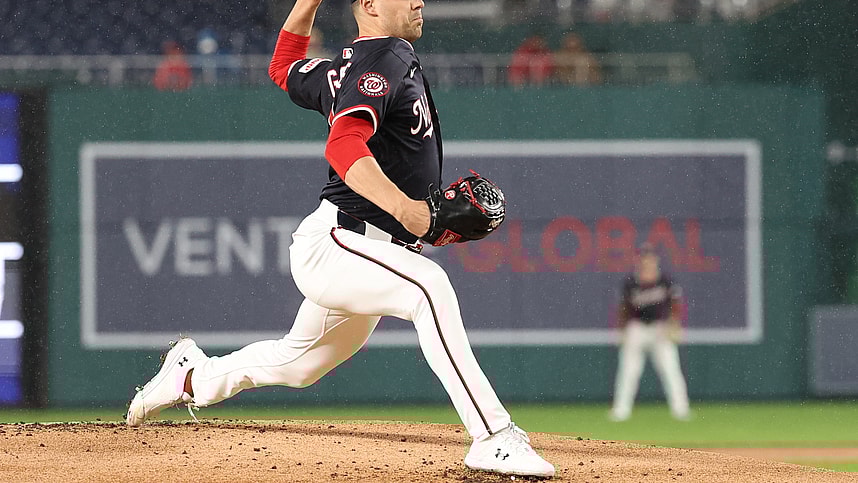
The buzz around MacKenzie Gore to the Yankees reported by Andrew Golden of The Washington Post has certainly sparked the fanbase on social media.
While it’s unclear whether the team has had deep conversations with Washington or not, the Yankees’ interest in Gore is real as was their interest in reliever Jose Ferrer, who was traded to the Mariners.
New GM Paul Taboni has been clear that he is entertaining any and all offers for Gore, but why would Brian Cashman trade for a pitcher with an ERA over 4.00 to solve their rotational issues?
A bet on their player development headed by Sam Briend and Matt Blake on the pitching side, MacKenzie Gore could be the exact type of bet the Yankees end up extremely happy they made by season’s end.
READ MORE: Yankees ‘Ready to Pounce’: Adding a star utility man, among other quality pieces
MacKenzie Gore Provides Yankees With High-Octane Rotation Addition
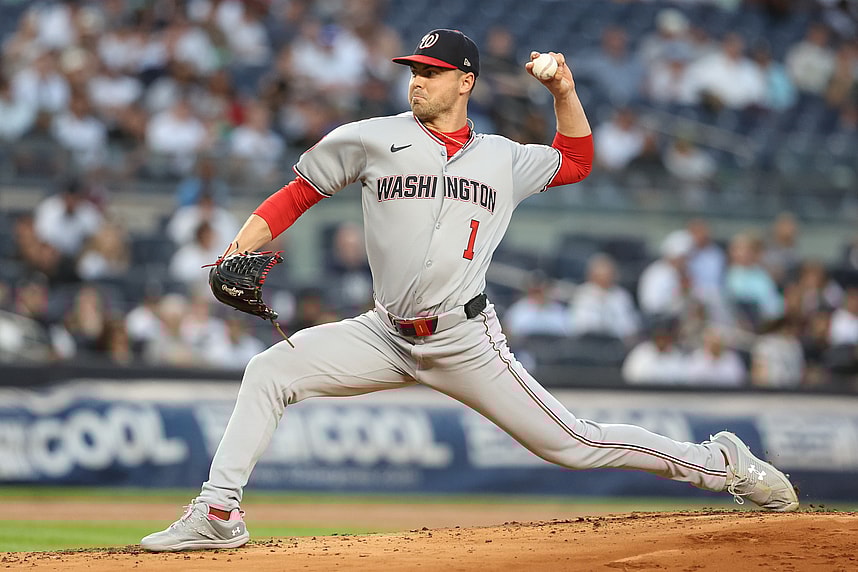
The pitch that has headlined MacKenzie Gore’s arsenal is a firm four-seam fastball that sits around 96 MPH and has excellent extension, allowing it to play harder than it actually is.
With 17 inches of vertical movement the heater has the profile of an excellent pitch, but the results this past year were lackluster as it recorded 0 Run Value and a .483 opponent SLG%.
Last season the left-hander found himself struggling to put batters away due to an relying too much on his four-seamer, which he used at a 49.2% clip in 2025, which goes against the league-wide trend of embracing a deep mix.
Among starters with at least 150 IP, Gore was seventh in four-seam usage, with no pitcher under these qualifications throwing a different fastball variant such as a cutter or sinker more than he threw his primary heater.
It’s easy to look at the results on Gore’s non-fastballs and think that he can’t decrease the fastball usage, but digging a bit deeper into the metrics reveals a different story.
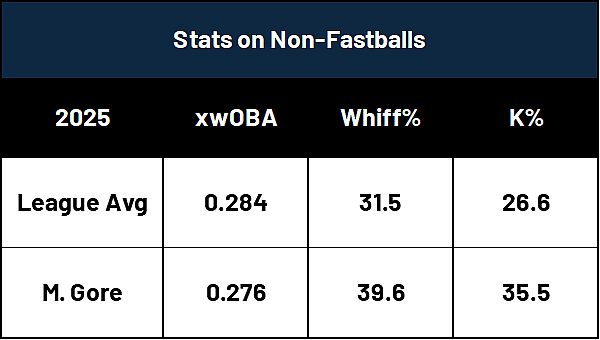
While it’s fair to point out that if Gore threw these pitches more it would be less effective, the average starter was at a 46% usage rate while he was at a 44.9% usage rate.
Improving the quality of secondary while simulatneously increasing the usage should help the left-hander improve his run prevention and decrease the HR/9 issues he had.
This isn’t a pitcher who could easily add a sweeper or a pitch that moves laterally and its why a less forward-thinking organization such as the one Mike Rizzo ran with the Nationals couldn’t help him take that next leap.
MacKenzie Gore’s pitcher archatype isn’t one that’s unfamiliar to the Yankees, in fact you can look at the top of their 2025 rotation to see
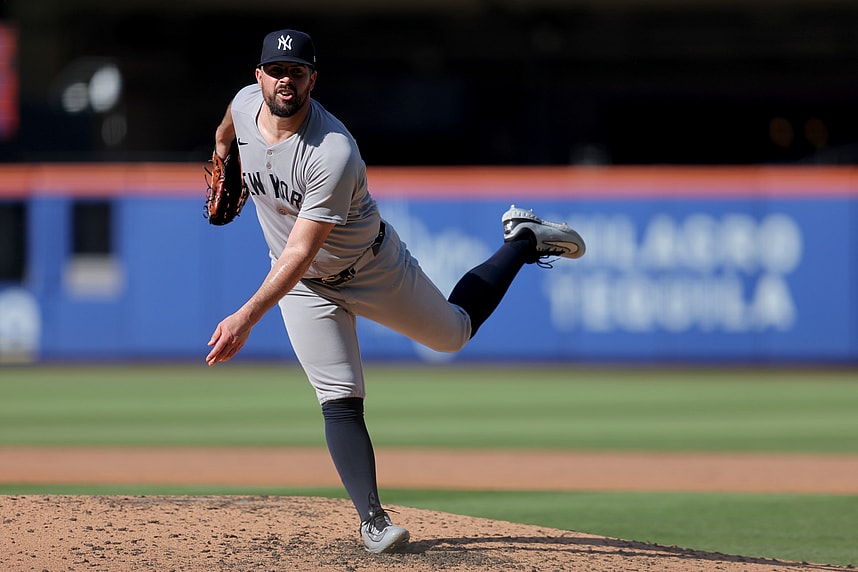
Carlos Rodon, similar to MacKenzie Gore, was a left-handed pitcher who didn’t have a deep repertoire and struggled to move the ball laterally away from or into batters.
When the four-seamer that ate through lineups was suddenly not so overpowering, he had to expand his repertoire and refined his previously useless changeup while adding a good sinker.
The Yankees could very much do the same with Gore, especially with Desi Druschel who is excellent at pitch design being back on the Major League staff.
Washington was awful at implementing data at the big league level while the Yankees excel at it, and we’ve seen former top prospects realize their full potentials in these kinds of swaps.
The aforementioned Rodon took time to figure himself out and Gerrit Cole became a true ace when he went from the archaic Pirates to the science-driven Astros in 2018.
Perhaps the Yankees strike out and miss on MacKenzie Gore, but if they land him, he could be a big swing-and-miss weapon for this rotation and push this staff inside the top 10 at a low financial cost.

More about:New York Yankees
