
 Alexander Wilson
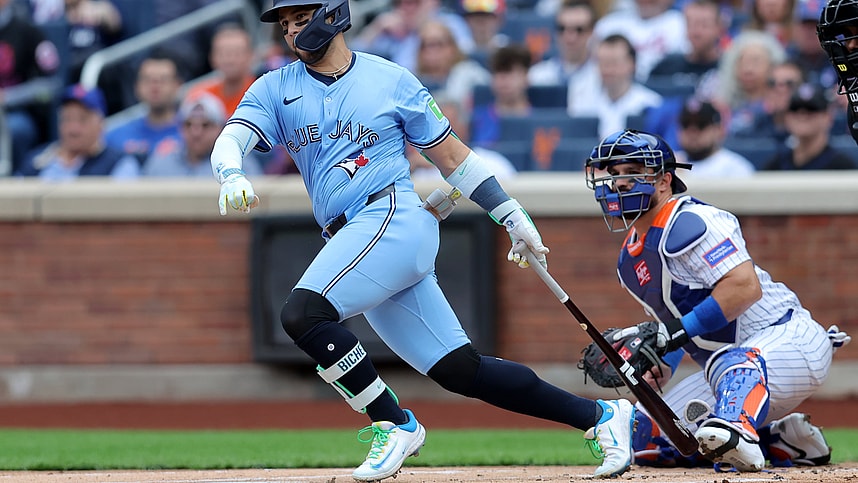
The New York Yankees are in a tricky position entering the offseason. With Anthony Volpe expected to miss the start of 2026 while rehabbing a partially torn labrum in his throwing shoulder, the team needs shortstop depth beyond Jose Caballero. But there’s a difference between adding support and splurging on a big-name free agent — and that’s where Bo Bichette comes in.
Bichette is one of the most talented bats available, but his defensive shortcomings make him an awkward fit for a team that desperately needs stability at shortstop, not another question mark.
The Toronto Blue Jays’ star is expected to command a seven-year deal worth around $182 million, an average of $26 million per season. That kind of investment would signal a long-term commitment — and the Yankees are currently on the fence about Volpe’s long-term future.
Bichette’s offensive excellence is undeniable
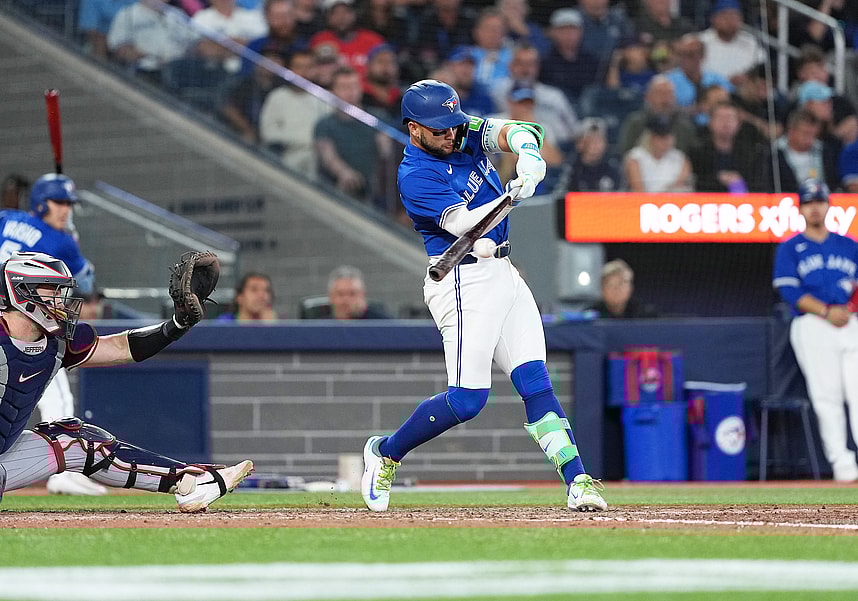
It’s not hard to see why Bo Bichette will draw attention. He’s a pure hitter, capable of driving the ball to all fields and carrying an offense for stretches. This past season, he hit .311/.357/.483 with 18 home runs and 94 RBIs. His 14.5% strikeout rate and 6.4% walk rate speak to an advanced plate approach, and his 134 wRC+ means he was 34% better than league average at the plate.
Offensively, he checks every box. The problem is that defense still matters — especially for a team built on pitching and run prevention.
Defense is the glaring red flag
For all of Bichette’s offensive polish, his glove continues to hold him back. He posted -12 defensive runs saved and -13 outs above average across 1,139 innings at shortstop in 2025, ranking among the worst defenders in baseball at the position.
The long-term expectation is that he’ll need to move to second base. But for the Yankees, that creates another issue: Jazz Chisholm already occupies the position and remains one of the few reliable defenders in the infield. Moving Chisholm just to accommodate Bichette’s limitations would be counterproductive, especially considering how much the Yankees have emphasized defensive versatility over the past few seasons.
No clear path for a fit
In theory, the Yankees could sign Bichette, keep him at shortstop for a year while Volpe recovers, and then transition him to second base later. By 2027, top infield prospect George Lombard Jr. should be ready to debut, giving the organization another long-term option.
But that’s a lot of moving parts for a deal that doesn’t make much sense financially or strategically. Paying $182 million for a player who might only fill a need for one season — and poorly at that — would be a risky and unnecessary gamble.
The Yankees have smarter options
General manager Brian Cashman has always preferred moves that create immediate and balanced impact. Signing Bichette would strain payroll flexibility, complicate positional fits, and do little to fix the team’s defensive concerns. The Yankees need short-term support at shortstop, not a long-term logjam.
With roughly $70 million in spending power and other priorities — including Trent Grisham’s $22 million qualifying offer and a possible Cody Bellinger reunion — investing heavily in Bichette feels like a misstep.
In the end, this is one of those times when the Yankees are better off saying no. Bo Bichette’s bat is tempting, but the glove tells the real story — and it’s not one that fits in the Bronx.

More about:New York Yankees
