Alexander Wilson
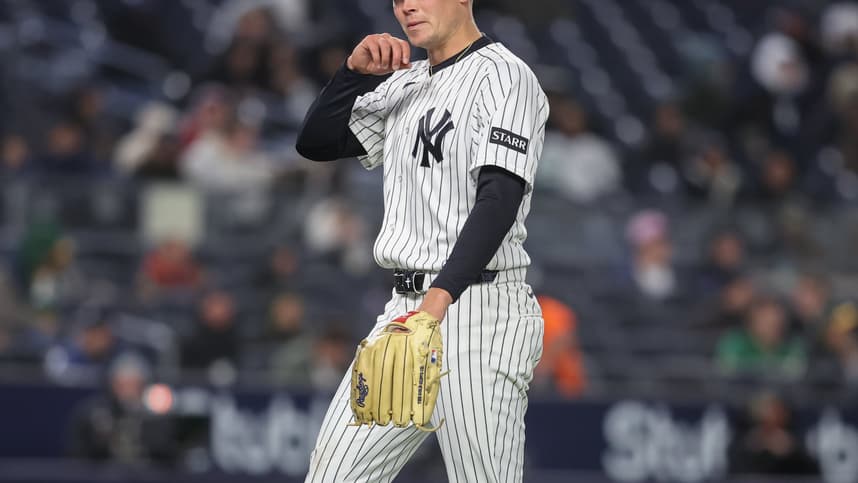
Will Warren went seven innings against the Kansas City Royals on Saturday, striking out 11 batters on 93 pitches, allowing five hits and two earned runs on a solo home run in the seventh before Aaron Boone took him out. If not for that one pitch, it’s a shutout. What the New York Yankees are getting from their 26-year-old right-hander right now is not what anyone reasonably expected heading into the season.
Last year, Warren posted a 4.44 ERA over 162.1 innings. He was a back-end rotation arm the Yankees needed to survive while Gerrit Cole recovered from Tommy John surgery. Nobody was calling him a legitimate weapon. He was a placeholder, a necessary piece in a difficult situation. Through his first several starts of 2026, that conversation has completely changed.
The Numbers Are Not a Mirage
Warren’s ERA sits at 2.49. His strikeout rate has climbed to 11.01 per nine innings, a career high. His walk rate has dropped to 2.13 per nine. His ground ball rate is at 50.7%, well above the league average and a meaningful improvement from where it was a year ago. His left-on-base rate is at 72.6%, which means he’s consistently escaping trouble when runners do reach base. And his velocity has hit an all-time high of 94.1 mph on the four-seamer, which is the pitch that unlocks everything else in his arsenal.
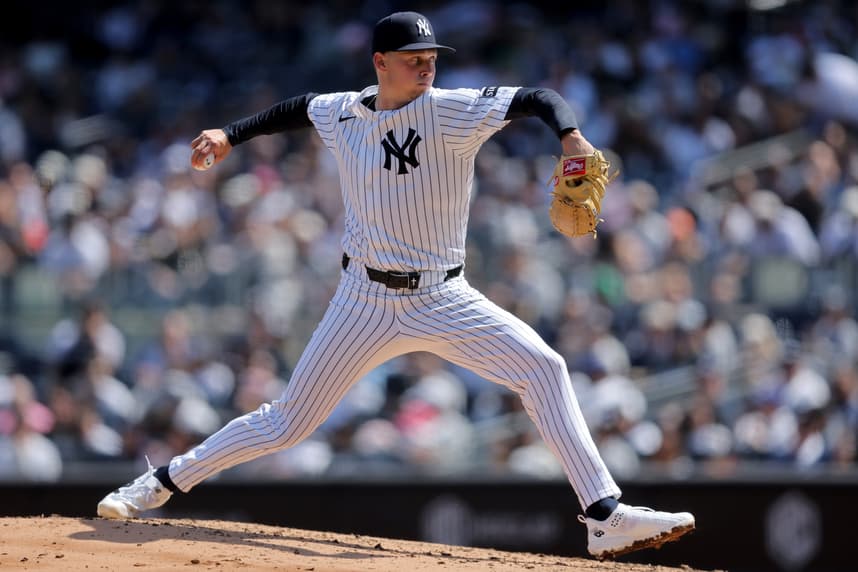
The underlying contact numbers show a pitcher who is still giving up some hard contact when batters make contact, which is the one thing to watch as the season progresses. But hard contact that turns into ground balls is significantly less damaging than hard contact that gets in the air, and Warren’s elevated ground ball rate is handling that risk well.
What Actually Changed
The velocity is the lead story. At 94.1 mph, Warren’s four-seamer is a different pitch than it was at 92 or 93. It gives him a genuine swing-and-miss weapon at the top of the zone, and it makes his sinker more effective by comparison because hitters have to respect the elevated fastball. When you add his sweeper into that mix, which he’s deploying more selectively and with better command than last year, you get a pitch sequencing puzzle that batters haven’t solved through the first month of the season.
The walk rate improvement is just as important as the velocity. Warren was always a pitcher with good enough stuff to succeed if he could stay ahead in counts, and this year he’s doing that with consistency that wasn’t there in 2025. Fewer walks mean cleaner innings, which means lower pitch counts, which means seven innings on 93 pitches against a major league lineup. That is a pitcher pitching efficiently, not surviving.
What This Means for the Yankees
The Yankees entered the season expecting Warren to eat innings and give them a chance to win most nights. What they’re getting instead is a pitcher who has elevated his game to the point where he’s arguably been their second-most consistent starter behind Max Fried. When Gerrit Cole and Carlos Rodon return, Warren will slide back in the rotation order, but he’s made it clear he belongs in a meaningful role on a competitive team.
He was supposed to keep the seat warm. Instead, he’s made it his.

More about:New York Yankees