
 Alexander Wilson
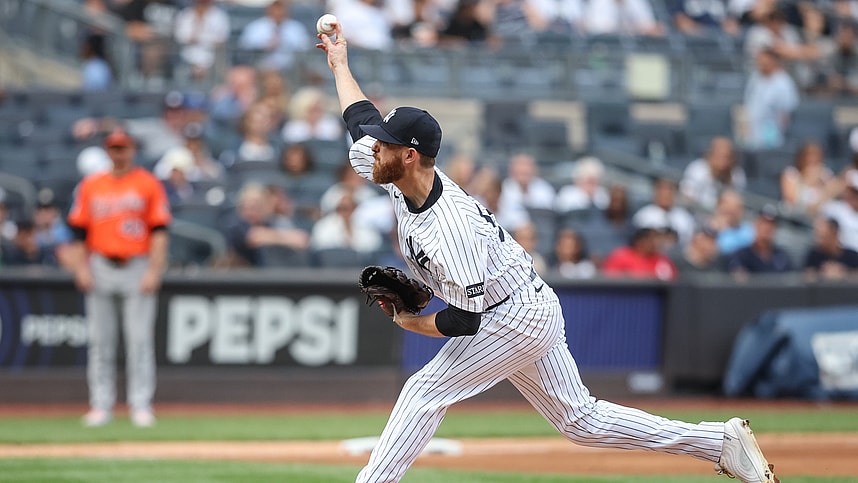
The offseason narrative in New York has become a tale of two checkbooks. On one side of town, the Mets are aggressively fortifying their relief corps, poaching both Devin Williams and Luke Weaver to construct a high-leverage death star. On the other side, the Yankees are scouring the clearance aisle, hoping to turn discounted spare parts into serviceable arms.
After watching their crosstown rivals spend big, General Manager Brian Cashman made a decidedly more modest move, deciding that the Yankees re-sign Paul Blackburn to a one-year, $2 million contract.
It is a signing that screams depth rather than dominance, but it highlights the Yankees’ current strategy of prioritizing underlying metrics over surface-level results.
Blackburn’s 2025 campaign was objectively forgettable on paper; the 32-year-old tossed just 39 innings and posted a bloated 6.23 ERA, hardly the numbers of a pitcher expected to replace the likes of Weaver. In fact, the team was so turned off by their former reliever’s refusal to adapt that reports surfaced explaining why the Yankees refused to offer Luke Weaver a single cent to stay, opting instead to let him walk to Queens while they doubled down on projects like Blackburn.
The algorithm hides the best Yankees news; make sure you pin Empire Sports Media on Google News so you don’t miss a beat.
The Metrics Tell a Different Story
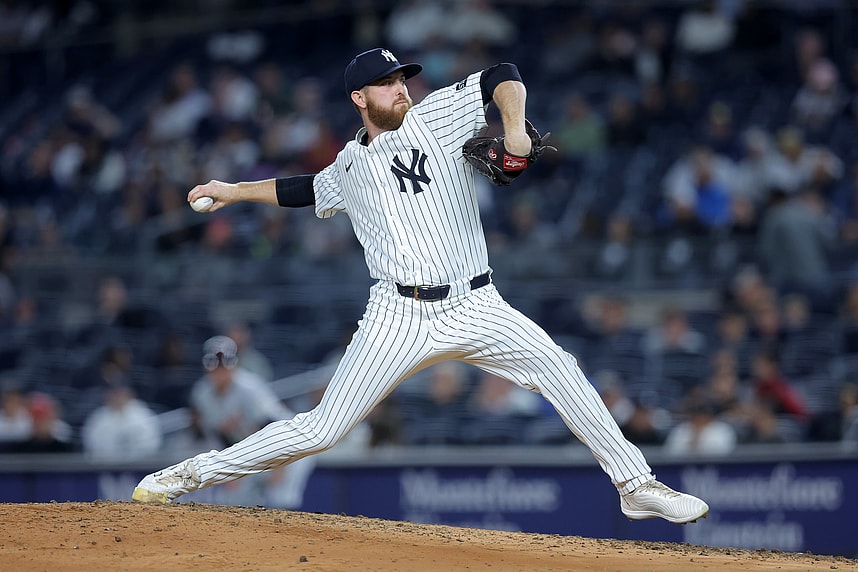
Despite the ugly ERA, the Yankees’ internal data suggests Blackburn was the victim of bad luck rather than bad pitching. The front office is infatuated with his ability to suppress hard contact, as he ranked among the best in baseball in average exit velocity allowed last season. He fits the mold of a pitch-to-contact specialist who limits damage, evidenced by his low walk rate and ability to keep the ball in the yard.
Perhaps the most encouraging sign for Matt Blake and the coaching staff is Blackburn’s ability to expand the zone. He posted an above-average chase rate of 29.6%, proving that even without elite stuff, he can fool hitters into getting themselves out. The Yankees are betting that if they can clean up his defense and optimize his usage, those underlying numbers will eventually translate into a respectable ERA.
The “Pitching Lab” Is Already at Work
The Yankees have already begun tinkering with Blackburn’s arsenal to maximize his strengths. He primarily utilizes a sinker, cutter, sweeper, and curveball, sitting around 92.6 mph with the sinker. He doesn’t blaze with velocity, but he generates weak contact, which is the currency the Yankees are currently trading in.
Toward the end of last season, the team initiated a significant shift in his approach, forcing him to increase his sinker usage by over 10% while virtually eliminating his four-seam fastball. The strategy is clear: stop trying to blow pitches past hitters and start relying on the heavy sinker and cutter to bore in on hands and break bats. This bargain bin shopping might frustrate fans watching the Mets land marquee names, but the Yankees are banking on their pitching lab to turn a $2 million investment into a valuable innings eater.

More about:New York Yankees
