
 Alexander Wilson
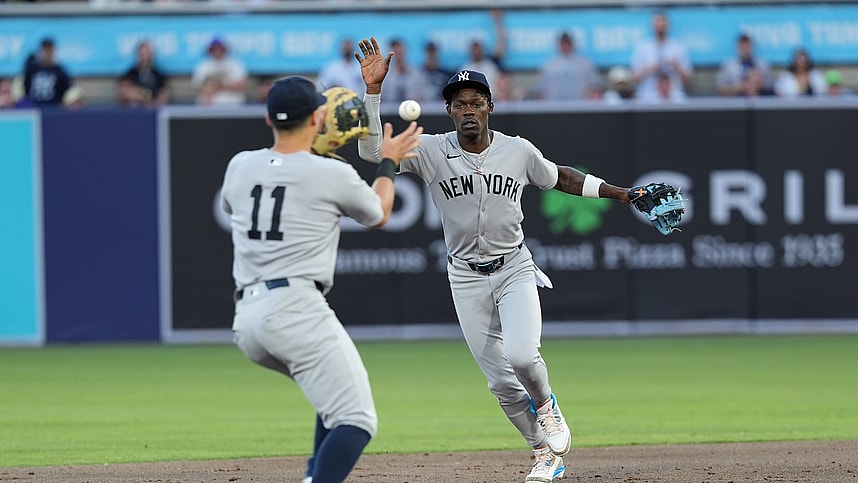
Sometimes, you finally get your missing puzzle piece back, only to wonder if you’re forcing it into the wrong corner.
That’s where the New York Yankees find themselves with Jazz Chisholm Jr., who’s ramping up toward a return from a significant oblique injury.
While his presence will be a welcome boost, the decision on where to play him could open up more questions than answers.
Chisholm’s return from injury is moving fast
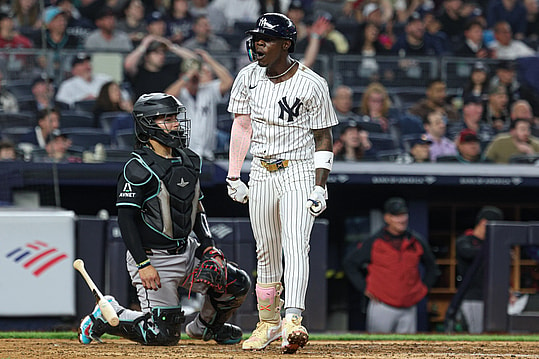
After suffering three oblique tears, the 27-year-old is surprisingly ahead of schedule and began a rehab assignment this week.
Manager Aaron Boone confirmed Wednesday that Chisholm has been swinging fully and taking infield reps with no lingering discomfort.
That’s a great sign for a team that’s been plugging holes at third base with Oswald Peraza, who’s offered glove work but little at the plate.
Chisholm brings a spark — even with a .181 batting average, he launched seven home runs with a .714 OPS before the injury.
His bat has struggled, but the power is real
Despite the underwhelming average, Chisholm’s underlying numbers paint a more encouraging picture of his offensive ceiling.
He ranks in the 88th percentile in barrel rate at 14.9%, which means when he makes contact, it’s often explosive.
That power production adds a different layer to a Yankees lineup that already thrives on slugging, but the consistency is still a work in progress.
The real debate isn’t about his health or power — it’s about where he fits defensively once he returns.
The infield shuffle could cause problems
Chisholm has been one of the best defensive second basemen in the league this year, recording three outs above average at the position.
His range, athleticism, and quick twitch allow him to turn tough double plays and cover ground few others can.
Second base is a premium position defensively, and Chisholm fits it like a glove — which is why moving him feels like a mistake.
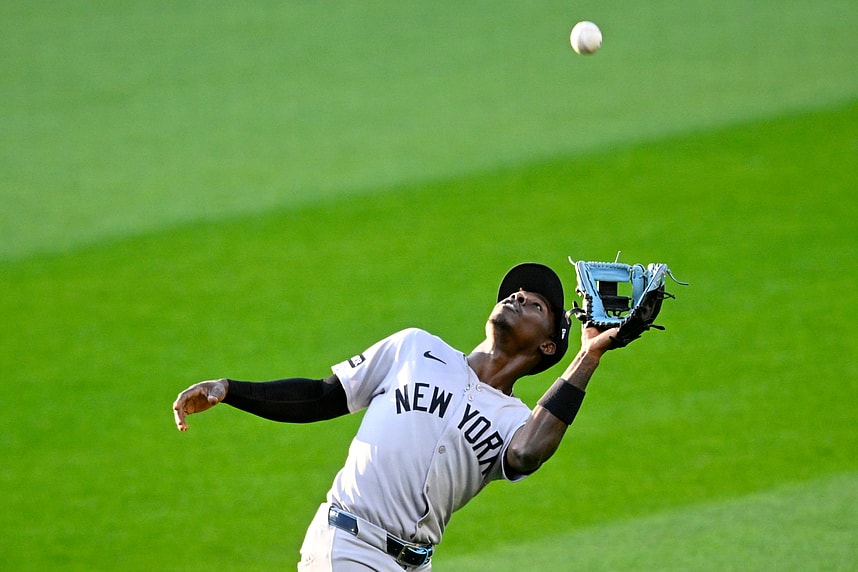
Boone has floated the idea of shifting Jazz back to third base, where he played 400.1 innings in 2024.
The hot corner experiment brings risk
At third, Chisholm held his own — a .940 fielding percentage, six outs above average, and -2 defensive runs saved.
But it was his first real stint at the hot corner, and second base remains his natural position, one he prefers and excels in.
DJ LeMahieu is solid defensively at either spot, but his age and limited range make second base a bigger challenge for him than Jazz.
Forcing Chisholm back to third might make things look neat on paper, but it risks disrupting what was clearly working.
Let the game-changer play where he’s best
The Yankees are finally getting back one of their most dynamic defenders, someone who changes the energy on the field.
Giving him the freedom to play where he’s most comfortable — and most impactful — shouldn’t be a debate.
Sometimes the simplest answer is the right one: put your best athletes where they thrive and let them do what they do best.
READ MORE:
Yankees 1, Angels 0: Good news and bad news as Yanks pitch their way to a sweep

More about:New York Yankees
