Ryan Garcia
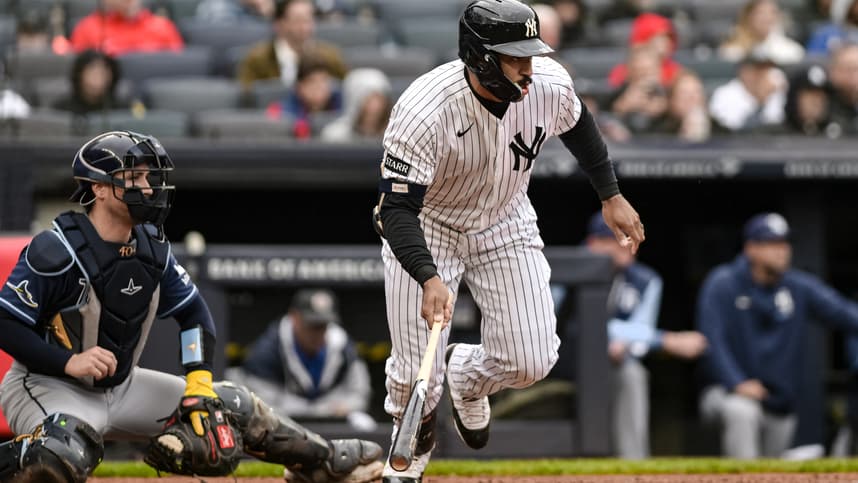
Trent Grisham’s Qualifying Offer remains one of the more controversial moves in the Yankees’ recent string of offseason transactions, and there was some logic behind it.
Signed in November, it meant the Yankees would have to push their payroll to new heights to retain Cody Bellinger and make other improvements to the roster to aid their rotation and bench.
Once the team had filled out its payroll and showed that they would spend over that $22 million bill, the move to me became one of their best given what they needed in the outfield and the aspect of it being a one-year deal.
A slow start to the season brought that into question again with many claiming the team should have went a different direction, but this is a lesson in how teams measure performance and how fans do.
When we look solely at OPS we’re missing the bigger picture, and Trent Grisham is an excellent example as to why a player’s inputs may not always match their outputs in small sample sizes.
READ: The Yankees might have found an undrafted gem
Why The Yankees Value Underlying Numbers So Much

It’s easy to just check a hitter’s slashline on Baseball Reference or MLB’s Official Website to see whether they’re having a good season or not.
Quickly digestable and simple to understand, they allow us to create quick conclusions on how we feel about a player’s performance, but team’s are rarely just looking at those outputs.
Trent Grisham’s .298 OBP and .312 SLG% at the end of April were certainly not good, but the Yankees were adamant that he would remain their starter in centerfield and hit at the top of the lineup vs RHP.
New York’s front office and staff likely saw a .145 BABIP as a mark that just couldn’t be sustainable, and that if Grisham were to continue making contact, drawing walks, and hitting the ball hard things would turn eventually.
Their faith has paid off; Grisham is hitting .288 with an .850 OPS since the calendar flipped to May while carrying nearly identical underlying numbers to what we saw in April.
You’ll often hear about how his low batting average makes him a poor fit on this roster, and while the team doesn’t have a bunch of high-average hitters around him, I vehemently disagree with this claim.
Grisham gets on-base, makes a ton of contact in-zone, and has enough power to hit 20+ home runs as well, he may not run a high average but he brings important skills to have at the top of a modern lineup.
I’m a bit baffled that Yankees fans aren’t more in-love with a hitter who puts the ball in play as much as Grisham does, he has the same Z-Contact% as Luis Arraez this season while pacing to have 45-50 XBHs on the season.
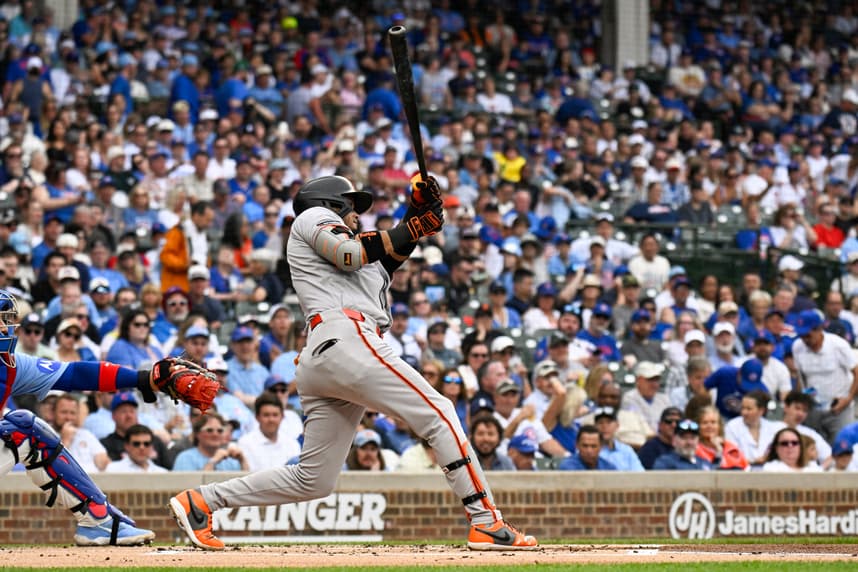
I acknowledge the defensive limitations are a real issue, Grisham’s -2 Fielding Run Value makes him one of the worst defensive centerfielders in the game and he’s been really bad since the start of the 2025 season.
For $22 million this feels like the kind of hinderance on a player’s profile that would prevent them from being even remotely worth that kind of money, but it ignores the way that teams operate in free agency now.
The Mets and Dodgers chose to emphasize high-AAV deals on shorter term with Kyle Tucker and Bo Bichette for a reason (despite both moves looking underwhelming so far), and the Yankees did the same with Cody Bellinger.
Front offices would rather pay about $12-15 million per WAR for a player while they’re in their prime than pay them tens of millions to provide little-to-no value to their roster.
If Grisham produces a 2-2.5 WAR season it won’t look great in $/WAR models, but they would have paid a bit above the perceived market value for that kind of production without any commitment to the player beyond that one season.
Had the Yankees went after Harrison Bader for example, they would be on the hook for $10.25 million in 2027 when he presently is producing a -0.4 WAR in 30 games for the San Francisco Giants.
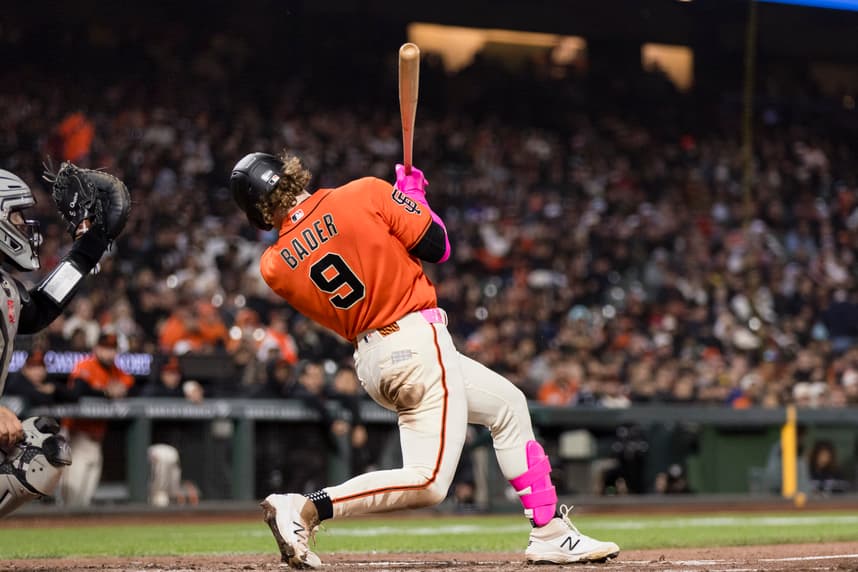
There is such thing as a bad one-year deal, the opportunity cost of acquiring a player is still relevant in these discussions, but the signing of Trent Grisham did not come at the cost of landing a better option.
Luis Robert Jr. has become a lost cause in Queens due to inconsistent play and a serious injury that will keep him on the IL for multiple months.
Brandon Nimmo has some centerfield experience, but he would have required the Yankees to take on a five-year $100 million deal to get a 106 wRC+ and even worse defense than Trent Grisham most likely.
Brian Cashman could have either seriously hampered the Yankees’ long-term spending opportunities or shaved a couple of wins off of the 2026 team solely to “shake things up”.
Trent Grisham is far from a perfect player and I’m not exactly in-love with the idea of him playing centerfield for the team in 2027, but he’s proven to be by far the Yankees’ best option for that centerfield spot in 2026.

More about:New York Yankees