Alexander Wilson
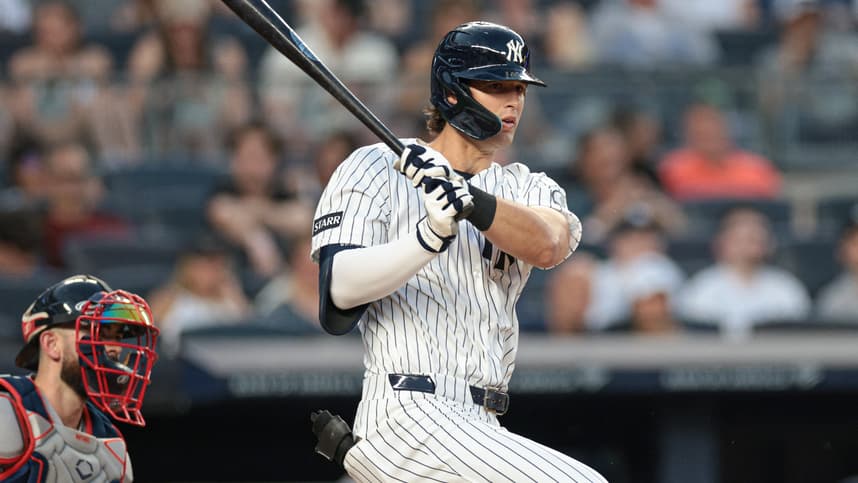
Spencer Jones did not sneak his first big-league homer over the wall. He sent it to dead center in Cleveland at 112.2 mph, and the ball traveled a Statcast-projected 443 feet before the Yankees could even start pretending the swing was normal.
The whole appeal with Jones lives inside that kind of swing. The contact risk is real, the strikeouts can get ugly, and the path to steady playing time is complicated, but the power is loud enough to change the conversation in one swing.
With Aaron Judge sidelined and Jasson Dominguez still working back, the Yankees have needed Jones to look less like a nervous call-up and more like a dangerous major-league option. Tuesday night gave them that version.
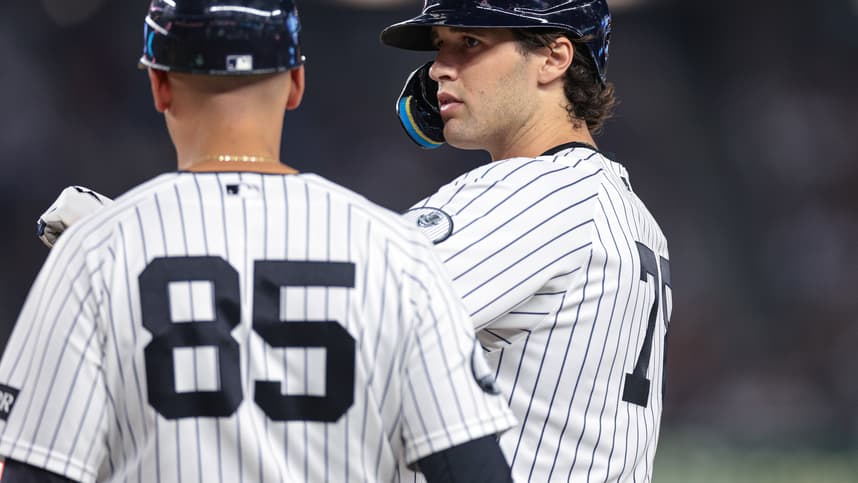
Jones showed why the Yankees keep dreaming
Jones’ homer came in the second inning of a 3-2 win over Cleveland, and the swing looked like the exact reason the organization has kept betting on his upside. The cutter from Slade Cecconi caught too much plate, Jones got extended, and the ball left like it had somewhere else to be.
The current line is still early-career noise: 36 at-bats, a .278 average, one homer, five RBIs, one steal, and a .722 OPS. Nobody should pretend 36 at-bats settles anything, but he is no longer waiting around for his first moment.
The more important part is how he looked. A swing like that tells pitchers they cannot simply challenge him and hope the length in his bat bails them out.
The roster math gets interesting
Jones is still fighting two different labels at once. The first says he can help the Yankees right now because the outfield is thin and the lineup needs left-handed damage. The second says he remains a premium trade chip if July turns into a catcher or bullpen hunt.
Tuesday made the first label harder to ignore. A 6-foot-7 lefty who can put a ball into orbit gives the Yankees a different kind of mistake punisher, especially while Judge is resting and Dominguez is not quite ready to return.
The concern has not disappeared. Jones can still be beaten by velocity in the right spots, and pitchers will keep testing whether he can shorten up with two strikes. That adjustment will decide whether he becomes a short-term spark or a real lineup piece.
For now, the Yankees should let the at-bats breathe. They do not need him to be Judge, and frankly, that comparison is unfair to almost anyone. They need him to threaten damage often enough that pitchers feel the risk.
Jones finally put the first one on the board. If the next few weeks bring more contact with that kind of violence, the Yankees may have to stop treating his roster spot like temporary injury coverage.

More about:New York Yankees