Ryan Garcia
No. 21-30
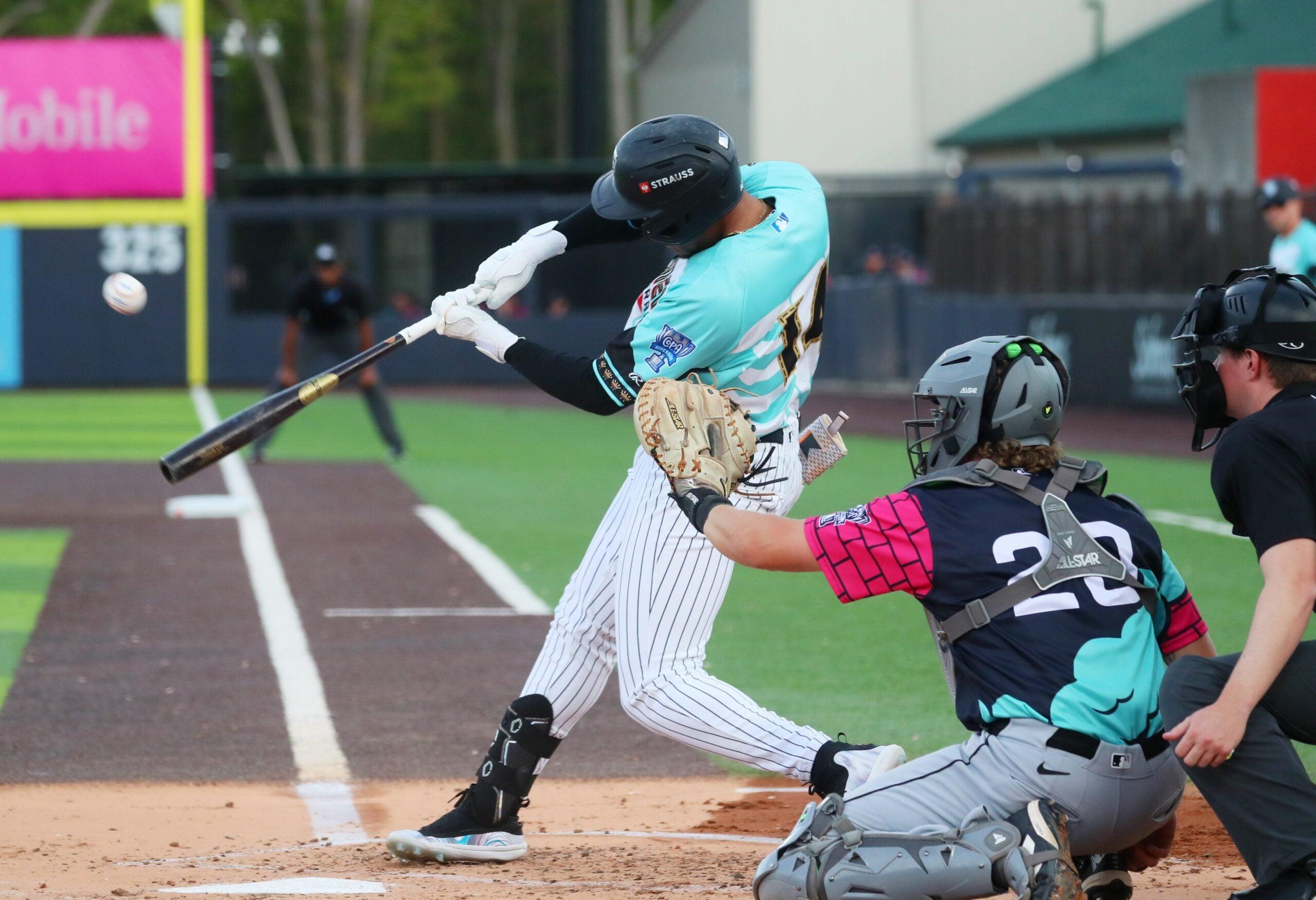
30. Cade Smith – RHP: The Yankees’ 2023 sixth-round Round Pick has dealt with some injuries after having a strong 2024 season between Single-A and High-A, limiting his velocity gains while forcing him to become a craftier pitcher. Smith sits around 91-93 MPH on his fastball with solid vertical movement from a low slot, and has now added a sinker to give him another pitch to keep hitters off-balance. He possesses a slider, sweeper, curveball, and changeup, but his swing-and-miss rates from his early MiLB days have not translated at the Double-A level. There’s reason to question whether the organization should slide him into a bullpen role where he can contract his repertoire and potentially add some more velocity, as he projects to currently be Triple-A depth for an organization.
29. Tyler Boudreau – RHP: Another UDFA in our updated top 30 rankings, Tyler Boudreau has an intriguing mix that features a four-seam fastball between 91-94 MPH with over 19 inches of ride. His bullet-spinning slider, fading changeup, and big looping curveball that he spins well from his over-the-top delivery, which has resulted in very high whiff rates at the Single-A level. He needs to find a two-seamer or sinker that he can attack inside with because better hitters will crowd the plate knowing that Boudreau doesn’t have the velocity to beat them inside with a four-seamer or something that can move in to jam them. I think this is a potential back-end starter for a second-division team with upside to add some more.
28. Jace Avina – OF: While Avina’s contact rates have regressed from 2025, his power output has shot up dramatically as the right-handed hitting outfielder has crushed Eastern League pitching. The 3% decrease in Contact% might be worth going from 11 HRs in 98 games last year to 16 HRs in 61 games in 2026 with a 138 wRC+ at a level that he scuffled at a bit last season. He has quick hands that allow him to crush pitches to his pull side which gives him some real upside to become a platoon outfielder who can hammer left-handed pitching. The contact rates are a concern if he doesn’t make any hit tool strides, but I do think his ability to hit southpaws has a real chance to translate in an MLB role and his outfield versatility is of value too.
27. Brendan Beck – RHP: Sporting a fastball-slider-curveball-splitter mix, Brendan Beck is a pitcher who relies on command to deceive his way through a lineup. When he cannot locate well, he gets hammered as we saw in his start against the Minnesota Twins where he was taken deep three times in 3.2 IP. Injuries had seemingly derailed his career to the point where he was a non-prospect without a realistic shot of reaching the Major Leagues, so the fact that he even reached the Bronx is a testament to his resiliency and work ethic.
26. Stiven Marinez – SS: The 18-year-old shortstop has made massive strides with his hit tool in his age-18 campaign, simultaneously increasing his Contact% and Swing%. He’s hitting more flyballs which has resulted in more home runs and a higher SLG%, as Stiven Marinez will look to go stateside during the 2027 season. His left-handed swing is smooth and allows him to get into launch position consistently, but how he fares against better competition at the Complex Level or higher will be the ultimate test of whether Marinez’s time on this top 30 is short-lived or not.
25. Xavier Rivas – LHP: A tall left-hander with a sky-high release height, Xavier Rivas relies on a dynamic split-finger that can carve through a lineup when his command is on. The fastball has good ride from a generic slot with unimpressive velocity (90-92 MPH) while having a tight slider that can help him keep hitters off of the splitter, but he doesn’t throw enough strikes to make up for having a bad heater. His size makes you believe there’s some velocity to add here and if he can throw a bridge cutter he might fill out a backend starter role one day, but I think the more likely scenario is that an organization tries to ride that elite splitter in a 1-2 inning reliever role.
24. Wilson Rodriguez – OF: The combination of excellent exit velocities and a great K:BB ratio have catapulted Wilson Rodriguez from a fringe top 40-50 guy to one of the 30 best prospects in the organization. A 21-year-old left-handed outfielder with a compact swing, Rodriguez has a well-rounded offensive profile that should allow him to end his season in Double-A if he maintains this kind of play for the summer. His defensive skills in centerfield leave a lot to be desired and he still has some issues with lifting the ball, but Rodriguez has a chance to climb into the 10-20 range for the system.
23. Chien-Fan Lai – RHP: The wiry Taiwanese teenager has a fastball with good vertical movement that gets up to 96 MPH, sporting a good offspeed pitch with a rainbow curveball as well. Lai is just 18 years old and has plenty of projectable skills that could cause him to rocket up prospect boards after he spends time in the Yankees’ pitching lab. When the organization named Mario Garza as their Director of International Scouting, there was an intent to increase their presence in the Pacific Rim, and that plan is starting to be put into motion.
22. Ben Grable – RHP: A power bullpen arm with a really good four-seam fastball, Ben Grable has rapidly ascended from a little-known 11th-round Pick to a potential MLB option for the Yankees in 2027. He sits in the mid-90s with over 20 inches of Induced Vertical Break as he stays behind the ball incredibly well, snapping off some tight-spinning sliders to get swings out of zone as well. Grable will need to improve his secondary offerings to become an above-average MLB reliever, but his fastball serves as an excellent foundation for his repertoire.
21. Rory Fox – RHP: My pre-season faith in Rory Fox looked to be foolish at first, as the right-hander was getting bombed at the High-A level in every start. He has since turned his season around, having a 4.92 ERA which is somehow right around the league-average for a pitcher in the suddenly run-heavy South Atlantic League. His smooth delivery allows him to get ride on his low-90s fastball and tons of bite on his gyro slider, which are his two best pitches right now. If he can refine his changeup and curveball to become real weapons against left-handed batters, he could become a no. 4 starter at the Major League level.
No. 11-20
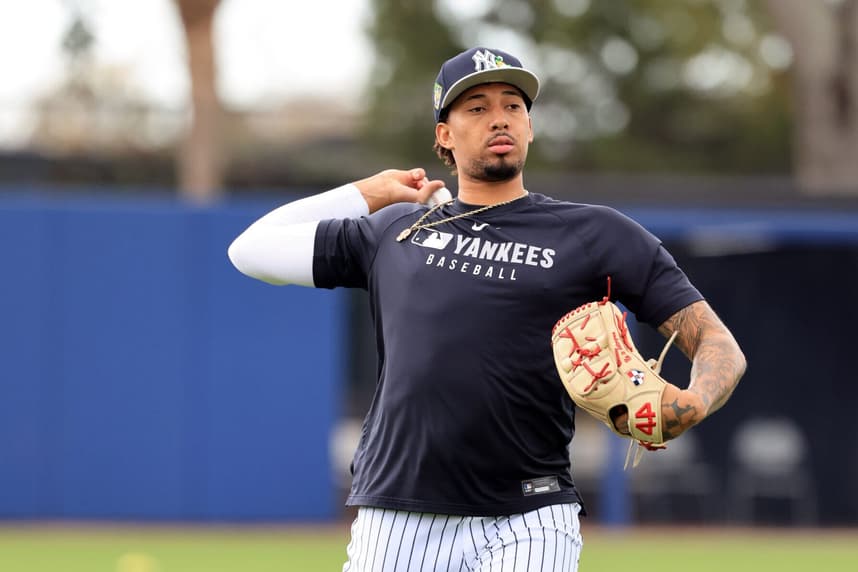
20. Kyle Carr – LHP: The soft-tossing left-hander has gone through a fascinating Minor League journey, struggling mightily in 2024 before having a solid 2025 season. Even in that seemingly productive campaign, he had a mediocre 11.5% K-BB% and struggled mightily in three Double-A starts. Fast-forward to 2026, and Carr has produced a 28% K% with the Somerset Patriots thanks to his deep pitch mix and improving command. He has a four-seamer, sinker, cutter, sweeper, curveball, and changeup that he’ll mix-in, with the four-seamer sitting between 92-94 MPH, the sinker 90-93 MPH, and the cutter 87-90 MPH. There’s not as much upside here due to the low spin rates and underwhelming velocity, but he could become a solid backend MLB starter.
19. Mac Heuer – RHP: Shaky command and a season-ending injury have caused Mac Heuer to fall a bit in draft stock, but the burly right-hander displayed an enticing repertoire at Single-A. His fastball has cut-ride action with good extension at 94-96 MPH, being paired with a gyro slider, sweeper, and curveball that all have high spin rates. Heuer has a great feel for spin and has a heavy amount of cut on all of his pitches, but his mechanics need work and he has firmly below-average command at the moment. He has the upside to become a mid-rotation starter, but the command issues create serious reliever risk.
18. Yovanny Cruz – RHP: It’s rare that I value a reliever prospect so much that they make the top 20 on a prospect list, but Yovanny Cruz has a lot of plus traits. His fastball velocity averages between 99-100 MPH from a low arm-slot, allowing the pitch to work well in his mix despite not having particularly good movement on it. Cruz’s slider and splitter are both double-plus pitches that complement his arsenal beautifully and allow him to project as a potential high-leverage bullpen arm. The issues in his game are centered around command and a general lack of polish, but those are issues that shouldn’t prevent him from being in the big leagues right now.
17. Richard Matic – 3B: A strong season in the Dominican Summer League last year has been followed up with an excellent performance in his debut season at the Complex League level. Matic is hitting .307 with a 126 wRC+ while running great contact rates, good batted ball distributions, and solid game power. His violent swing allows him to generate tons of damage in-zone, but my concerns lie with how his glove will develop in the Minor Leagues. Matic doesn’t seem to have good defensive chops at third base as the Yankees have already started experimenting with him at first base, but it won’t stop me from being enamored with his offensive skillset.
16. Core Jackson – SS: The Yankees’ fifth-round pick from 2025 has a speed-power combination at a premium position such as shortstop, flashing a skillset that should allow him to reach Somerset (AA) by season’s end. With that said, I’d be doing a disservice if I just overlooked the massive makeup concerns that come with his abhorrent behavior at college, as he will have to show that those incidents are a reflection of who he was and not who he currently is.
15. Allen Facundo – LHP: The hard-throwing left-hander has put together a really nice season with 95 strikeouts in 69 innings, as his heater sits between 94-96 MPH while topping out at 99 MPH. His four-seamer and sinker are not elite pitches but they function as solid pitches that can set up his nasty slider, which has been his signature pitch dating back to his days in the Dominican Summer League. His changeup is starting to emerge as a potential weapon for him, but the biggest question remains whether there’s enough strike-throwing ability to make Facundo a starter long-term. He has the upside to fill out as a no. 3 starter, but there’s serious reliever risk here.
14. Wilberson De Pena – OF: The Yankees landed Wilberson De Pena from the Los Angeles Angels for Oswald Peraza, and he has absolutely demolished pitchers in his Complex League debut. He slammed 13 home runs in 44 games with an OPS above 1.000 on the season, generating high exit velocities with brilliant batted ball distributions as well. There’s more swing and miss than I’d like to see in this profile, but he has the tools to become one of the top five prospects in this system and I believe the organization might have gotten a real steal in this trade.
13. Bryce Cunningham – SP: When the Yankees selected Bryce Cunningham, I was hoping for the Yankees to end up with a guy who had a mid-90s fastball with ride alongside a great changeup. Injuries have limited his ability to make the necessary steps needed to maintain some of the top-end velocity we saw at Vanderbilt, and his command has been underwhelming ever since the Spring of 2025. I’m not sure that we can declare this a dead-in-the-waters prospect, but I have moved away from considering him one of their 5-8 best prospects. Cunningham’s frame and delivery still lead me to see some upside as a mid-rotation starter, but his recent performances have muddied that outlook.
12. Chase Hampton – SP: Much like Bryce Cunningham, Chase Hampton has become a shell of the pitcher he once was due to injuries. I’ve provided Hampton with a bit more grace given that his injuries effectively kept him off the mound for over two years, as he’s still discovering himself again on the mound. His fastball struggles to exceed 91-92 MPH despite the solid vertical movement on it, and his command has regressed to the point that he isn’t able to execute pitches for good swing-and-miss rates anymore. Once the top propsect in the system and a top 40-60 prospect in MLB, he’s become more of a big-league hopeful with a sky-high ceiling that may never be realized.
11. Pico Kohn – SP: A dominant debut in Brooklyn put Pico Kohn in the spotlight for a brief moment before suffering a lower-body injury that has robbed him of nearly three months of MiLB action. The left-hander has a funky fastball that has decent ride from a low arm angle at 90-93 MPH that plays better than the radar gun would suggest due to his odd delivery. His best pitch is a slider with excellent two-plane movement that can wipe out lefties or righties, and he has flashed both a changeup and curveball as well. Kohn’s tall and sturdy frame suggest that there’s more velocity here to unlock, and if he can get it up to 92-94 MPH sitting we could be looking at a no. 3-4 starter on a playoff contender.
No. 1-10
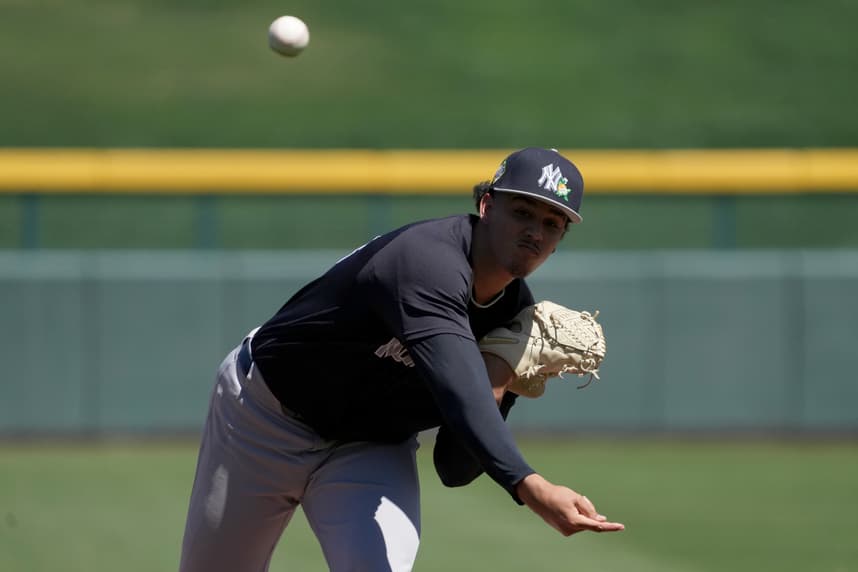
10. Jack Cebert – SP: The ERA has been misleading for what I think has been a strong season for the 24-year-old, who has flashed a deep mix with good movement and a funky release point. Cebert sits between 91-94 MPH on his fastballs, having both a four-seamer and sinker at his disposal with good movement. He gets good extension on those pitches due to his long arms, and he pairs them with a sweeper, cutter, changeup, and curveball. The issue Cebert runs into is that he tends to hang his breaking balls in-zone when he misses, resulting in home run damage that could become a real issue at the Major League level. A pitcher from the same mold of Michael King, Hayden Wesneski, Clarke Schmidt, Will Warren, and Elmer Rodriguez, the Yankees have a rich history of converting these guys into big-league regulars.
9. Kaeden Kent – SS: Kaeden Kent has an excellent hit tool that allows him to generate a ton of contact in-zone with plenty of line drives to go with it. He’s very hitterish and has some occasional pull-side power that he can tap into as well, collecting 28 XBHs in 65 games for the Hudson Valley Renegades. The defense at shortstop has impressed me relative to my more pessimistic outlook on his future at the position, and he’s been an excellent baserunner as well. I am worried that his lack of damage contact will create a clear ceiling on his profile and that he may not have more to add due to being a 22-year-old college bat, but the Yankees are fairly good at getting bat speed gains at even later stages of a player’s pro career. Kent profiles to be a utilityman who can move around the diamond and hit in the bottom-half of the order, but has the upside to stick at shortstop as an above-average regular.
8. Thatcher Hurd – RHP: Coming off Tommy John Surgery, there was some rust for Thatcher Hurd to shake off before he hit the ground running for the Tampa Tarpons. The right-hander has allowed just two earned runs with a 40% K% in his last five starts, sitting between 92-95 MPH on his fastball with plus extension and elite ride. His breaking balls are his best pitches, sporting a firm slider in the upper-80s and a big curveball that gets swings and misses at the bottom of the zone. An athletic right-hander with a clean delivery, his command and lack of a deep mix stick out in a profile that has a lot to love. He looks like a potential mid-rotation starter with upside to become a no. 2 starter or even serve as an electric bullpen weapon for a contender.
7. Spencer Jones – OF: An incredible athlete with ridiculous power and speed, Spencer Jones is a unicorn for better and for worse. His strikeout rates are unlike anything we’ve seen for a prospect with any hype in the Yankees’ organization, and they create a clear “bust” outcome for him. The positives also create the sky-high ceiling where he gels into an elite centerfield option for a World Series contender, but the conundrum lies in giving him the at-bats that he’d need to even have a chance at fulfilling that outcome. Can the Yankees live with a .200 AVG and 250 strikeouts in a season at centerfield to maybe get an above-average regular down the road? So far, they’ve made it clear that they don’t find that route to be their first choice of action.
6. Ben Hess – RHP: The stuff remains excellent, sporting a four-seamer in the 92-95 MPH range with good ride from a low arm-slot alongside a nasty sweeper and curveball, but his command is a real problem. Hess has struggled to throw strikes in 2026, and things haven’t gotten much better since suffering an injury early in April that has caused him to use Double-A games to slowly build up back to form. A strong second-half could push him back into the top-five, but I’d consider his stock a bit down after the pre-season hype suggested a top-100 prospect outcome was within reach. He could still become a mid-rotation starter, and I would not dismiss the odds that he ends up a very good reliever as well with his frame and feel for spin.
5. Henry Lalane – LHP: After years of sliding on prospect lists due to diminishing velocity and health concerns, the towering southpaw has returned in his age-22 season with a vengeance. He’s ripping apart the Florida State League and looks due for a promotion to Hudson Valley, flashing a 93-96 MPH fastball that’s topped out at 98.4 MPH with a nasty slider and changeup. Henry Lalane has even corrected a lot of the strike-throwing issues we saw earlier in his career, issuing just 10 free passes in his last 42.1 IP. Lalane should contend for some top-100 spots by season’s end, and I would recommend circling the dates that he’s scheduled to start on your calendar.
4. Elmer Rodriguez – RHP: Regressing command has made Elmer Rodriguez far less effective at the Major League level than I had hoped for, but I think there’s a better repertoire here than stuff models would suggest. His bowling ball sinker at 94-96 MPH is hard to barrel up and can steal strikes when located well, having excellent two-plane movement. This headlines a deep repertoire that includes a four-seamer, cutter, changeup, sweeper, and curveball which have all had varying degrees of success in Triple-A. If the Yankees can help him gain some more confidence just going after hitters aggressively, he could fill out as a reliable mid-rotation starter for them in 2027 or 2028.
3. Dax Kilby – SS: This has been a really frustrating season for Dax Kilby, who was shelved for most of the year, returned to rehab in the Complex League, and immediately got hurt again. He has not played since then, and it’s made it hard to figure out where I’d rank him in the top 30. Kilby is a gifted hitter who has a flat swing that can generate hard contact consistently while limiting the swing-and-miss, and he’s a great athlete as well. Ultimately, his youth and elite inputs during his run at the Single-A level give me some hope that he’ll return and hit the ground running again, but we have no idea when that will be just yet.
2. Carlos Lagrange – RHP: A shoulder injury that will knock him out for potentially the entire season serves as a potential deathblow for his chances of making his 2026 MLB debut. The Yankees wanted to see if he could hack it as a starter for the big-league club this season, but opted to shift him to the bullpen after the command was lagging behind his pitch quality. I think his stuff is still good enough to see him become a good MLB starter, but I ultimately believe that his likeliest outcome is becoming a high-leverage bullpen arm. There will (justifiably) be a massive health concern given how many injuries he’s dealt with in his time with the Yankees’ organization.
1. George Lombard Jr. – SS: In a top 4 that has mostly dealt with injuries or roadblocks on the field, George Lombard Jr. stands out as an elite performer who has seen his prospect stock soar. The 21-year-old shortstop possesses elite athleticism that allows him to play a strong shortstop and run the bases well, and he’s bulked up to the point that his game power is better-than-average compared to MiLB averages. His exit velocities are brilliant, the hit tool is slowly improving, and the Yankees have a player who could become a legitimate franchise cornerstone at a position that has been a question mark since Didi Gregorius tore his UCL in 2018. There is some swing-and-miss concern here, but Lombard profiles to become a well-rounded infielder who soaks up WAR value.
Overview of the Yankees’ Farm System
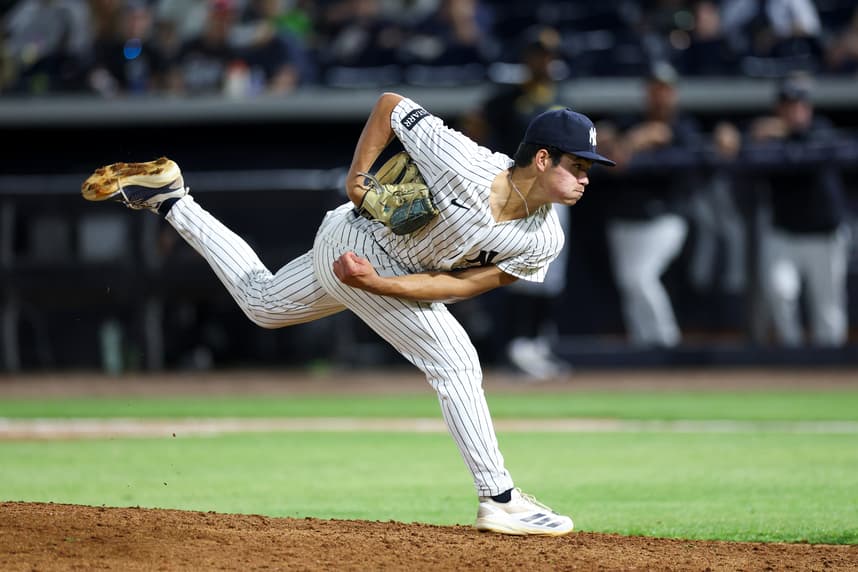
The Yankees’ farm system has seen a lot of pitchers take steps forward to become interesting names to keep tabs on, but the top of the organization is not as strong as 2026.
Elmer Rodriguez and Carlos Lagrange look more like 50 OFPs instead of 55 OFPs while Dax Kilby has failed to stay healthy enough to rise on this list, as he will likely need the 2027 season to regain any of the lost stock back.
I think the Yankees are in a good position to make some deadline improvements for their roster which has been crushed by the injury bug, but they won’t rank well in system rankings for good reason.
New York has a steady pipeline of talent that they find out of nowhere in the draft, and with a revamped IFA scouting system, hopefully they can operate more like the Dodgers down the road who dominate the prospect world.
Sam Briend and Matt Blake were the headlining hires in a transition into the modern age of player development and those hires have resulted in some draft wins that the Yankees are not used to.
Ben Rice, Cam Schlittler, and Will Warren are considerably better than what their draft slot suggested they would be, but work needs to be done to make sure there are more success stories like that one.
At the very least, the Yankees have successfully built a farm system that they can use as a war chest at the trade deadline to remain in a contention window.

More about:New York Yankees