
 Ryan Garcia
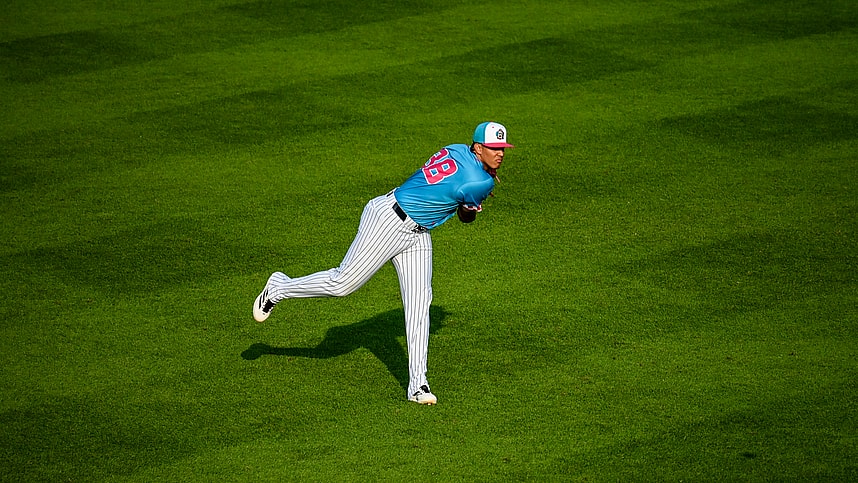
During the chaotic 2025 season where the Yankees had soaring highs and crushing lows, their farm system had quietly formed a trio of prospects who have become front-and-center in trade talks.
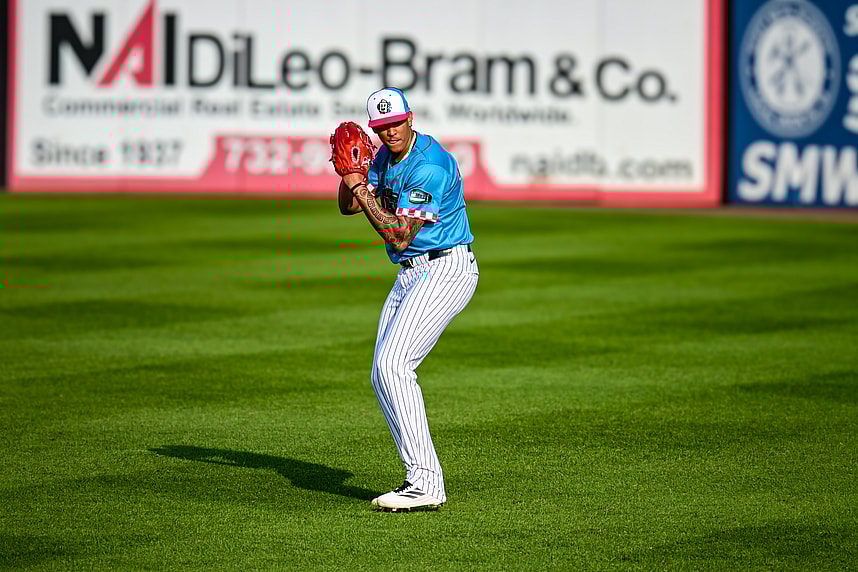
Elmer Rodriguez, Carlos Lagrange, and Ben Hess all opened the season together as starters for the High-A Hudson Valley Renegades, and one-by-one they’d climb up the ranks until all three of them were reunited in Double-A Somerset.
The Yankees added Rodriguez to the 40-man roster and expect him to be in the mix for starts in 2026, but Hess and Lagrange are not too far behind.
With these three being important for the organization’s ability to either import pitching talent or find more of it internally, their future outcomes will determine a lot about how the next half decade of Yankees baseball will look.
A group of 22-year-old starting pitchers, they could make their presence known in the Bronx during the 2026 campaign.
READ MORE: The Yankees are stuck in a massive Cody Bellinger conundrum
The Trio Who Has the Yankees Thrilled About Their Rotation’s Future
There’s still time for the winter to play out and for some of these names to end up elsewhere, but if the Yankees hang onto them then Spring Training will be an exciting time for the trio.
Elmer Rodriguez, Ben Hess, and Carlos Lagrange are not too far away from the big leagues and are likely to get in-game action for the team similar to how Cam Schlittler during the Grapefruit League last year.
It’s highly debated in many prospect circles if Elmer Rodriguez or Lagrange is the crown jewel of the farm system, but there’s a universal agreement that the former Red Sox prospect is the most Major League ready right now.
Elmer Rodriguez struck out 176 batters across 150 innings pitched, sporting a 2.58 ERA and 2.81 xFIP as he displayed a deep mix with multiple plus pitches.
His command improved rapidly with the Yankees as the team lowered his arm angle and release height to make him more of an east-west kind of pitcher who can throw sinkers and sweepers.
The sinker is my favorite pitch in his whole mix; while the breaking balls get more whiffs, his two-seamer always seems to end up on the first-base side of the plate which results in plenty of called strikes.
Paired with a strong framer like Austin Wells, those two will make life hell for opposing hitters as he steals strikes and gets count leverage from the jump.
His changeup, sweeper, curveball, four-seamer, and cutter give him weapons he can use against any kind of hitter, as Rodriguez actually performed better against lefties than he did against righties.
I will be ranking him as the no. 1 pitching prospect in the Yankees’ organization and considered him as an outside candidate to be the team’s best overall prospect, but that doesn’t make Carlos Lagrange a slouch.
Dubbed ‘La Pistola’, Carlos Lagrange lives up to the nickname with a fastball that sits around 98 MPH and tops out at 103 MPH, overpowering hitters across High-A and Double-A.
The right-hander does have command issues as he walked 12.3% of batters faced but he also struck out 33.4% of hitters with a 3.53 ERA and 3.21 xFIP.
He has a dominant changeup and two different sliders, having both a sweeper and gyro slider with all three pitches having incredibly high Whiff% numbers this past season.
I do ding his prospect ranking a bit due to the elevated reliever risk compared to Elmer Rodriguez, but the stuff and upside is arguably the greatest of any prospect in the system.
If you rank prospects solely based on their 90th Percentile outcome, then you should look at Lagrange as one of the best arms in all of Minor League Baseball.
Ben Hess is not ranked ahead of either pitcher in any prospect outlet, but the right-hander was the team’s first round pick in 2024 and was very impressive this past year.
With a 3.22 ERA and a 2.94 xFIP, Hess actually led both pitchers in K-BB% (22.1%) this past season which is one of the most important statistics when discussing prospects.
His four-seam fastball sat around 92-94 MPH with really good vertical movement from a pretty low launch point, which makes the pitch very effective at the top of the zone.
The decrease in walk rate from High-A to Double-A and the stagnant xFIP after the promotion are indications that Hess can adapt quickly to advanced competition, a trait also shared by Elmer Rodriguez.
All three of these prospects have skills unique to themselves, but they have a shared developmental path as they were teammates at two different stops this season.
While not all of them will likely pan out, they’re on track to become teammates once again in the Bronx as the Yankees have a real shot to find 60% of their future rotation in one crop.

More about:New York Yankees
