Ryan Garcia
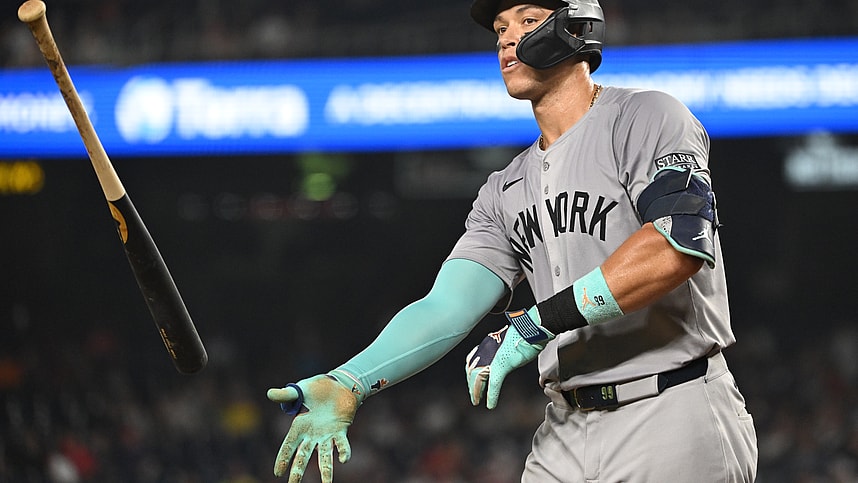
Last night we saw the conclusion of an all-time great MVP race, as the Yankees’ Aaron Judge and Mariners’ Cal Raleigh would find out which would be named 2025 AL MVP.
It was a close vote; Judge earned 17 first-place votes and Raleigh earned 13, splitting the ballot as they were the only rational choices for the award winner.
Aaron Judge winning the award has sparked some controversy on social media about whether he should have won his third MVP or Cal Raleigh should have won his first.
While 60 home runs and 9.1 WAR as a catcher is truly remarkable, what Aaron Judge did in 2025 was more valuable and impactful, and based on what the MVP is supposed to be about, he was the rightful winner of the award.
READ MORE: Yankees eyeing extension for utility piece who punishes left-handed pitching
Reason #1: Aaron Judge Was By Far the Best Hitter in the American League
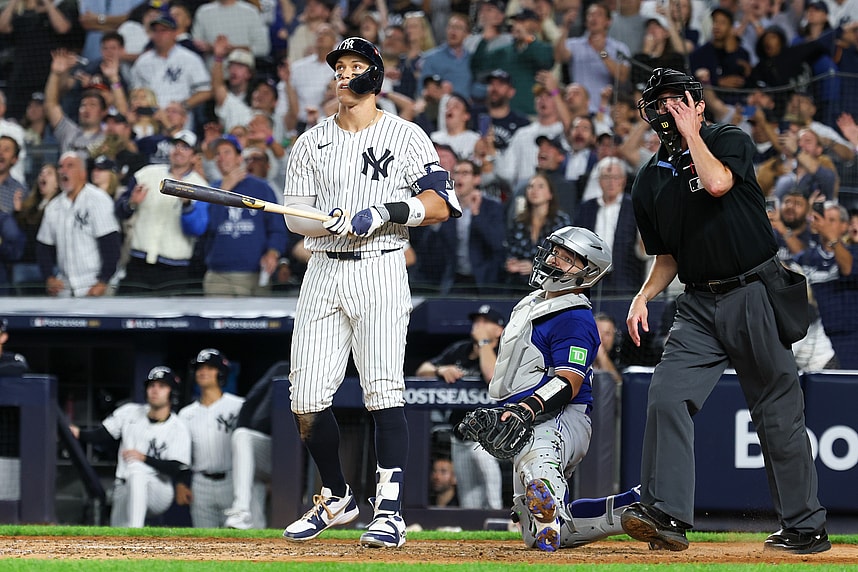
The season that Aaron Judge had offensively didn’t get enough appreciation by some voters in this MVP race, while Cal Raleigh did hit 60 home runs (most ever by a catcher), that doesn’t make him a better hitter.
His 1.144 OPS was nearly 200 points higher than Cal Raleigh’s and his 204 wRC+ was 43 points higher than Raleigh’s, but sometimes gaps need to be put into context in order to properly understand them.
Cal Raleigh’s .948 OPS was closer to Sal Frelick (.756) than Aaron Judge, that’s how much better of a hitter the Yankees’ captain was during the 2025 season.
The 204 wRC+ he posted was the sixth-best mark ever for a right-handed hitter (min. 500 PAs), only behind seasons such as Mark McGwire’s 1998 campaign where he hit 70 HRs and Rogers Hornsby in 1924 when he hit .424.
Only four right-handed hitters have ever had a season with a 200 wRC+ or greater under those qualifications in the history of Major League Baseball which spans back to 1871.
Statcast measures this 2025 season as the third-best Run Value ever recorded in a season (79) which spans back to 2008 and only trails Aaron Judge’s 2022 and 2024 seasons.
Reason #2: Aaron Judge Was More Valuable than Cal Raleigh
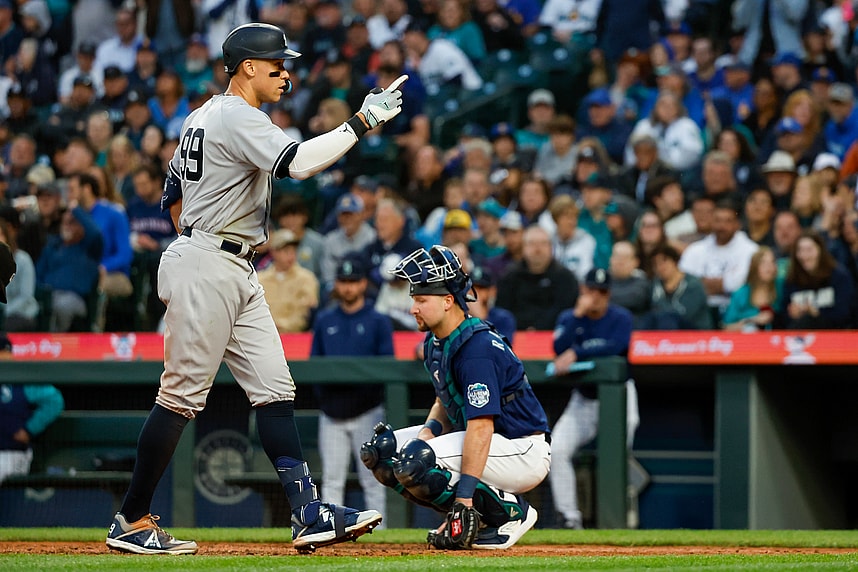
For this thought experiment, we will be using FanGraphs’ version of Wins Above Replacement (WAR) because it is the most fair for a comparison between a right fielder and catcher for an MVP race.
Baseball Reference doesn’t factor in Framing to the extent that it should considering that Raleigh is an excellent framer and teams believe framing is by far the most important component of catching defense.
As for Baseball Prospectus, which excels in prospect coverage, their usage of DRC+ for their WAR calculations makes it less descriptive and more predictive, and I believe results determine MVPs, not underlying data.
Aaron Judge (10.1) had more WAR than Cal Raleigh (9.1), and while the margin of error is about 1.0 WAR either way, voters handed the Yankees’ captain the award unanimously with a mere 0.8 WAR lead over Bobby Witt Jr. a year ago.
WAR factors in defense, baserunning, offense, and defensive position in their calculations, with FanGraphs being extremely friendly towards catchers and harsh towards corner outfielders.
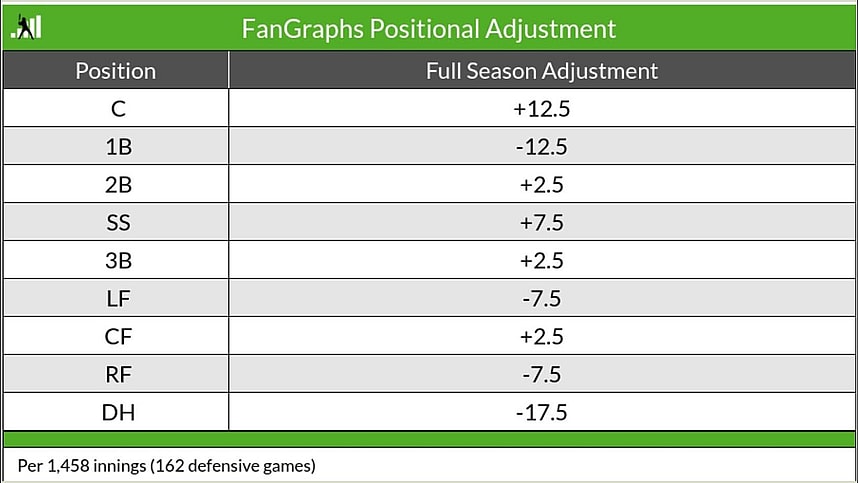
FanGraphs has a quanitifable and measurable weight for catchers, whereas detractors of the use of WAR in this MVP race have claimed that they don’t properly account for what comes with being a catcher.
Whether you believe it should or shouldn’t be this wide of a gap, FanGraphs has that baked into their models, and they still grade Judge as a full WAR better than Raleigh.
Factor in that we have a more accurate understanding of offense than defense, and the argument against Judge providing more on-field impact hinges on the hypothetical that current baseball statisticians are completely off the mark on value.
Is it possible? Sure, but should someone win MVP based on the idea that one day we might find out that they’re significantly more valuable than we currently can measure?
Reason #3: Yankees’ Fans Can Make Up Intangible Talking Points Too
We can’t measure what Cal Raleigh’s physical toll as a catcher is? The responsibility of managing a pitching staff is unquantifiable? Making history determines who should or should not win MVP?
These are all arguments that people could make for Aaron Judge as well.
Is there any player under more of a microscope than him outside of Shohei Ohtani? Does anyone deal with more negative local news coverage than the Yankees do?
What’s the responsibility of being the longest-tenured player in the Yankees’ clubhouse and being the Captain of that team as well?
Is being a six-foot-seven outfielder more physically taxing on him than people think? All of these questions and narratives all serve as hogwash in this kind of conversation.
We can objectively measure value, which is the point of the MVP, who contributed the most value in all of baseball, and that was Aaron Judge based on what we have access to information-wise.
The Yankees’ Captain is now a three-time MVP, and there’s an argument to be made that this should be his fourth.

More about:New York Yankees