
 Alexander Wilson

It wasn’t the on-base percentage or the sprint speed that defined Mets former star Brandon Nimmo’s tenure in Queens lately; it was that suffocating expiration date stamped on a contract destined to age like milk left on a radiator. By swapping the beloved homegrown outfielder for Texas Rangers veteran Marcus Semien, the New York Mets didn’t just make a trade. They performed emergency surgery on their long-term payroll books.
Sending Nimmo to Texas is a gut punch to the fan base. He was the smiling face of the franchise, the guy who sprinted to first on a walk. But sentimentality doesn’t win championships. The cold reality is that Nimmo is 32 years old with over $100 million left on a deal that runs until he is nearly 40.
The Mets escaped.

A Swap for Sanity and Defense
In return, New York gets Marcus Semien. He is 35. He is expensive. But his contract vanishes after 2028. That three-year difference in commitment is the entire logic of the deal. This isn’t to say Semien is just a financial placeholder. Far from it. The Mets needed a defensive stabilizer at second base, and despite a down year offensively, Semien provides a glove that rarely slumps.
Both players looked like shadows of their former selves at the plate last season. It happens. Father Time is undefeated. Yet the Mets are betting that Semien’s decline is manageable and that his defensive floor raises the team’s ceiling. They essentially bought themselves an escape hatch from the Nimmo contract while plugging a hole in the middle infield. It’s a gamble. But it’s the kind of calculated risk successful organizations take.
The Writing is on the Wall for McNeil
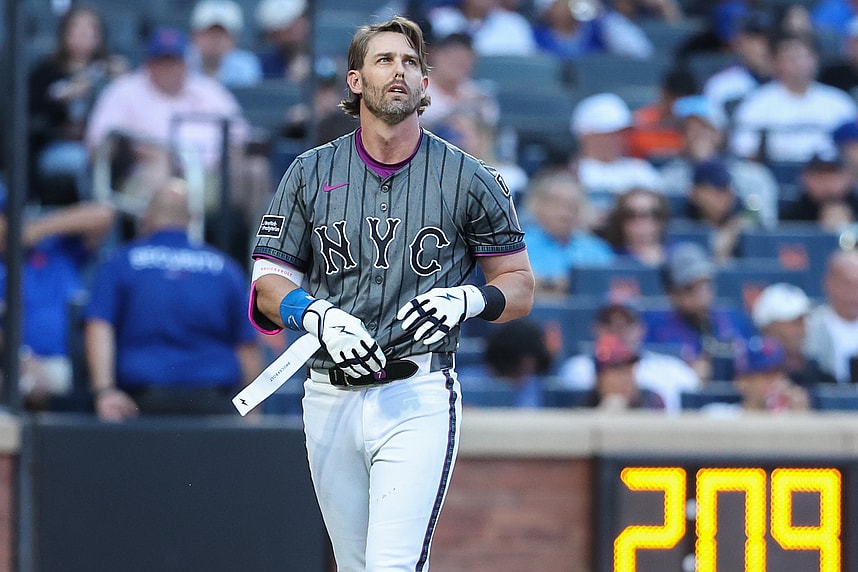
The arrival of Semien creates an immediate logjam. You don’t acquire a veteran second baseman on a significant contract to have him split time. This leaves Jeff McNeil as the odd man out.
McNeil is a useful player. In fact, he quietly put together a respectable campaign over 122 games last year. He slashed .243/.335/.411 and posted a 111 wRC+. That means he was 11% better than the league average hitter. In a league starving for offense, that has value. But does it have $15.75 million worth of value to the New York Mets?
Probably not.
Flexibility Over Loyalty
McNeil has one guaranteed year left before a club option in 2027. He is 33. He makes significant money for a guy who suddenly doesn’t have a starting position. The front office clearly wants to reallocate resources. Every dollar saved on McNeil is a dollar that can be thrown at a starting pitcher or a high-leverage reliever.
The math is simple. If the Mets can find a trade partner willing to take on McNeil’s salary—or even a chunk of it—they will pull the trigger. His bounce-back performance creates a window of opportunity to sell high, or at least sell reasonable. He isn’t a distressed asset. He is a solid hitter with no place to play.
Expect the phone lines to burn up this week. The Nimmo trade was the earthquake, but the aftershocks are coming. Jon Heyman of the New York Post said it best: McNeil is an “ex-Met walking.”

More about:New York Mets
