
 Alexander Wilson
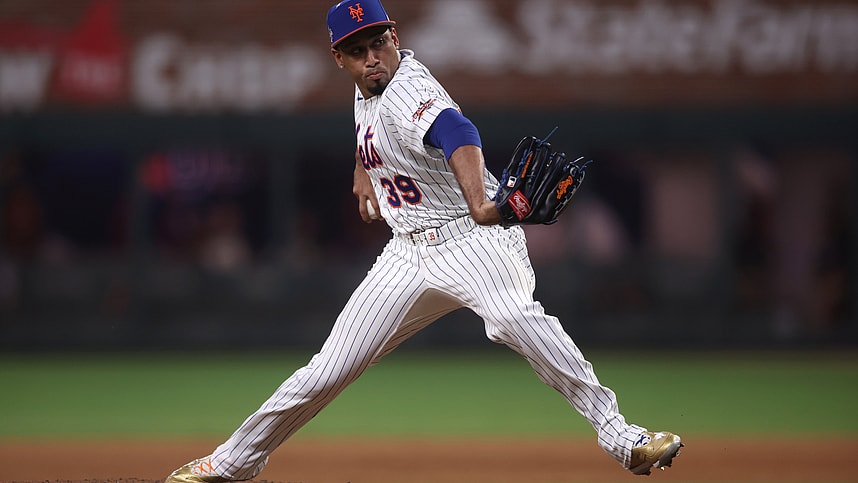
The vision of a shortened game in Queens is tantalizingly close, the kind of “game over after seven innings” dominance that keeps opposing managers awake at night. With the ink barely dry on Devin Williams’ three-year, $51 million contract, the New York Mets have effectively secured one half of the most terrifying bullpen duo in baseball, but the job is only half done.
The hesitation to give Edwin Díaz another five-year deal because he is now 31 years old is fiscally responsible in a vacuum, but championship windows don’t care about your actuarial tables.
If David Stearns and Steve Cohen are serious about a World Series run in 2026, they need to stop staring at Díaz’s birth certificate and start looking at the scoreboard.
We are talking about pairing a closer who just posted a 1.63 ERA and 98 strikeouts with a setup man who, despite a “down” year, still boasted a 2.68 FIP and elite swing-and-miss stuff. You don’t buy a Ferrari engine (Williams) only to put budget tires on it; you pay the premium to ensure the car finishes the race.

Devin Williams Is the Ultimate Buy-Low Gamble
Let’s address the elephant in the room: Devin Williams had a 4.79 ERA last season with the Yankees, and the box score scouts are screaming that he is damaged goods. But anyone paying attention knows that number is a mirage fueled by bad luck and defensive lapses; his underlying metrics tell the story of a pitcher who is still untouchable. He struck out 90 batters in just 62 innings and posted a 34.7% strikeout rate, proving that the “Airbender” changeup is still baffling hitters at an elite level.
The Mets capitalized on this market inefficiency, snagging a premier high-leverage arm who is ready for an eighth or ninth-inning role in 2026 without having to trade the farm.
If Williams positively regresses to his career norm—which his sub-3.00 FIP suggests is inevitable—the Mets have an All-Star caliber setup man for roughly $17 million a year. That level of production is usually far more on the open market, giving them the financial wiggle room to justify overpaying slightly to keep Díaz in the fold.
The Cost of Certainty: Why Díaz Is Worth the “Bad” Contract
Edwin Díaz knows his worth, and after saving 28 games with a microscopic 0.87 WHIP in 2025, he has every right to demand a deal that mirrors his previous five-year, $102 million pact.
Yes, locking up a reliever until his mid-30s is risky, but the alternative is entering the season with a bullpen full of “hope” and “potential” rather than proven dominance. Díaz isn’t just a closer; he is an emotional anchor for this team, a guy who thrives in the pressure cooker of New York while others crumble.
The market for elite closers is thin, and letting Díaz walk over a year or two of term would be a catastrophic miscalculation for a team with the deepest pockets in the sport. You pay the “Steve Cohen Tax” not just for the player Díaz is today, but to prevent him from closing out games for a rival in October.
Secure the asset, lock down the ninth inning, and worry about the payroll implications in 2029 when you have a World Series ring on your finger.
The Rotation Question Mark Remains
Of course, a historic bullpen means nothing if the starting rotation can’t hand them a lead, and the Mets still have significant work to do in that department. While the relief corps looks like a juggernaut, the front office might just strike a stroke of luck in a trade for a superstar pitcher to anchor the staff. Rumors are also swirling that they could target free agents to stabilize the rotation, which explains why the Mets are suddenly in hot pursuit of Michael King.
If the Mets can land just one more dependable starter to eat innings, the combination of a solidified rotation and the Williams-Díaz knockout punch becomes the blueprint for a deep playoff run. The offense is there, the setup man is there, and the money is there. Now, it’s just a matter of the front office realizing that the most expensive move they can make is the one they don’t—letting Edwin Díaz leave town.
Looking Ahead: The Seven-Inning Game
Imagine a scenario where Mets starters only need to provide five or six quality innings before turning it over to a bullpen hierarchy that ends with Williams and Díaz. It fundamentally changes how a manager can deploy his resources, effectively shortening the game and demoralizing opponents before the first pitch is even thrown. In the modern MLB, you win with power arms that miss bats, and the Mets are on the verge of assembling the best 1-2 punch in the game.
The check is going to be large, and the final years of the contract might be ugly, but that is tomorrow’s problem. Today’s reality is that the Mets have a chance to build a super-team bullpen that can mask a dozen other flaws on the roster. Sign the check, queue the trumpets, and let’s get ready to watch the most electric eighth and ninth innings in Mets history.

More about:New York Mets
