Quinton Fesq
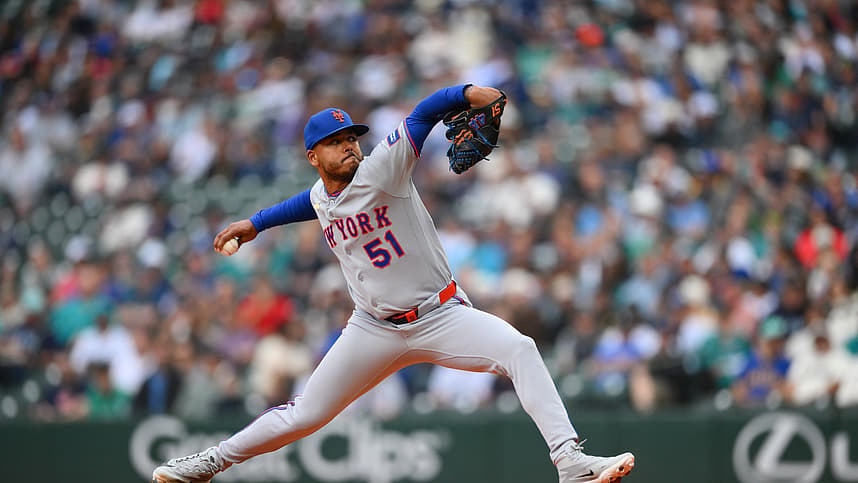
There is a version of the Freddy Peralta trade conversation where the Mets can still get something useful, but it probably requires them to admit what this season has become. After Saturday’s start against Philadelphia makes that a lot harder to sell, as Peralta allowed 10 earned runs on 10 hits in just 2.2 innings, pushing his ERA to 4.83 after another outing where the command and damage allowed were both a problem.
That does not make him worthless, and it also should not turn the Mets into a team that just accepts the first decent offer because the optics have become ugly. The more realistic middle ground is that Peralta is still a tradeable starter, but not one who should be priced like a clean No. 2 starter anymore.
New York also has to be honest about the bigger picture. I do not see the consistency for a serious comeback from this group, and if the Mets are going to sell, Peralta is one of the first names that has to be discussed.
ESPN is already treating it that way, as Jeff Passan and Kiley McDaniel gave Peralta a 90% chance of being traded on their deadline board. That is not just speculation for the sake of filling a trade column. It lines up with where the Mets are, where Peralta’s contract is, and how little sense it makes to let him walk for a weaker draft-pick return.
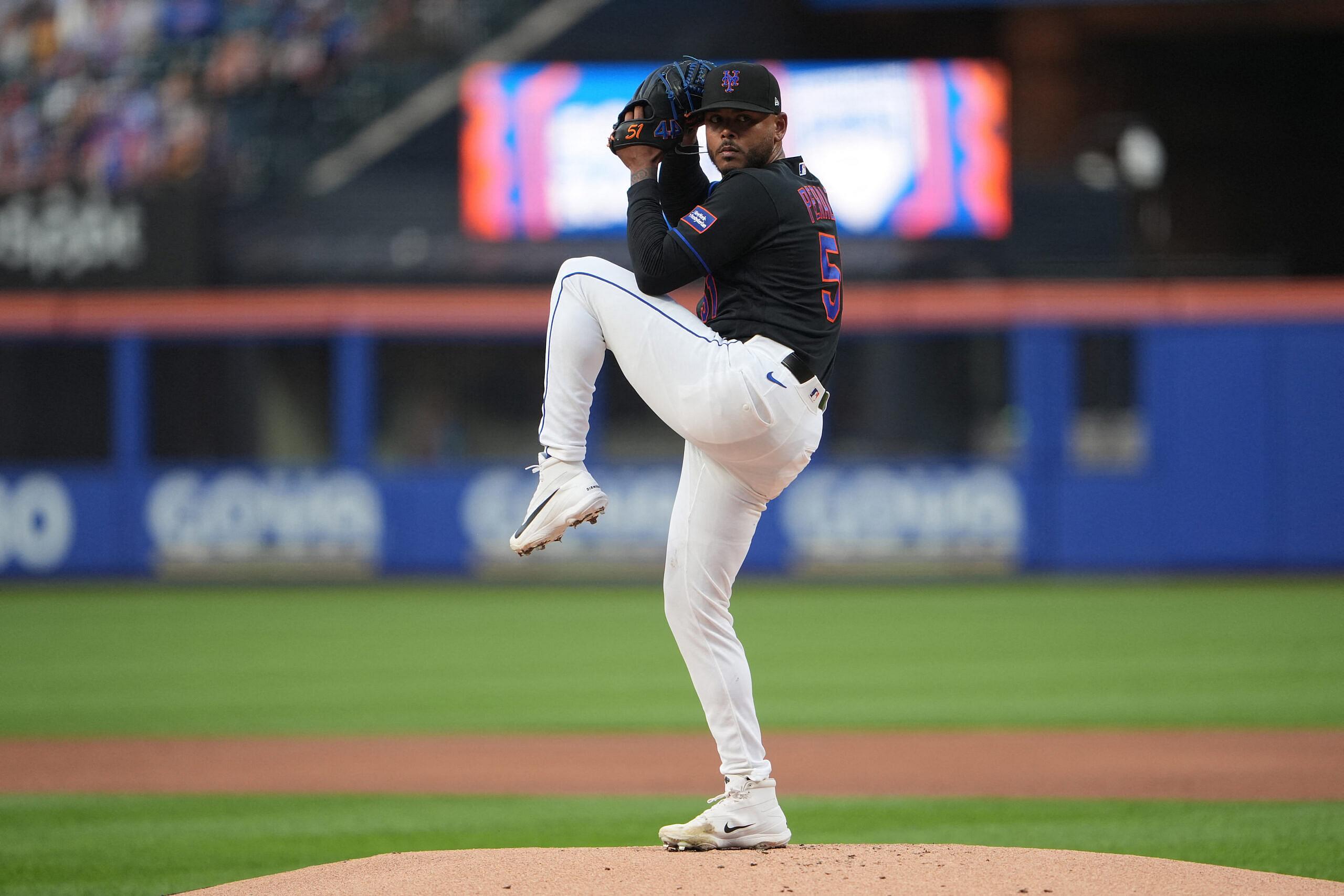
READ MORE: The Mets’ Freddy Peralta extension problem is getting harder to ignore
Freddy Peralta’s value has changed, but it has not disappeared
The Mets cannot pretend the last few weeks have not happened. Peralta was already in a strange spot before the Phillies outing as the results were slipping, the walks were starting to matter, and the long-term contract question had become difficult to justify. SNY reported earlier this month that Peralta and the Mets were not expected to discuss an extension until after the season, which was the right approach even before Philadelphia got to him.
He is an impending free agent, and is already listed as a notable trade candidate, with the Cardinals, Guardians, and Rays named as potential fits. ESPN’s board went even further, placing him 11th among deadline candidates and giving him one of the clearest trade-probability numbers on the market. That part still matters because a rental starter does not need to be perfect to have value in July.
The issue is the price range. Peralta is no longer the kind of arm where the Mets can credibly ask for a premium top-50 prospect without adding something else to the deal. He is more likely in the range of names like Thomas Saggese, C.J. Kayfus, Bryce Cunningham, Jacob Melton, Alex Freeland, or Zach Dezenzo than the best prospect in a buyer’s system.
That may sound disappointing given what the Mets gave up to get him, but deadline markets do not care about what a team paid six months ago. They care about what the player is worth right now, and the Mets may have to attach cash or another smaller piece if they want the better names on this board.
What the Mets should actually be asking for
The Mets’ ask should be built around useful proximity instead of prospect-list ego.
They need pitching badly, especially with the rotation constantly forcing them to patch things together. Kodai Senga has dealt with health interruptions, Christian Scott is on the IL, and Sean Manaea has only recently started to give them something more stable. That is why names like Cunningham, Selvidge, Hartle, Forret, Zazueta, and McGreevy matter more than another vague lottery ticket.
The Mets also need athletic position-player depth, especially players who can cover up roster holes without forcing them into another expensive winter of buying every answer. That means center field depth, left-side infield depth, catching depth, and bats who can give them something against right-handed pitching.
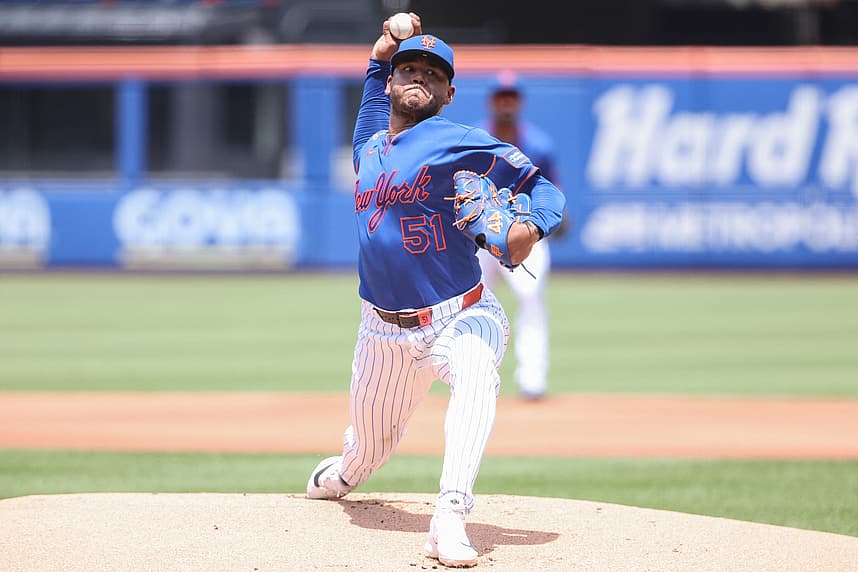
I would bucket the return into three realistic shapes if the Mets sell:
- Peralta only: one useful prospect, usually someone like McGreevy, Watson, Nichols, Selvidge, or Dezenzo.
- Peralta plus cash: one cleaner fit like Saggese, Kayfus, Freeland, Cunningham, or Morgan.
- Peralta plus another piece: a two-player package where the Mets include a prospect such as Will Watson, Zach Thornton, Chris Suero, Marco Vargas, or Nick Morabito to push the return into a better tier.
That feels more honest than pretending Peralta should bring back a centerpiece who would headline a winter blockbuster by himself. He can still help a contender, but he is now more of a targeted deadline add than a rotation-altering prize.
Cardinals: the most realistic baseball fit
St. Louis is probably the team I would start with because the fit is not overly complicated.
The Cardinals are young enough to care about preserving long-term value, but close enough to the race where adding a veteran starter can be justified. Peralta would not need to carry the staff. He would just need to give them legitimate innings and some swing-and-miss in games that matter.
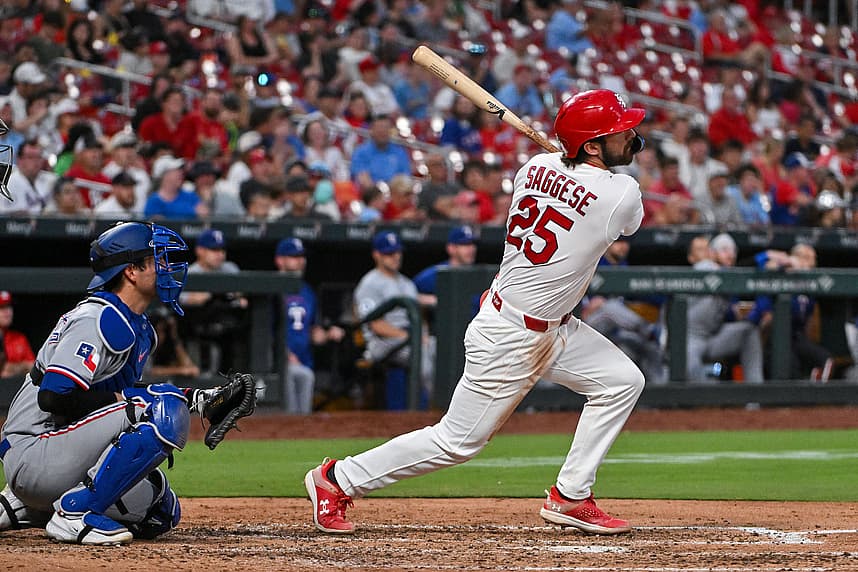
The Mets should ask about Quinn Mathews or Tink Hence because that is what a team does when it starts a negotiation, but I would not frame either as the likely return. The more realistic conversation should start with Thomas Saggese, Jimmy Crooks, Tekoah Roby, or Michael McGreevy, depending on whether the Mets want a bat, catcher, upside arm, or major-league-ready depth.
Mock trade 1:
Mets Receive: Thomas Saggese, Tekoah Roby
Cardinals Receive: Freddy Peralta, cash considerations, Will Watson
Mock trade 2:
Mets Receive: Jimmy Crooks, Cooper Hjerpe
Cardinals Receive: Freddy Peralta, cash considerations
More realistic fallback:
Mets Receive: Michael McGreevy, Gordon Graceffo
Cardinals Receive: Freddy Peralta
This is not a return that would make fans forget what the Mets gave up to acquire Peralta, but Saggese, Crooks, or McGreevy would at least give them a player who could help the 2027 roster. The Saggese/Roby version probably needs the Mets to sweeten the pot, which is why cash or a prospect such as Will Watson belongs in the structure.
Guardians: a good fit if the Mets avoid quantity over quality
Cleveland makes sense because the Guardians usually need pitching and usually prefer short-term, affordable upgrades over expensive long-term commitments.
The issue is that Cleveland is very good at making a package look deeper than it actually is. The Mets cannot take three names just because it sounds better than one. If the Guardians are not including a player with either proximity or a real carrying tool, the deal becomes a way to move Peralta without actually improving the organization.
Parker Messick is the kind of name that sounds good from the Mets’ side, but I do not think it is realistic. He has been too good and too important for Cleveland’s pitching pipeline to headline a deal for a volatile rental starter. Angel Genao, Travis Bazzana, Ralphy Velazquez, and Chase DeLauter are even less realistic unless the trade grows into something bigger than Peralta alone.
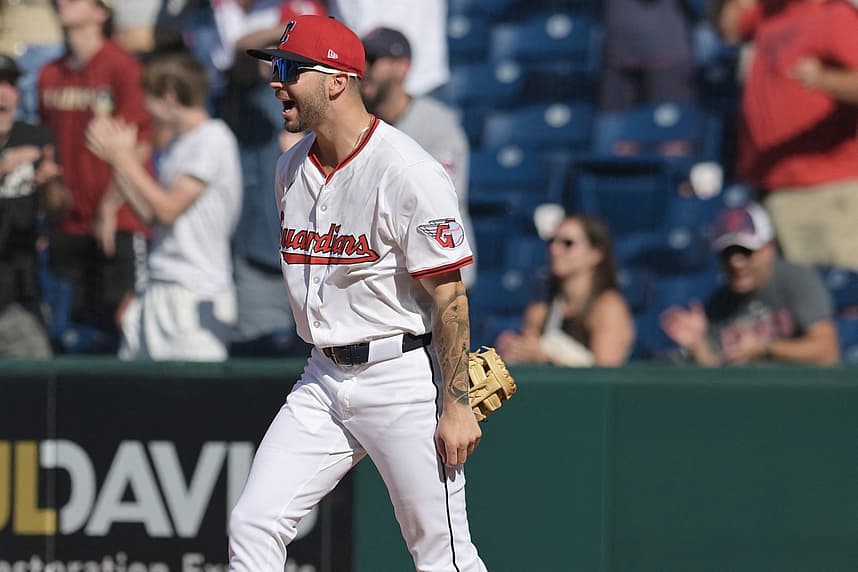
Mock trade 1:
Mets Receive: C.J. Kayfus, Josh Hartle
Guardians Receive: Freddy Peralta, cash considerations
Mock trade 2:
Mets Receive: Juan Brito, Matt Wilkinson
Guardians Receive: Freddy Peralta, Marco Vargas
More realistic fallback:
Mets Receive: Kahlil Watson, Austin Peterson
Guardians Receive: Freddy Peralta
If Cleveland is offering Peterson, Ryan Webb, or another pitcher who projects as a fifth starter or middle reliever, the second piece has to be more than a throw-in. A deal built around Kayfus and Hartle probably requires the Mets to cover money, because Messick is not the realistic target and Cleveland is not going to pay full sticker price for the current version of Peralta.
Dodgers: the deepest system, not necessarily the biggest offer
The Dodgers are always interesting in these conversations because they can take on risk better than almost anyone.
They do not need Peralta to be their best starter. They need arms who can keep them alive through the regular season, give them matchup options in October, and maybe pop with some mechanical or pitch-usage tweaks. If any organization would look at Peralta’s recent struggles and still see a way to squeeze more out of him, it is probably Los Angeles.
The problem is that the Dodgers rarely lose trades because they panic. Asking for Josue De Paula, Eduardo Quintero, Mike Sirota, or Zyhir Hope is probably more of a phone-call opener than a realistic expectation.
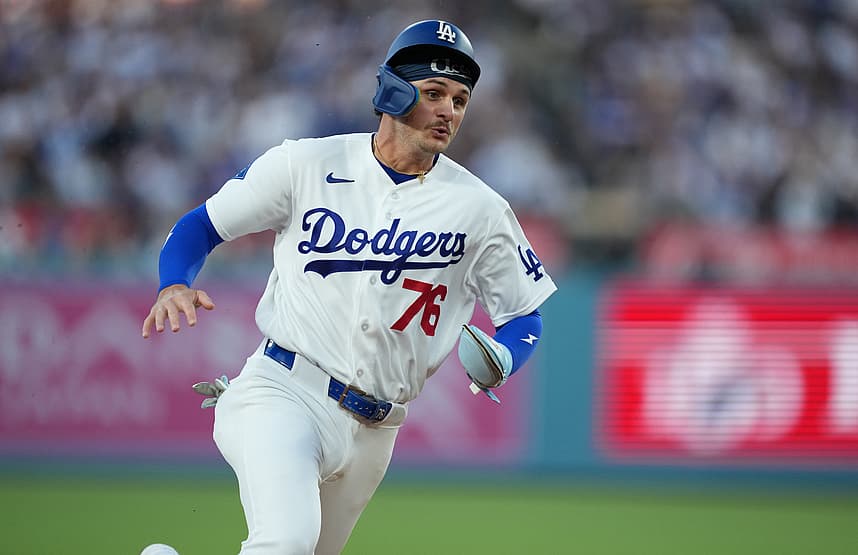
Mock trade 1:
Mets Receive: Alex Freeland, Christian Zazueta
Dodgers Receive: Freddy Peralta, cash considerations
Mock trade 2:
Mets Receive: James Tibbs III, Sterling Patick
Dodgers Receive: Freddy Peralta, Zach Thornton
More realistic fallback:
Mets Receive: Charles Davalan, Jerming Rosario
Dodgers Receive: Freddy Peralta
I would like this fit more if the Mets are prioritizing a two-player package over one bigger name. Freeland is the most interesting roster-fit name because the Dodgers can create infield depth without him, while Zazueta or Patick would give the Mets the kind of pitching-development bet they need more of. Los Angeles is also one of the teams where eating money might actually matter less than getting the player evaluation right.
Yankees: the local angle is fun, but the price still has to make sense
The Yankees make sense on paper because they will almost always be tied to available starting pitching, especially when a pitcher has swing-and-miss traits and enough veteran experience to be trusted in a playoff race.
I just do not think the Mets should expect a local premium to save the return.
George Lombard Jr. is not a realistic target here. Carlos Lagrange or Ben Hess would be more interesting, but even one of those names might be aggressive unless the Yankees really like the fit and believe they can fix the recent command and contact issues. The more realistic group is Bryce Cunningham, Brock Selvidge, Chase Hampton, Thatcher Hurd, Pico Kohn, or Kaeden Kent.
Mock trade 1:
Mets Receive: Ben Hess
Yankees Receive: Freddy Peralta, cash considerations
Mock trade 2:
Mets Receive: Bryce Cunningham, Kaeden Kent
Yankees Receive: Freddy Peralta, Chris Suero
More realistic fallback:
Mets Receive: Brock Selvidge, Thatcher Hurd
Yankees Receive: Freddy Peralta
If the Mets are going to trade Peralta across town, they should not do it for a soft package. That does not mean demanding Lombard. It means the Mets should be asking for Cunningham, Selvidge, Hampton, or Kent instead of taking a collection of names outside the Yankees’ real prospect group. If Hess is the target, Peralta alone probably is not enough after this recent stretch.
Rays: the team that would try to buy low
Tampa Bay is the team I would be most careful with.
The Rays will probably like some version of Peralta’s profile because they always care about traits, pitch shapes, and the possibility of improving an arm in their run-prevention machine. They would also probably use Saturday’s start as a reason to drive the price down.
That does not mean the Mets should avoid them. It just means the Mets need to know the difference between an interesting Rays prospect and a prospect who actually moves the needle. Brody Hopkins and Theo Gillen are probably too rich. Jacob Melton, Tre’ Morgan, TJ Nichols, Michael Forret, and Santiago Suarez are more useful names for this kind of deal.
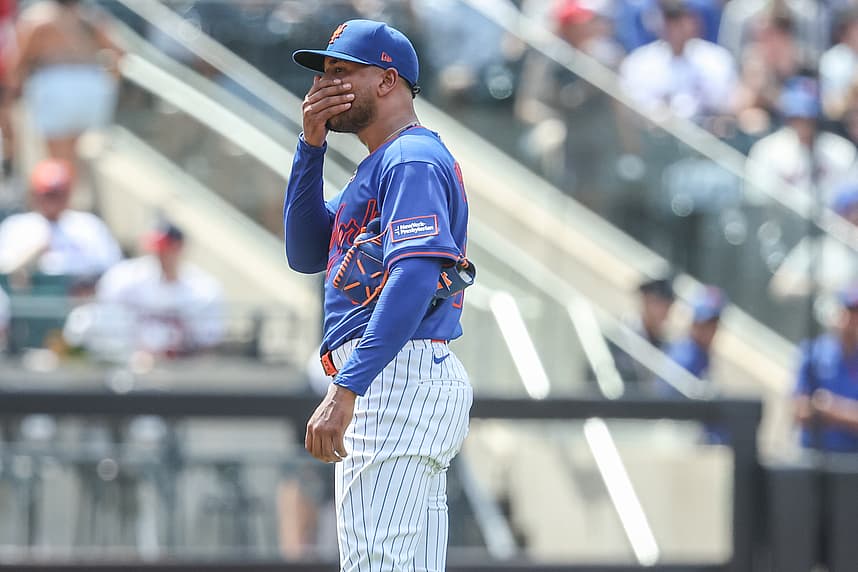
Mock trade 1:
Mets Receive: Tre’ Morgan, Michael Forret
Rays Receive: Freddy Peralta, cash considerations
Mock trade 2:
Mets Receive: Jacob Melton, Santiago Suarez
Rays Receive: Freddy Peralta, Nick Morabito
More realistic fallback:
Mets Receive: TJ Nichols
Rays Receive: Freddy Peralta
This is the type of deal where the Mets could look smart in two years or wonder why they let Tampa Bay talk them into the wrong player. Morgan is probably the bat I would prefer, while Forret or Suarez would be the pitching-development play. The Rays are also the buyer most likely to demand the Mets add something to make the better version of the package happen.
Braves: only if Atlanta pays the division tax
Trading Peralta to Atlanta would be uncomfortable, but the Mets should not rule something out just because it feels bad.
The Braves are in win-now mode every year, and they could talk themselves into Peralta as a mid-rotation arm who looks better with a stronger defense, more consistent run support, and a clear role. That does not mean New York should be eager to help them.
Owen Murphy is the kind of pitcher who would make the Mets listen, but Atlanta probably does not start there. Hurston Waldrep and Cam Caminiti feel too aggressive for this version of Peralta, and if the Braves are protecting Murphy, the conversation should shift toward JR Ritchie, Didier Fuentes, Drue Hackenberg, or Nacho Alvarez Jr.
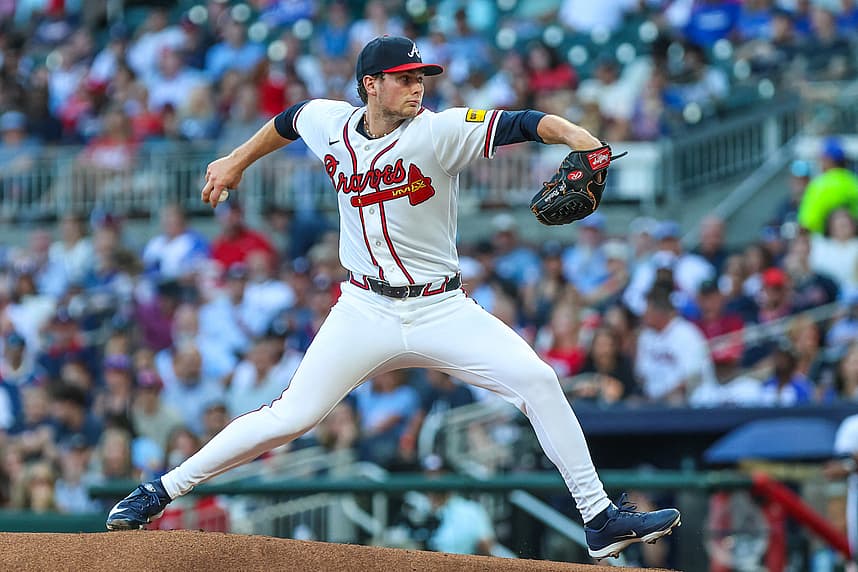
Mock trade 1:
Mets Receive: Owen Murphy
Braves Receive: Freddy Peralta, cash considerations, Will Watson
Mock trade 2:
Mets Receive: JR Ritchie, Nacho Alvarez Jr.
Braves Receive: Freddy Peralta, Zach Thornton
More realistic fallback:
Mets Receive: Didier Fuentes, Drue Hackenberg
Braves Receive: Freddy Peralta
If the Braves are only offering the same value as everyone else, the Mets should pass. There is no reason to create the possibility of watching Peralta help Atlanta in a meaningful game unless the return is clearly better, and that is why any Atlanta package probably needs the Mets to add value while still demanding a division tax.
Astros, Red Sox, Giants, and Orioles should stay on the board
The first wave of fits is easy to identify, but deadline markets usually get weird when injuries hit and teams start talking themselves into being one pitcher away.
Houston should be monitored because the Astros always seem to find a way into pitching conversations, and names like Zach Dezenzo, Shay Whitcomb, Miguel Ullola, AJ Blubaugh, or Ethan Pecko would make more sense than asking for Brice Matthews or Walker Janek. Boston would make sense if the Red Sox decide to push instead of sell, though Connelly Early and Payton Tolle are probably too expensive, leaving names like Luis Perales, Blake Wehunt, or Allan Castro as more realistic targets.
San Francisco could be aggressive if the Giants are still hanging around the race, but Bryce Eldridge, Josuar Gonzalez, and Luis Hernandez are not realistic in this kind of deal. The Mets would be looking more at Bo Davidson, Dakota Jordan, Gavin Kilen, Jacob Bresnahan, or Trevor Cohen. Baltimore has the young talent to make an offer if it finally decides to pay for a veteran arm, with Trey Gibson, Chayce McDermott, Cade Povich, Seth Johnson, and Enrique Bradfield Jr. fitting the conversation better than the Orioles’ top bats.
The Mets should not need a perfect fit. They need enough teams involved to keep the price from collapsing after a bad start.
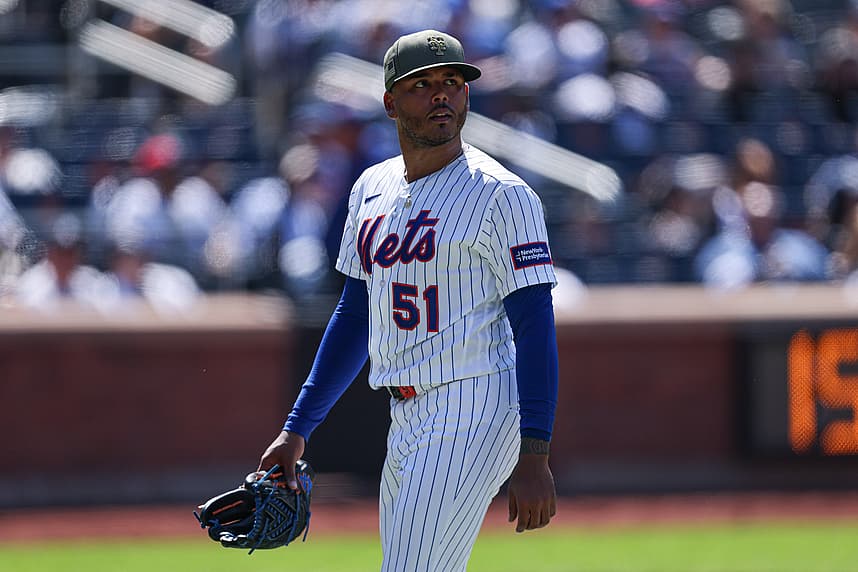
That is why I would not rush this unless a team offers a specific fit such as Saggese, Kayfus, Freeland, Cunningham, Morgan, or Ritchie early. Peralta’s value is down right now, and moving him immediately after a disaster outing would probably invite teams to treat the Mets like they are just trying to get rid of him.
My preferred Mets trade board
If the Mets decide to move Peralta, this is how I would rank the fits from their perspective:
- Cardinals, because Saggese, Crooks, McGreevy, and Roby all fit what the Mets should be hunting.
- Dodgers, because they can build a strong two-player package without giving up a headliner.
- Guardians, because they need the arm but cannot be allowed to win the deal with quantity.
- Yankees, because the fit is real, but the Mets should not expect a prospect windfall.
- Rays, because they will see the traits but will likely try to buy low.
- Braves, because the division tax has to be meaningful.
Peralta is still useful enough to bring back real value, but the Mets need to price him like the player he is today, not the player they hoped they were getting when they acquired him.
If New York falls further out of the race, the best path is probably to turn Peralta into one or two players who can help the next version of the roster. That may not be exciting, but after what happened in Philadelphia, it is starting to look like the most honest outcome.
More about:New York Mets