Quinton Fesq
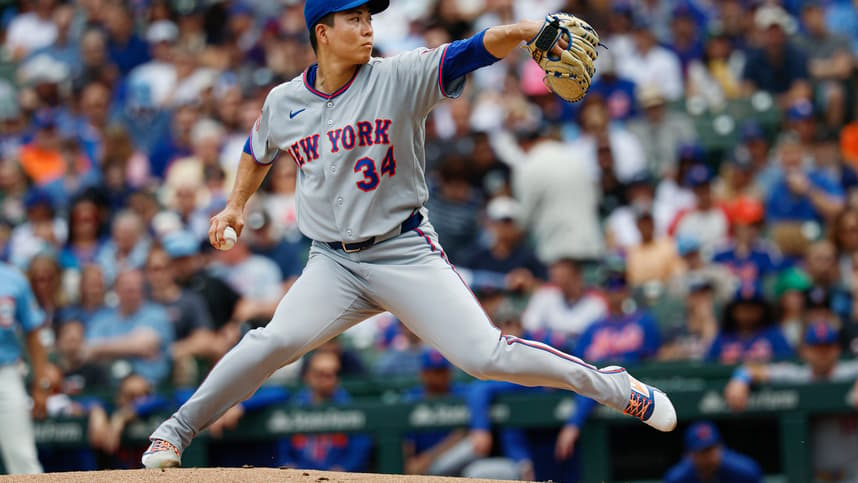
The Mets need Kodai Senga back, but his latest start with Triple-A Syracuse did not exactly calm anything down. He threw 5 innings against Scranton-Wilkes-Barre on Tuesday and allowed 3 earned runs, 6 hits, 2 walks, 2 hit batters, and 2 wild pitches on 91 pitches. The strikeout total was fine at 5, but fine is not the point when the Mets are waiting on a pitcher they still view as a part of their rotation.
The rehab line now sits at 8.2 innings, 5 earned runs, 10 hits, 4 walks, 10 strikeouts, 3 hit batters, and 3 wild pitches. It is discouraging when the Mets are trying to figure out whether Senga can step back into a major league rotation that needs stability, not more guessing.
The rehab numbers are not clean enough
The original hope with Senga’s assignment was easy to understand. Let him build up, get the feel back, prove the body is ready, then bring him back when the Mets need the rotation help. That sounds simple until the outings start raising more questions than answers.
His first rehab start at Rochester lasted 3.2 innings. He allowed 2 earned runs, 4 hits, 2 walks, 1 hit batter, and 1 wild pitch while throwing only 41 strikes on 80 pitches. That is a 51% strike rate, which is the type of number that should make everyone pause before pretending the process is nearly finished.
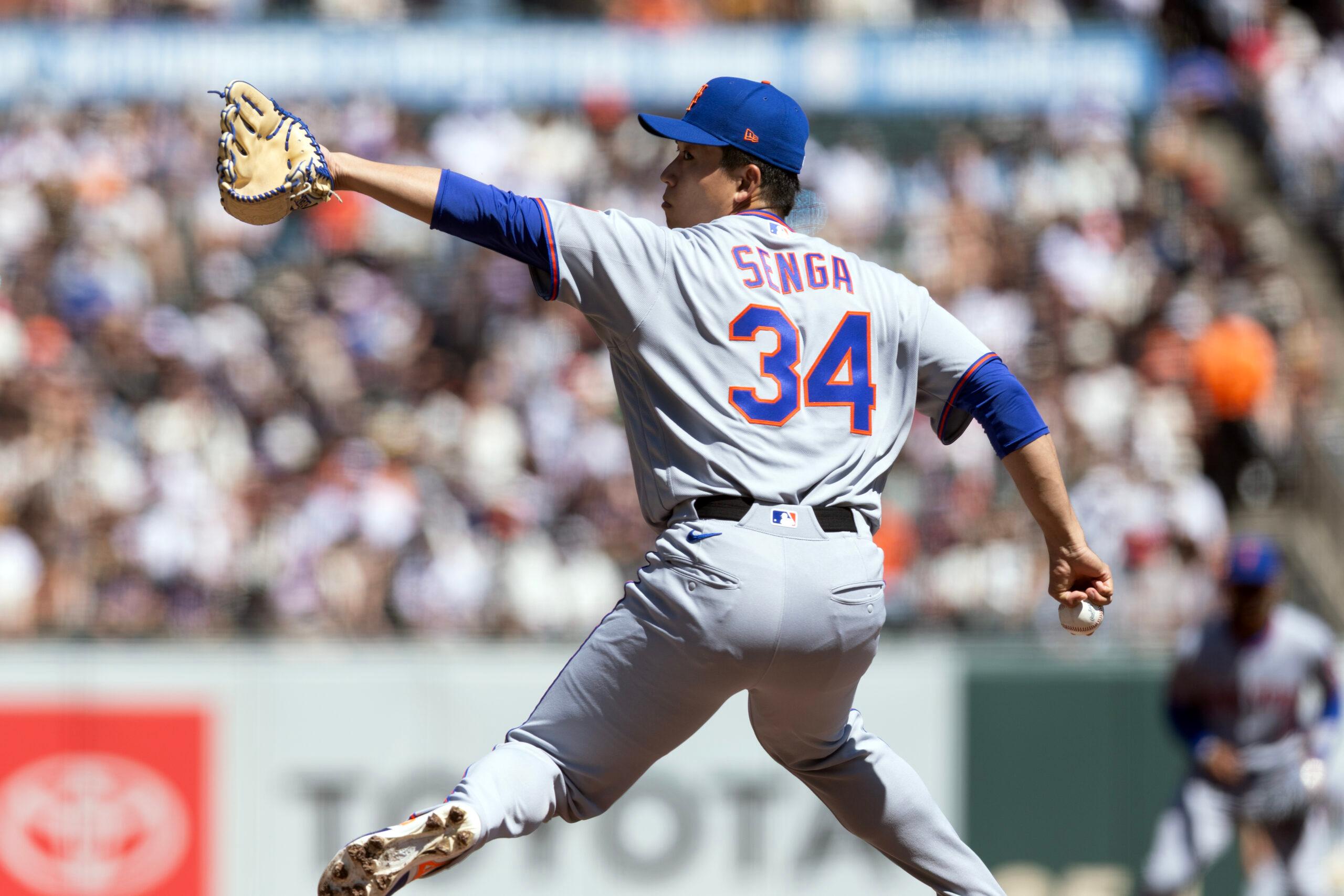
The second start gave him more length, but not enough clarity. Senga did get through 5 innings, and that matters from a workload standpoint. Still, 54 strikes on 91 pitches is not exactly a sharp command check. Add in 2 hit batters and 2 wild pitches, and the outing starts looking less like progress and more like survival.
That is the part the Mets cannot gloss over.
This is not about panicking over 2 minor league starts. It is about knowing what Senga is supposed to look like when he is right. The ball should have more purpose. The fastball should set up the fork. The misses should not pile up in a way that forces a Triple-A start to become a traffic jam.
The command is the real warning
Senga can still miss bats. That part has not disappeared. The 10 strikeouts in 8.2 rehab innings are the best thing on the page, and they keep this from being a full red flag situation. The problem is everything around those strikeouts. Four walks, 3 hit batters, and 3 wild pitches in 2 starts is not the profile of a pitcher ready to rescue a rotation.
It looks like a pitcher still searching.
That matters because Senga’s entire game depends on hitters having to honor multiple shapes. When the command is loose, the ghost fork becomes easier to take, the fastball has to carry too much of the workload, and counts get messy. That can work in short flashes against minor league hitters. It becomes a problem quickly against big league lineups that are comfortable waiting him out.
The Mets have already lived through too many starts this season where the rotation could not give the bullpen a clean runway. They cannot bring Senga back just to create another version of that problem.
The Mets cannot need the idea more than the pitcher
There is always a temptation with an injured starter to let the roster need make the medical decision feel easier.
The Mets should resist that here.
Senga’s value is obvious. When he is right, he changes the entire pitching staff because he gives Carlos Mendoza a real swing-and-miss starter. The problem is that the current rehab version has not earned that trust yet.
I recently talked about how the Mets’ injury picture turned into a larger roster problem, and Senga sits near the center of it because his absence changes the ceiling of the rotation. Christian Scott has helped by giving the Mets something sturdier than expected, but that does not replace what Senga is supposed to be.

It only gives the team enough breathing room to be honest. If Senga needs another rehab start, he needs another rehab start. If he needs 2, the Mets have to live with that too. The front office cannot let urgency turn into wishful thinking.
Senga needs proof, not optimism
The next step should be pretty blunt. Senga has to show the Mets a cleaner outing.
It does not have to be 7 scoreless innings with 12 strikeouts. It just has to look like a pitcher in control of his delivery and the count. He needs more strikes, fewer free bases, no hit batters, and no wild pitches turning a normal inning into a stress test. That is what the Mets need before they can seriously talk themselves into handing him a major league start again.
The season has already been rough enough on the rotation. Senga opened the year with 2 useful starts, then things unraveled before the injured list entered the picture. His major league line still shows a 9.00 ERA over 20 innings, with too many walks and too many hard innings packed into a short sample.
The Mets should make him force the decision
The best version of this is Senga taking the ball in his next rehab start and making the decision obvious.
That has not happened yet.
Right now, the Mets are looking at a starter who is building volume, missing some bats, and still fighting the strike zone too much. That is not enough for a team trying to stop the rotation from wobbling every few nights.
Senga’s return can still be a major lift. It probably has to be if the Mets are going to stabilize this season and keep their pitching staff from feeling patched together every week.
But the path back should run through performance, not hope. The Mets need an arm in the rotation. They just cannot afford to pretend this rehab assignment has been anything close to reassuring.
More about:New York Mets