
 Quinton Fesq
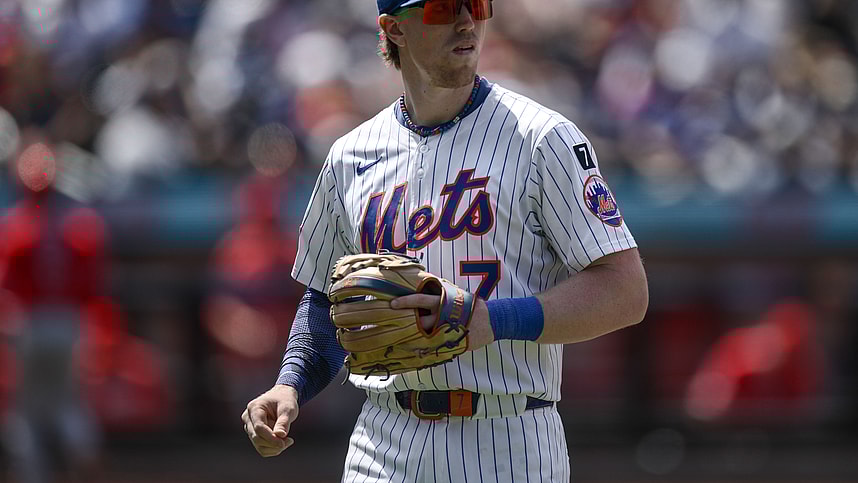
The New York Mets are entering the 2026 season with a roster that looks drastically different from the one that walked off the field last season. The front office made moves this offseason, adding Bo Bichette, Jorge Polanco, and Marcus Semien to an infield that was already crowded with young talent. Although these moves are a clear sign of a “win-now” approach, they also create a crowded infield picture. Brett Baty is sitting in the middle of this logjam, and seemed to finally look like he turned a corner in 2025. The question for 2026 isn’t about how he’ll perform, but rather where and how often, he plays.
A 2025 Breakout to Build On
For the past couple years, Baty has always been a high potential prospect with inconsistent results. But in 2025, he finally started to rewrite his Mets career. In 130 games and 393 plate appearances, Baty posted a slash line of .254/.313/.435, which was good for a solid .748 OPS and a 111 wRC+, indicating that he was 11% better than the league-average hitter. He hit 18 home runs and drove in 50 RBIs, proving that his raw power was able to translate when he made contact.
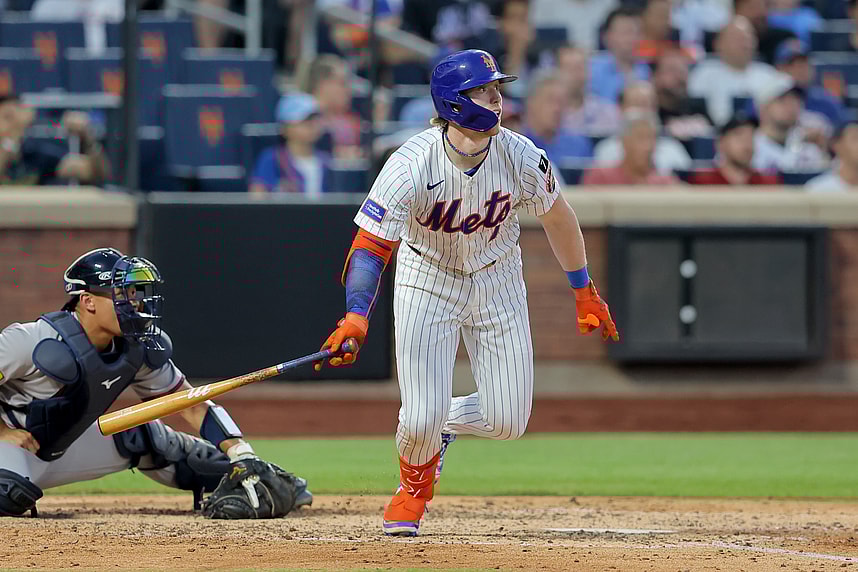
Brett Baty’s Baseball Savant page shows that he destroyed the ball, reaching a Barrel Rate of 12.8% (80th percentile), and a Hard-Hit Rate of 46.9% (72nd percentile). His bat speed was also elite, sitting in the 86th percentile at 74.8 mph. When he was able to make contact, the damage usually followed, with his expected Slugging (xSLG) sitting at a .457, as well as posting a .334 Expected Weighted On Base Average (xwOBA) that was in the 66th percentile, suggesting that his surface numbers were not a fluke.
Baty also silenced some critics with some stellar defense last season. Despite his arm strength being a concern, sitting in the 28th percentile, with an average of 81.2 mph, his range and instincts took a massive leap forward. He posted a 69th percentile ranking in Fielding Range with +1 Outs Above Average (OAA). He was no longer just a bat-first liability, he was able to transform into a legitimate major league third baseman. However, the swing-and-miss issues still showed, with a 27.3% Whiff rate and a 25.0% Strikeout rate putting him in the lower tier of the league in contact ability.
Brett Baty’s 2026 Projections
For 2026, the projections see Baty maintaining his production, though they are skeptical about his playing time. ZiPS is the most optimistic, projecting Baty to play 128 games and hit 19 home runs with a .251 average and a 111 wRC+, essentially repeating his 2025 efficiency over a slightly larger sample size. Steamer is more conservative, likely factoring in the crowded depth chart, projecting just 93 games and 14 home runs, with a slightly lower wRC+ of 108.
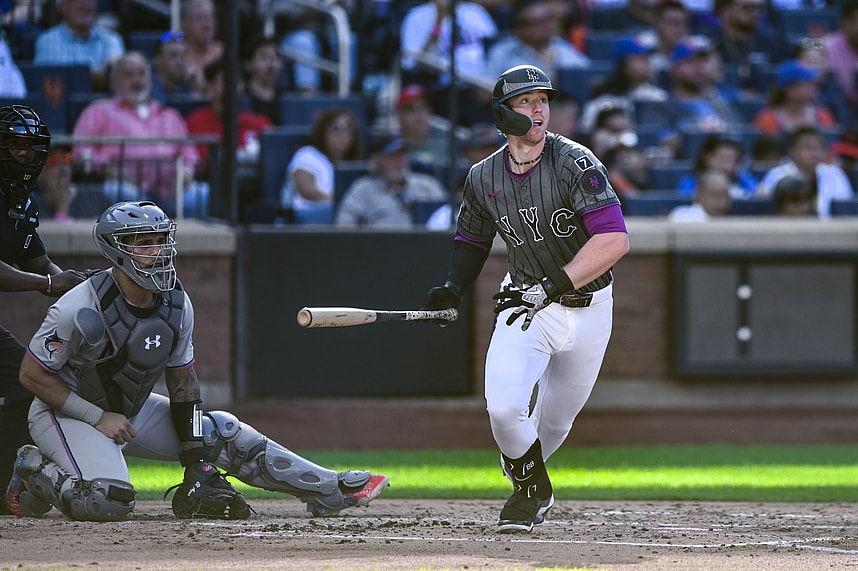
The difference in these projections highlights the challenge Baty faces. The metrics expect a player entering his prime, who is capable of hitting 20-25 homers with solid defense. His projected Isolated Power (ISO) remained healthy in the .170-.180 range across most systems. If he is able to get the at-bats, the production will likely be there. But the challenge is that Bichette is sliding over to third, or the Mets using him in a rotation of DH options to keep legs fresh, Baty can’t be guaranteed 500 plate appearances.
Finding a Fit in the “Super Team” Era
So, how will Baty fit into this new-look Mets lineup? If the plan is to play Bichette at third base, Baty’s path to the lineup becomes complicated. He could see time in left field, which is a position he has flirted with in the past, or we could see him in a platoon at DH against right-handed pitching, where his lefty swing will play best.

However, trading Baty now would be selling a rising asset. His 2025 season proved that he belongs in the majors, and his underlying power metrics are hard to find. The Mets need left-handed power in this lineup to balance a righty-heavy team. Baty can be the left-handed bat to provide that balance.
Ultimately, 2026 can be the year Baty forces the issue. He’s shown that he has the exit velocity and the defensive improvements to be a starter on a championship-caliber team. Whether he ends up being the everyday third baseman, a super-utility player, or a primary DH, Baty has earned his spot on this team. The projections see a league average or better hitter, and if he can cut down the whiffs even slightly, he could easily outperform those conservative projections and become a pivotal piece in the Mets’ pursuit of a World Series title.
More about:New York Mets
