Ethan Cushman
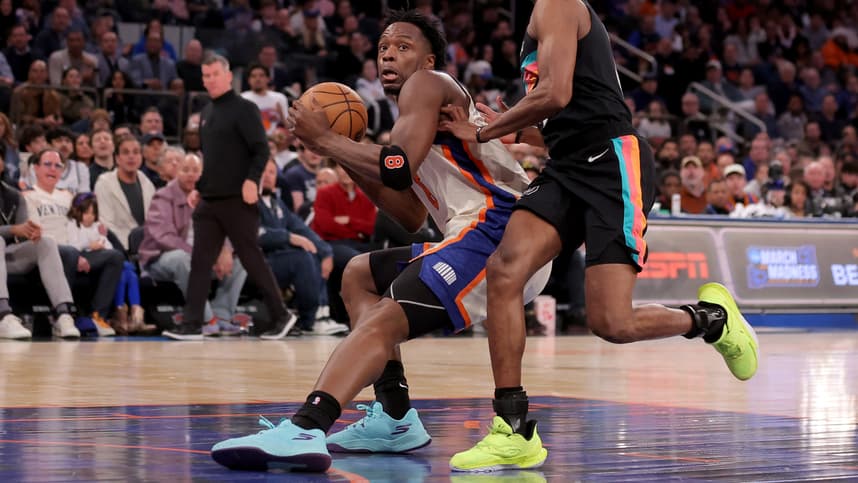
There are many differences between the recent and long-term history of the finals matchup between the Knicks and Spurs. The Spurs have been one of the premier NBA franchises, with five championships since 1999. On the contrary, the Knicks have fallen on hard times, notably not making the finals since 1999, when they lost to, you guessed it, the San Antonio Spurs, and not winning the Larry O’Brien since 1973.
The Spurs have been a model of consistency; they have gone from Tim Duncan to David Robinson to Kawhi Leonard, and now to Victor Wembanyama, with respected faces of their franchise and plenty of other fixtures along the way. Spurs first-year coach Mitch Johnson is their second head coach since 1996. In comparison, the Knicks’ infamous Charlie Ward curse, in which they had not extended a player they selected in the draft since 1999, was only broken in 2022 with Mitchell Robinson and RJ Barrett, while first-year head coach Mike Brown is their 18th coach in that same time frame since 1996.
Luck has played a factor in the fortunes of these two franchises as well. The Knicks have moved up once in the draft lottery, receiving the number one pick in 1985 and landing hometown star Patrick Ewing in a lottery still debated to this day. Compare that with the Spurs, who have moved up in each of the last three draft lotteries, including moving up two slots to number one in 2023 to select Victor Wembanyama.
The Spurs Have Continued to Build Through The Draft
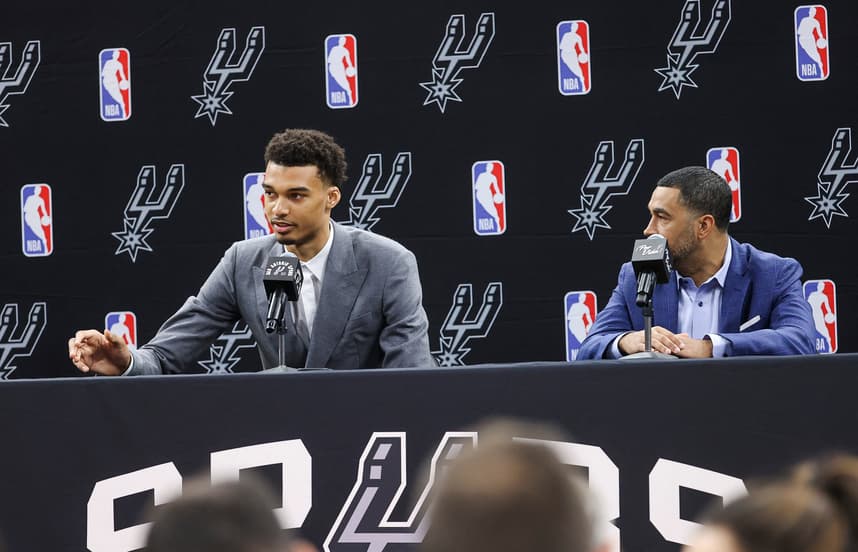
In Game 7 of the Western Conference Finals, 157 of the 240 minutes played were by players drafted by the Spurs. The Only players to record at least 7 minutes in the game who came from outside the Spurs organization were trade acquisition De’Aaron Fox and Julian Champagnie, the latter of whom was an undrafted free agent with two career games outside the Spurs organization.
The Spurs, as an organization, have continued the tradition of drafting and developing core players in-house. On almost all of their championship teams, whether it be Tim Duncan, David Robinson, Tony Parker, or Kawhi Leonard, the vast majority of the key guys were all drafted and/or developed by the Spurs organization.
That is no different with this Spurs team. Many people recognize Wembanyama, Stephon Castle, and Dylan Harper as the core building blocks of this team going forward, all of which have been drafted, developed, and will continue to progress in the Spurs organization.
While you can credit some of the Spurs’ success to luck, constantly moving up in the draft lottery, it should be noted in that core that Stephon Castle is a huge developmental win for them. In just his second year, he adds being a key contributor on a finals team to his rookie of the year resume and unquestionably goes number one in a 2024 NBA redraft. Many draft analysts were skeptical of Castle due to his poor shooting for a guard/wing archetype, but the Spurs saw someone who has contributed to the high-level, winning basketball they sought to return to.
Additionally, like the Spurs of the past, the Spurs continue to hit it on the nose in the margins of drafting and development. The 11th pick in the 2020 draft, Devin Vassell, has been a starter for the Spurs ever since his second year and remains such on the 2026 finals run. The 30th pick in the 2019 NBA draft, Keldon Johnson, has had a somewhat up-and-down career up until this year, when he rewarded the Spurs’ patience by turning in a Sixth Man of the Year season. The aforementioned Julian Champagnie went undrafted and was let go by the 76ers after just two games with the franchise, who now, after four years in the Spurs organization, is a starter on a finals team and one of the best three-and-D guys in the league.
The Spurs have remained patient in their team-building strategy. They have continued to stockpile draft picks while their players developed. They have largely stayed out of the market for older stars like Giannis Antetokounmpo and Kevin Durant, who they feel would rush their development, instead trusting their infrastructure to develop their own guys into players of that caliber. When the time came to make a move, they used their stockpile of draft picks from trading away aging players like DeMar DeRozan and Jakob Poetl to acquire De’Aaron Fox, a younger veteran who better fit the timeline of their young guys while still retaining future assets.
Patience is a big lesson to be learned from this Spurs build. They easily could have lost patience after missing the playoffs for six years in a row from 2019-2025. Instead, they continued to trust their scouting and development teams, and as a result, we saw simultaneous improvement across all their young guys, culminating in a finals appearance in the very first playoff run of this version of the Spurs.
The Knicks Got The Right Players at The Right Time
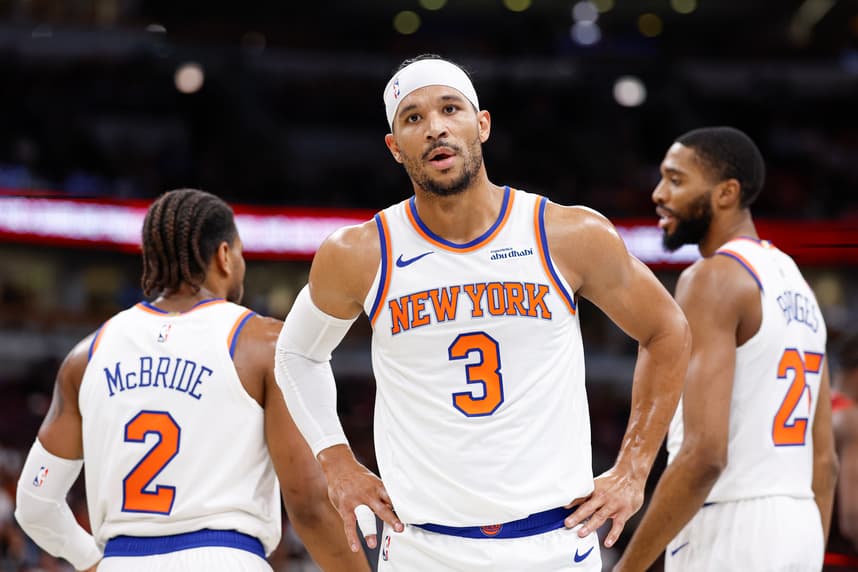
When the Knicks missed out on Kevin Durant and Kyrie Irving in the 2019 offseason, it appeared that if the Knicks ever wanted to get back to any form of relevance, they would need to take a page out of the Spurs’ book and get core pieces in the draft. That had been the discourse surrounding the Knicks in the years leading up to that offseason and would continue in the near future. When the Knicks’ disaster offseason bled into a slow start during the 2019-20 season, they cleaned house, firing both coach David Fizdale and president Steve Mills. While we already touched on the coaching carousel the Knicks had gone through, Rose additionally became the Knicks’ 10th president of basketball operations since 1999.
While Rose and his team made plenty of draft picks, including plenty of hits along the way, showing that when they needed to, they could supplement the roster through the draft, it wasn’t necessarily drafting that helped create one of the most impressive sports rebuilds of our time. Instead, the Knicks front office has continued to maximize underutilized talent around the league, prioritizing getting guys who fit and with the proper infrastructure could have their talents maximized.
It arguably all started with Julius Randle, who became the early face of this Knicks rebuild. Randle was always considered a high-level NBA talent who was productive but struggled to find his footing in a winning situation, going from a dysfunctional young Lakers team early in his career to a Pelicans team whose season was headlined by Anthony Davis’s trade request to a Knicks situation where year one he had to carry the burden of being the team’s consolation prize for Kevin Durant and Kyrie Irving.
When Leon Rose and subsequently Tom Thibodeau took over as the Knicks president and head coach, the culture around the Knicks changed and thus Randle was able to thrive as the Knicks number one option, and with him as the head of the offense while the winning infrastructure brought by Thibodeau helped generate a Knicks defense leading to a miraculous turnaround of the season prior, a 41-31 record, and the fourth seed in the East.
The Knicks rebuild wasn’t done just by making the playoffs; while the Knicks front office didn’t make rash moves, they looked to improve every offseason and at the trade deadline. That brings us to the 2022 offseason, where the Knicks acquired the first of five starters on this eventual 2026 Finals team, Jalen Brunson.
When the Knicks signed Brunson to a 4-year, $110 million contract that offseason, it was one of the most controversial free-agent moves in recent times. While Brunson was seen as a good player with significant value, people questioned whether he was the kind of player who could help the Knicks take the next step beyond what they had already become. He was coming off an impressive playoff run, largely leading the Mavs to an upset series win against the Utah Jazz without Luka Doncic and eventually being a big part of them making the Western Conference Finals, but people still questioned what a small point guard who averaged 16.3 points per game during the regular season could do for a Knicks team that seemed stuck for so long.
What Brunson has become since then needs little explanation. Now a three-time All-NBA player for the Knicks, he is not only the face of the franchise but has the chance to be one of the greatest Knicks of all time. What people saw as Brunson’s limitations, the Knicks saw as a young guard who showed he could be the engine of an offense in high-pressure situations and had continued to grow year by year.
But the team Brunson joined at first has continued to evolve over the years. Brunson’s four other starting running mates were all acquired after his tenure. To varying degrees, all the other players had limitations that were pointed out when the Knicks acquired them.
In Brunson’s first trade deadline as a Knick, they acquired college teammate Josh Hart. Next trade deadline, OG Anunoby, and in that offseason they really shook things up, acquiring Mikal Bridges and Karl-Anthony Towns.
Josh Hart was considered by many a poor shooter and not a starter. Everyone thought OG Anunoby was good, but was he a good enough shot creator to be a true difference-maker? Mikal came in a similar boat, good, but did he show enough in Brooklyn as a true shot creator to justify the high draft pick haul? Towns was a multi-time All-Star, All-NBA guy, but when it came down to it, he was essentially salary-dumped by his team as it looked to take the next steps. Considered not a good enough defender and too soft for his skill set to be a “winner”.
When people saw what these players couldn’t, the Knicks saw what they brought to the table. Josh Hart could serve as the perfect energy glue guy while others on the floor provided shooting; OG didn’t have to be an elite self-creator on a Knicks team that provided it elsewhere; he could instead focus on bringing his many elite attributes to the table. Mikal never had to develop into the shot creator he tried to be in Brooklyn to justify his cost. He didn’t have to be worth five firsts for any team; he had to be worth five firsts for this specific Knicks team. The Knicks saw not only a supreme talent in Towns but someone whose reputation didn’t match his character. KAT has not only brought his skill to the Knicks but also adaptability and growth in many of the most criticized areas of his game.
While the Knicks have made the right big moves, they have also supplemented the roster with the right little ones. During the Rose era, they brought in Immanuel Quickley, Obi Toppin, Quentin Grimes, and Deuce McBride through the draft, and Alec Burks, Donte DiVincenzo, Isaiah Hartenstein, and Landry Shamet through free agency. All of which have supplemented a great Knicks roster or been valuable trade chips during this Knicks run.
It also wouldn’t be right to talk about the risks taken in this Knicks build without mentioning the chance they took on Head Coach. For five prior years, Tom Thibodeau brought the Knicks not only stability but also continuous year-to-year growth. From their first playoff performance to an ECSF two years later, 50 wins the next year and an ECF the year after, Thibs was undoubtedly one of the most successful coaches the Knicks have had in a ridiculously long time.
Still, as with the rest of their roster construction, the Knicks didn’t want to remain in the same place and saw an opportunity to improve. Despite an ECF appearance in 2025, Thibs was let go in favor of Mike Brown. Like many of the players on this roster, the decision to bring in Mike Brown was met with a lot of raised eyebrows. Mike Brown had had moderate success in a variety of locations but had never taken a team over the top and had been seen by many as flamed out. But once again the Knicks didn’t look for the perfect guy; they looked for the perfect guy for this team. Where Brown was often on teams of dysfunction and relied on to bring them out, on this team the foundation had been set, and it was his job to take it to the next level. Through trials and tribulations, Brown has tinkered with this team throughout the year, eventually finding the correct system that has led the Knicks roster to be maximized, and now on a historic 11-game playoff run, all while he’s been able to keep a similar level of intensity and drive to win from the Thibs era.
Both Front Offices Remained Patient.
While the Spurs and Knicks didn’t always go about it the same way, they both preached patience and continued to improve. Both teams largely passed on the big superstar market in favor of developing from within or continuing to bring in supplemental pieces. The Spurs had a relatively long playoff drought for their franchise’s standards, while the Knicks continuously progressed year by year. But neither team put their chips in all the way, leaving room to improve and pivot if things didn’t go according to plan.
Development was progressive for the Knicks and sudden for the Spurs, but both teams’ rosters rewarded their patience in different ways. There will never be a definitive answer on the correct way to build a team; if the Knicks win, you may argue that the Spurs’ strategy allows for a long window, while if the Spurs win, you may argue they were able to catch more breaks than the Knicks. Regardless, even if it came about in different ways, there is a model of team building worth learning from both teams.
More about:New York Knicks