Alexander Wilson

The New York Giants made a move on Friday night, trading up to the 74th overall pick in exchange for picks 105, 145, and a future fourth-rounder in 2027. The cost analysis actually works in New York’s favor here. The Giants gave up 11.6% less than teams typically surrender to move up to that specific spot, which means Joe Schoen got a favorable deal before the player is even factored in. Then you factor in the player.
Notre Dame receiver Malachi Fields is not the type of pass catcher the Giants have gravitated toward recently. They’ve built the skill position group around speed, agility, and yards after the catch. Fields offers something different: a big body, possession-style receiver with elite hands and the frame to function as a legitimate blocker on the boundary. For a John Harbaugh offense that values physical football and contested catch situations, this is a very intentional addition.
What Fields Actually Brings
His receiving profile from last season shows a receiver who finished with 630 yards and five touchdowns on a 58.1% reception rate. The reception rate looks modest until you understand why it is where it is. On 62 targets, he dropped only one pass, good for a 2.7% drop rate. That number is elite. He’s not dropping the ball. The completion rate reflects the type of contested, difficult throws he’s being asked to catch, not a hands problem.
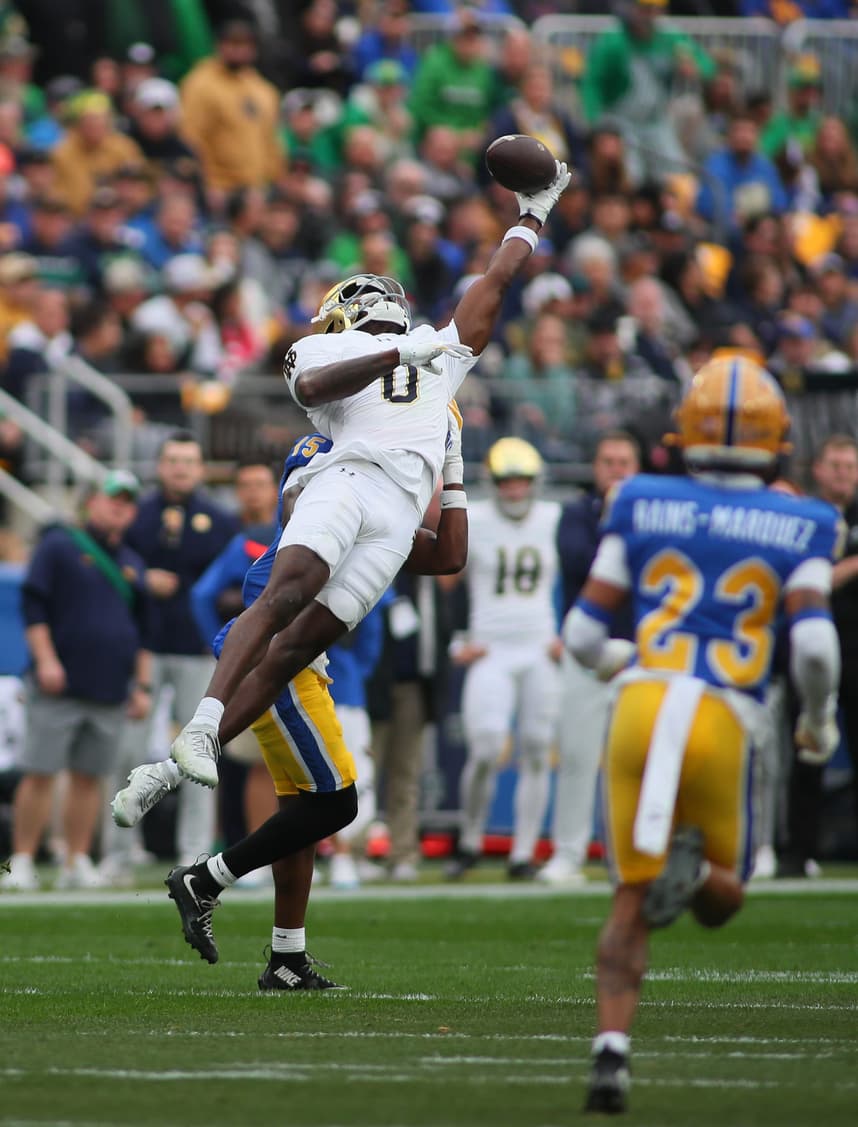
He spent 88.7% of his snaps aligned wide, making him a true X receiver rather than a gadget piece or a slot option. His contested catch ability is the headline skill: 291 yards and three touchdowns on throws 20 or more yards downfield. That tells you he can win in situations where the ball isn’t perfectly placed, which is the kind of receiver that makes a quarterback’s job significantly easier in clutch moments.
His frame also makes him a credible run blocker on the outside, something Harbaugh has always prioritized. The Giants’ running backs need clean edges to operate, and having a receiver who can seal defenders on the perimeter instead of getting pushed around opens up a different dimension in the ground game.
The Athleticism Question
The 4.61 forty is where most of the skepticism is going to come from, and it’s a legitimate concern at the NFL level where corners and safeties can run. Fields is not going to beat anyone deep on a pure speed route. That’s not what he’s been asked to do and it’s not what the Giants are drafting him to do.
What the organization believes, and it’s a reasonable position, is that his game speed is meaningfully better than his combine number. Players with strong football instincts and elite route precision often look faster on the field than they test in a straight line. His downfield production at Notre Dame supports the idea that he’s not getting exposed deep, he’s winning those matchups. The Giants are betting on that translating.
As a developmental third option alongside Malik Nabers and whatever else this receiving group becomes, Fields provides a skill set that doesn’t currently exist on this roster. Nabers is the explosive playmaker who demands the ball constantly. Fields is the reliable possession receiver who converts third downs, shields the ball away from defenders in traffic, and makes the tight windows accessible for the quarterback.
It’s a complementary pick that makes the offense harder to defend. At 74th overall and a favorable trade cost, the Giants got real value here.

More about:New York Giants