Anthony Rivardo
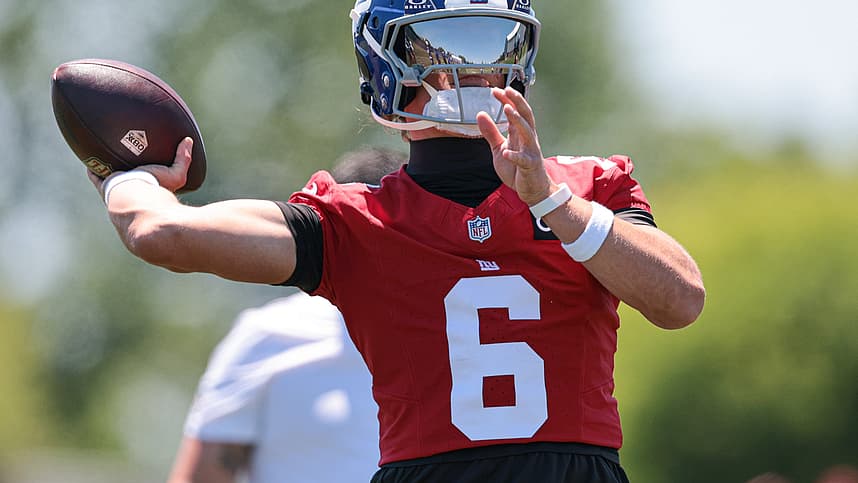
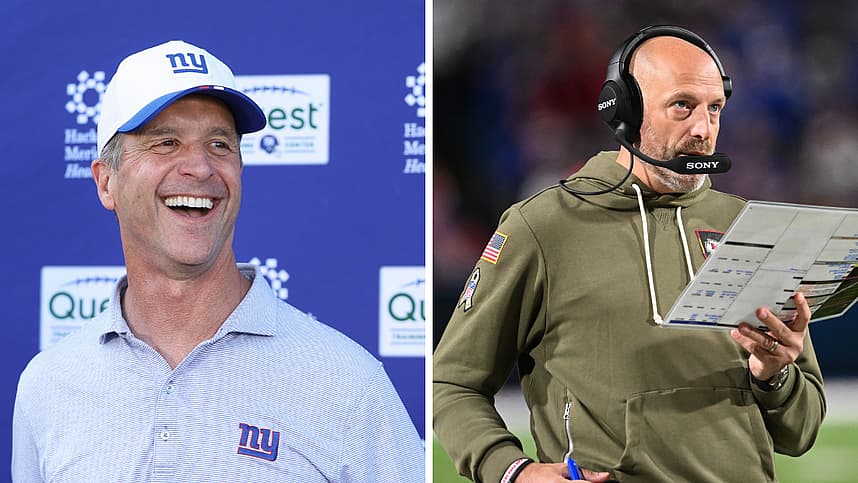
Jaxson Dart took the first-team reps across the Giants’ three-day mandatory minicamp, and the flaw that kept showing up was the deep ball, according to the beat writers in attendance. He held the football too long, hesitated on the launch, and let the defense win reps it had no business winning. Quarterbacks coach Brian Callahan told reporters the throwing arc and the air under those passes are an active fix.
This is the same rookie who threw for 2,272 yards and 15 touchdowns against just five interceptions in 12 starts last season, then added a franchise-rookie-record nine rushing touchdowns on the way to 24 total scores. While Dart flashed his potential and had moments of pure electricity as a rookie, his inconsistent deep passing accuracy was undoubtedly among his biggest weaknesses last season.
Dart is the Giants’ presumed franchise quarterback now, running a brand-new system, and the deep ball is the part that has not caught up yet.
The Deep Ball Is the One Real Concern
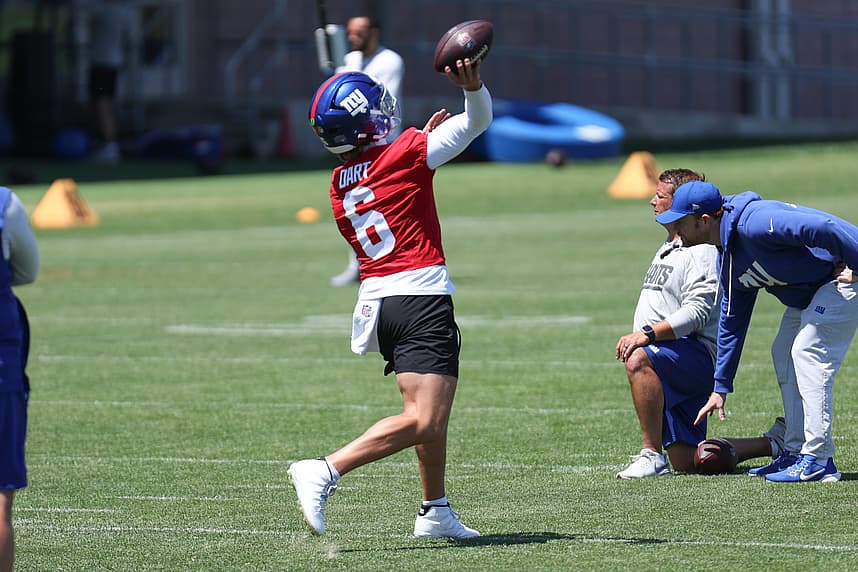
The deep passing game was the most concerning development of the entire minicamp, according to Patricia Traina of Sports Illustrated, pointing to Dart’s indecision and a tendency to hold the ball until the window closed. The mechanical work backs that up, as the coaching staff has been tweaking his footwork, his grip, and the throwing arc on deep balls, trying to get him to put less air under the ball so it arrives on time instead of hanging.
Callahan was not sounding any alarms. He said Dart “did a really nice job with it” and “has gotten better over the course of the spring,” framing the deep ball as a work in progress rather than a red flag, h/t Big Blue View. The track record gives that some weight, since Dart closed his rookie year with a career-high 110.2 passer rating in the Giants’ Week 18 win over Dallas.
Matt Nagy’s Offense Asks Dart to Live Under Center
The bigger adjustment underneath the deep-ball noise is where Dart is taking the snap. As a rookie, he operated almost entirely from the gun, throwing 310 of his 339 attempts out of shotgun and completing 64.2 percent, according to data compiled from PFF and NFL+. Matt Nagy’s offense pulls him under center far more often, which changes his footwork, his read timing, and the rhythm on exactly the kind of play-action shots that gave him trouble in June.
Dart’s overall rookie grade reflected a quarterback still rounding into form rather than a finished product. PFF handed him a 67.9 overall grade, 31st among 43 qualified quarterbacks, with a passing grade of 64.2 that ranked 34th. Those are developmental numbers from a 12-start sample, and the under-center transition is the kind of change that can drag them down before it lifts them. The Giants have seen Dart hit those deep shots in spurts, but the consistency needs to improve.
| Metric | 2025 rookie total | Context |
|---|---|---|
| Passing yards | 2,272 | 12 starts |
| Pass TD / INT | 15 / 5 | 91.7 passer rating |
| Rushing TD | 9 | Giants franchise record |
| PFF overall grade | 67.9 | 31st of 43 QBs |
What the Giants Need Before Week 1
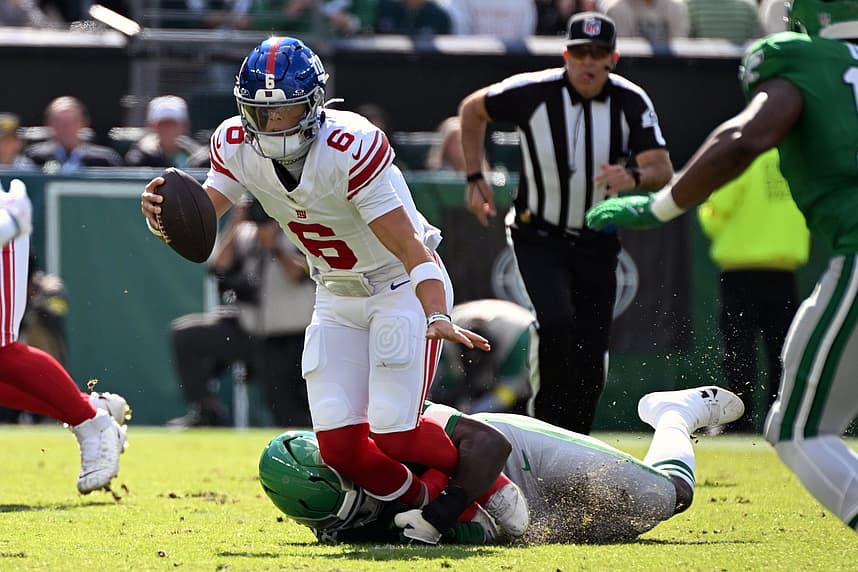
Jameis Winston sits behind Dart as veteran insurance, but this is Dart’s offense, and Harbaugh handed him a heavy workload to prove it. The job security is settled. The execution is the open question.
The Giants open the season at home against the Cowboys on September 13 in primetime, likely without Malik Nabers for at least part of the early slate, which leaves Dart leaning on a thinner receiver group and fewer easy completions. A quarterback who can hit the deep shot keeps a defense honest and opens the run game Nagy wants to build around. Dart has the arm and the rookie résumé. He has a summer to make the deep ball match them.

More about:New York Giants