
 Alexander Wilson

Every offseason brings a few headline-grabbing names that ignite curiosity, and this winter, the New York Yankees could find themselves in the middle of another international chase. With roughly $70 million in spending space before they hit the $300 million luxury tax line, the front office has flexibility — and according to Mark Feinsand of MLB.com, they’re keeping a close eye on Japanese star Munetaka Murakami.
At first glance, Murakami looks like the kind of bat the Yankees love to dream on: a 6-foot-2, 213-pound left-handed slugger with serious power and a proven track record overseas. But beneath the excitement lies a question that’s hard to ignore — where exactly would he fit?
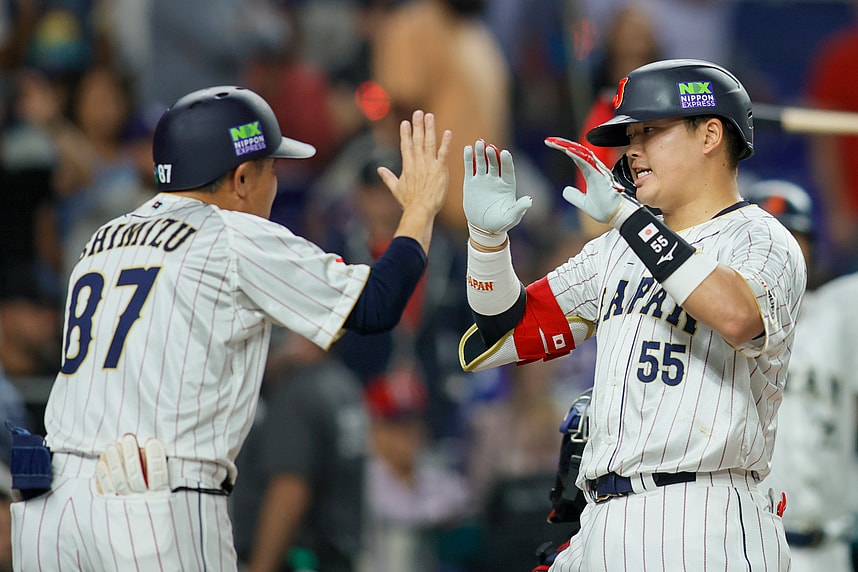
Murakami’s offensive power is undeniable
Murakami’s numbers speak for themselves. In just 69 games last season, he hit .286 with a .392 on-base percentage and a monstrous .659 slugging percentage. He blasted 24 home runs and drove in 52 runs, showcasing the kind of pop that translates in any league.
That level of production is hard to overlook. Murakami’s compact yet explosive swing is built for pulling balls into the right-field seats — something that tends to make Yankee Stadium executives drool. Still, he struck out 71 times in 220 at-bats, a reminder that even elite international hitters can struggle with swing-and-miss issues when facing more advanced pitching.
Transitioning from Japan’s NPB to Major League Baseball is rarely seamless. The velocity gap and pitching depth across rotations create an adjustment period even for the best hitters. For a player like Murakami, that could mean a season or two of growing pains before the power fully translates.
A crowded infield complicates the fit
While Murakami’s bat would instantly deepen the lineup, his defensive profile doesn’t line up perfectly with the Yankees’ current roster. He’s played both first and third base, two positions that already appear occupied.
Ben Rice has earned a legitimate shot as the team’s long-term first baseman after flashing consistent contact skills and solid defense down the stretch. At third, the Yankees invested in Ryan McMahon at last summer’s trade deadline, envisioning him as a reliable glove and steady presence on the left side of the infield.
That makes Murakami’s fit more complicated. If he were to share time at third or serve as a platoon bat, the move could make more sense. But adding another left-handed corner infielder when the team’s real needs lie in the outfield and middle infield might not be the most strategic use of their resources.
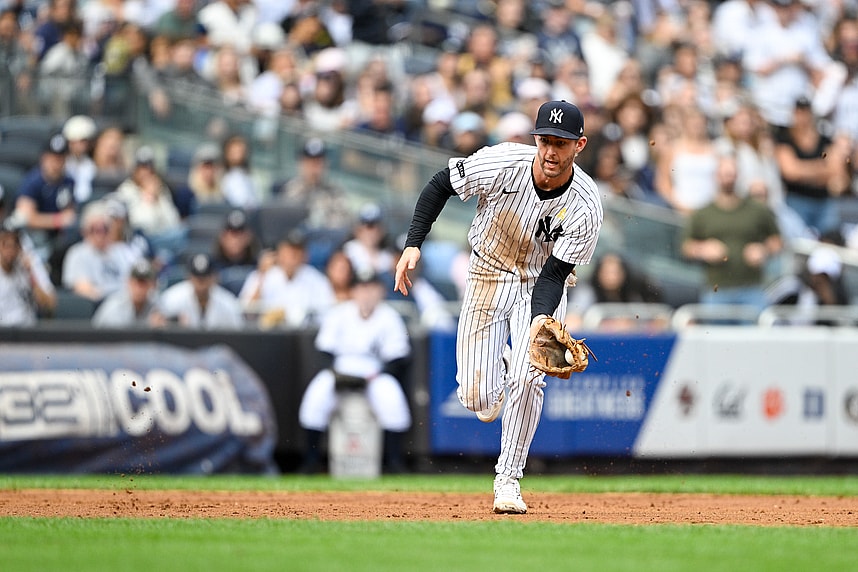
Big swing, uncertain landing spot
The Yankees’ interest in Murakami still makes sense from one angle: they’re always seeking power-hitting lefties who could thrive in their ballpark. The organization’s history with Japanese players, from Hideki Matsui to Masahiro Tanaka, only adds to the appeal.
The problem is, the Los Angeles Dodgers have signed every notable Japanese talent recently.
But the Yankees can’t afford to collect talent for the sake of it. With multiple holes to fill and a strict payroll target in mind, Brian Cashman’s decisions this winter will need to prioritize fit as much as flash.
Murakami could absolutely succeed in the majors — he’s that talented. Yet for a Yankees team already set at the corners, his arrival might feel like buying another luxury car when what they really need is a reliable engine.

More about:New York Yankees
