
 Alexander Wilson
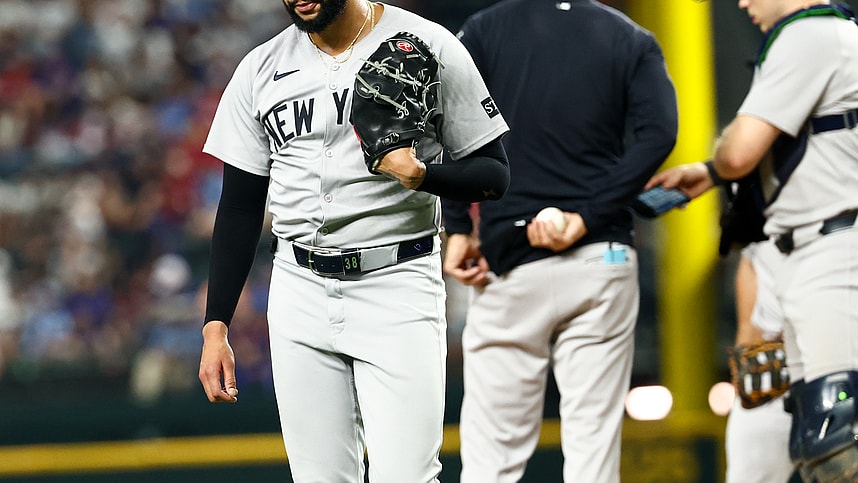
The Yankees have been notably quiet to start the offseason, watching from the sidelines as the crosstown rival Mets make waves with multiple high-profile moves, for better or for worse.
Among those transactions was the signing of Devin Williams, the Yankees’ former closer, to a three-year, $51 million contract. While seeing a high-leverage arm move to Queens might usually sting, reports suggest the mood inside the Yankees’ front office is less about regret and more about exhaling.
According to Jon Heyman of the New York Post, both the Yankees and Williams’ former team, the Milwaukee Brewers, seemed “relieved” to see the right-hander move on.
Williams’ tenure in pinstripes was turbulent from the start, marked by friction over team policies and an on-field demeanor that never quite clicked with the Bronx environment. It appears the fit was awkward from day one, and the separation might ultimately be beneficial for both parties involved.
The algorithm hides the best Yankees news; make sure you pin Empire Sports Media on Google News so you don’t miss a beat.
A Culture Clash from the Opening Pitch
When Williams arrived via trade last offseason, the focus wasn’t immediately on his “Airbender” changeup, but rather on his facial hair. He made headlines by challenging the Yankees’ decades-old appearance policy, a move that reportedly prompted ownership to relax the rules for the first time in generations. While the players publicly welcomed the modernized approach, it set a tone that Williams was perhaps more focused on individuality than integration.
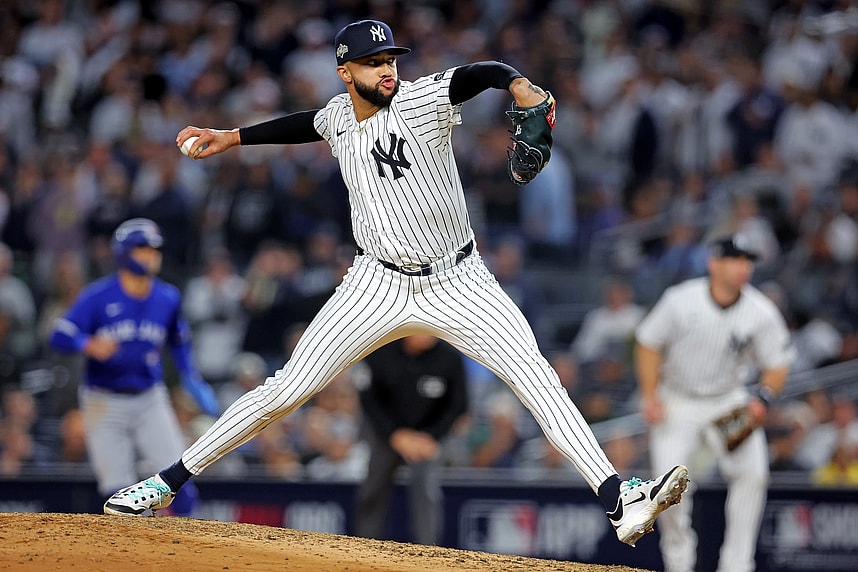
Observers noted that Williams never seemed truly comfortable or confident wearing the pinstripes, often looking like a player looking for the nearest exit. His parting shots at the fanbase on social media only solidified the perception that the marriage was doomed to fail. Sometimes a player and a city just don’t mix, and despite his talent, Williams and New York—at least the Bronx version of it—were like oil and water.
The Mets Take on a Calculated Risk
The Mets are banking on the idea that a change of scenery within the same city will unlock the dominant version of Williams. However, Heyman points out the irony in David Stearns, a former Brewers executive, being the one to bring him back. Multiple Brewers sources reportedly told Heyman they knew New York wasn’t the right place for him, making the acquisition a fascinating gamble on talent over temperament.
Replacing Edwin Diaz with Williams is undeniably a downgrade on paper, simply based on the raw dominance Diaz provided when healthy. While Williams is a legitimate high-leverage arm, the drop-off in performance and the lingering questions about his comfort level in New York make this a move fraught with variables. The Mets need him to be elite, but his track record suggests that the pressure cooker might not be his preferred environment.

“Not a Disrupter,” But Not a Fit
Heyman’s reporting emphasizes that Williams isn’t necessarily a “disrupter” in the locker room, but rather someone who just didn’t mesh with the specific culture of his previous teams. He noted, “Both Brewers and Yankees people seemed relieved when he left… Williams isn’t a disrupter and he seemed more comfortable late last year. But the switch from Díaz to Williams is an undeniable downer, even beyond the 2025 performance gap.” That nuance is important; a player can be a professional without being the right piece for the puzzle.
The Yankees clearly felt that the juice wasn’t worth the squeeze, preferring to let him walk rather than try to force a square peg into a round hole for another season. It allows Brian Cashman to reset the bullpen culture and look for arms that might be better suited for the unique demands of Yankee Stadium. Sometimes addition by subtraction is a real phenomenon, and the Yankees seem to believe this is one of those cases.
Looking Ahead: A Fresh Start for Everyone
Ultimately, this split allows everyone to move forward without the baggage of a mismatched relationship. The Yankees can focus on finding a closer who embraces the pressure of the Bronx, while Williams gets a fresh contract and a chance to prove his doubters wrong in Queens. The narrative surrounding his exit will linger, but the results on the field next season will determine who actually won this breakup.
For the Yankees, the silence this winter might be frustrating for fans, but dodging a long-term commitment to a player they didn’t believe in is a prudent move. They avoided the temptation to overpay for a name that didn’t fit the culture. Now, the pressure is on Cashman to find the arm that actually does.

More about:New York Yankees
