Alexander Wilson

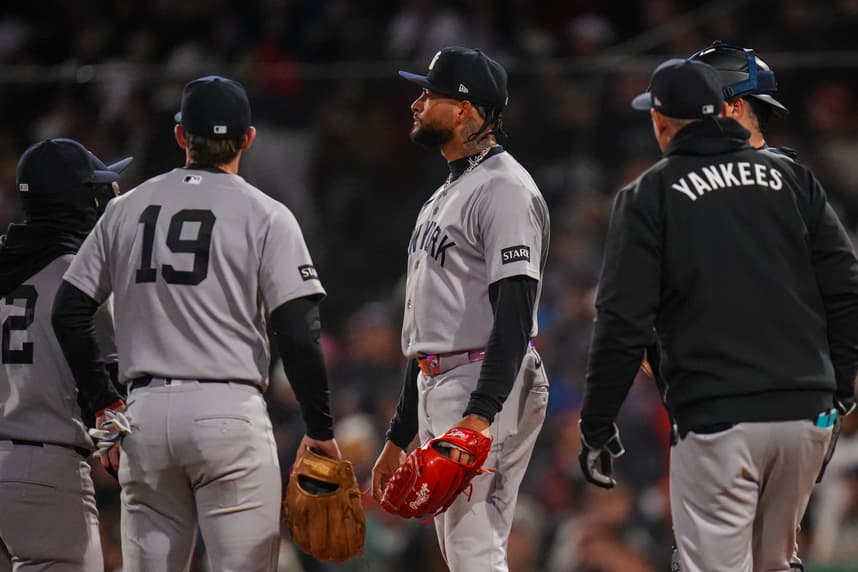
The New York Yankees shut out the Boston Red Sox 4-0 on Tuesday night and Luis Gil was the reason. He tossed 6.1 scoreless innings on 83 pitches, allowed two hits, walked three batters, and struck out two. Aaron Boone pulled him despite the clean result and the low pitch count because the Yankees are managing his buildup carefully as he works his way back toward a starter’s load. It was a win. It was a gem on the surface. It was also a performance that raises more questions than it answers when you look past the box score.
Three swings and misses on the entire night. His fastball was down 1.7 mph from where it normally sits. His slider was down 3.8 mph. For a pitcher whose entire value proposition is built around premium velocity and swing-and-miss stuff, those two numbers are the only ones that really matter, and they were both trending in the wrong direction on Tuesday.
What the Box Score Is Hiding
Gil’s best seasons have been defined by one thing above all else: the ability to miss bats at an elite rate. When he won the Rookie of the Year in 2024, he was posting strikeout numbers that put him in the conversation with the best young arms in baseball. His career profile is built on swings and misses generated by a fastball sitting in the upper 90s and a slider with genuine two-plane movement. When those pitches are operating at full capacity, hitters have almost no chance against him.
Tuesday was not that version of Gil. Three swings and misses across 6.1 innings is a number you’d expect from a contact pitcher who nibbles at the corners and tries to keep the ball on the ground. That’s not what Gil is or what he needs to be. The Red Sox are not a team that gets credit for making anyone look this controlled. They’re a lineup that has been struggling offensively, and pitching two hits and two strikeouts through six innings against them doesn’t tell us much about whether Gil is back.
Why the Yankees Are Still Concerned
The velocity dip is the part that sticks with me. A 1.7 mph drop on the fastball and 3.8 mph on the slider are not rounding errors. Those are meaningful decreases, and for a pitcher who returned from injury this season still working his way back to full strength, they suggest he’s not quite where the Yankees need him to be yet. Sometimes low velocity shows up early in the season as arms are still building. Sometimes it shows up because something is wrong. The Yankees don’t know which one this is yet, and neither does Gil.
To Boone’s credit, pulling him at 83 pitches despite the clean result was the right call. Getting Gil healthy and at full capacity over the course of the full season matters a lot more than squeezing out two extra innings on a night when he’s already operating below his normal velocity.
Tuesday was a gift. Boston’s lineup handed him a performance his underlying numbers probably didn’t deserve, and the Yankees will take it. But if the velocity doesn’t come back and the whiff rate stays this low, the concerns about Gil are going to become a much louder conversation by the time May arrives.

More about:New York Yankees