Alexander Wilson
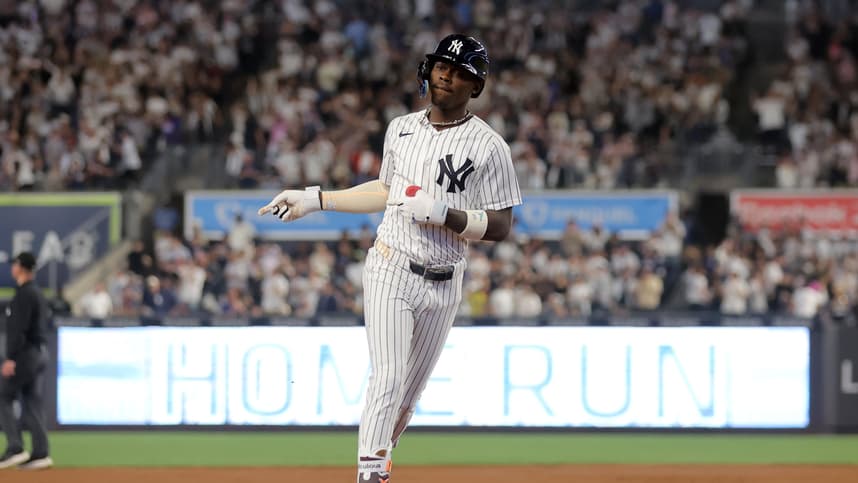
The worst possible outcome for a player heading into free agency is to play badly in the year that’s supposed to define their market value. Jazz Chisholm is living that outcome right now, and the implications for both his future and the New York Yankees’ roster construction extend well beyond the next few months.
Entering the season, Chisholm talked openly about chasing 50 home runs and 50 stolen bases, which would’ve been one of the most historic individual achievements in baseball history and positioned him for a contract somewhere in the $35-40 million per year range. Through 38 games, that conversation has become extremely uncomfortable. He’s hitting .203/.284/.326 with four homers, 13 RBIs, 11 stolen bases, and a 74 wRC+, meaning he’s been 26% worse than the average MLB hitter this season.
What the Advanced Numbers Are Screaming
The surface stats are bad. The advanced metrics are worse. Chisholm ranks in the 30th percentile in hard-hit rate, 35th in barrel rate, and 37th in average exit velocity this season. He’s whiffing on 30.5% of his swings and ranks in the 26th percentile in strikeout rate. Those numbers place him among the least productive offensive players in the sport right now, not just below average, genuinely among the worst.
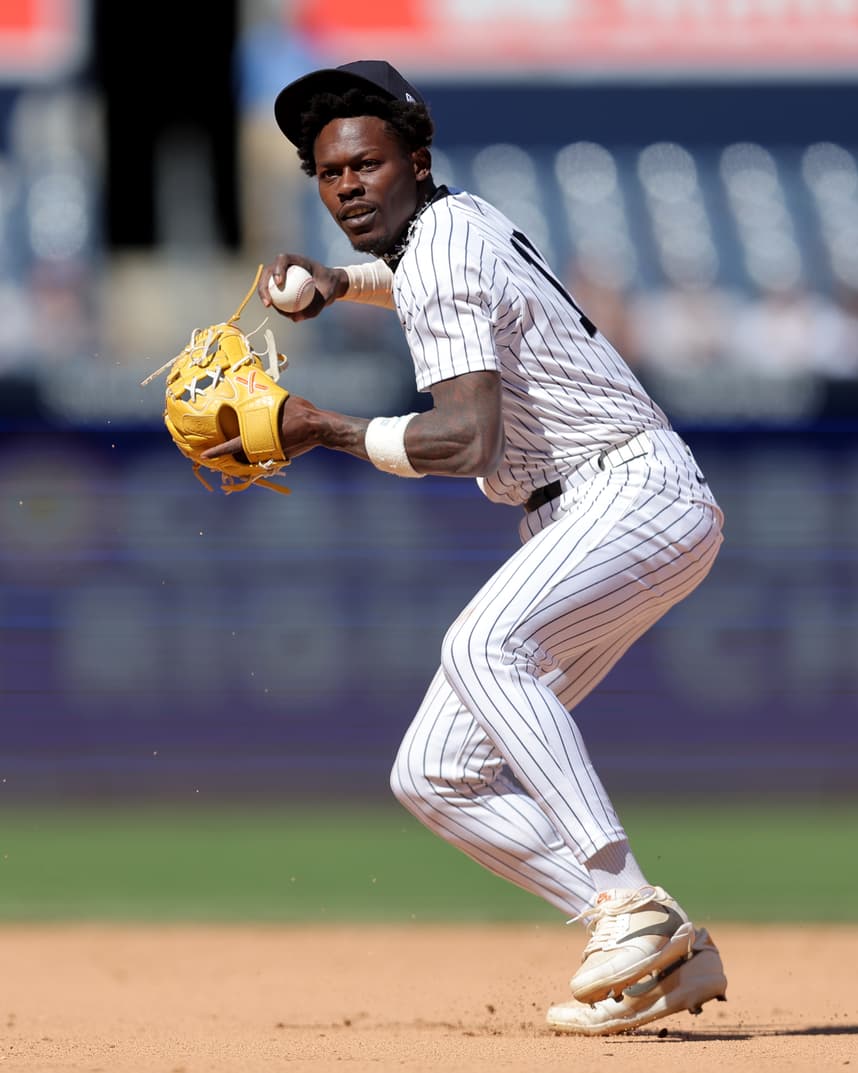
The comparison to his 2025 season is jarring. Last year, Chisholm ranked among the best hitters in baseball in barrel percentage and was well above average in bat speed, which was the engine driving everything. The 30-30 season he put together wasn’t a fluke. He was genuinely making elite contact quality and converting it into home runs at a rate that supported the big contract narrative.
This year, the bat speed has dropped noticeably and the barrel rate has fallen off with it. When bat speed declines, hitters get late on fastballs and start fouling off pitches they used to drive. The power evaporates first because those are the pitches that leave the park, and that’s exactly what we’re watching happen in real time. At his current home run pace, he’s tracking toward 17 for the season. He hit 31 last year in 130 games. The gap between those two numbers is not a slump. That’s a significant change in how the ball is leaving his bat.
The Contract Situation Is Evolving Quickly
Chisholm wanted $35 million annually over eight to ten years when the season started. Brian Cashman’s posture throughout spring was that these things get resolved in November, which was the organizational way of saying they weren’t panicking. At the time, that was a reasonable position given last year’s production.
Now, it reads differently. Cashman has a well-documented history of letting second basemen walk when the price doesn’t match the production. Gleyber Torres was solid and productive for years and the Yankees still let him leave because the money didn’t align. Chisholm is performing considerably below Torres’ level right now and asking for considerably more money. The math does not work in his favor.
If the second half doesn’t produce a dramatic reversal, the Yankees are almost certainly letting Chisholm hit free agency and addressing second base internally or through a different avenue entirely.
What Comes After Chisholm
The interesting part of this situation is how many options the Yankees actually have if Chisholm walks. Anthony Volpe has played shortstop his entire career, but the Yankees have already discussed moving George Lombard Jr. around the infield at Triple-A, and if Lombard is ready by 2027 to take over shortstop, Volpe sliding to second is a real possibility. He’s athletic enough to handle the position defensively and it removes the durability questions around his throwing shoulder that shortstop demands.
Lombard himself is the most obvious long-term answer at a premium infield spot, but the Yankees want him at third base or shortstop where his elite defensive tools and range have the most impact. Putting him at second base to solve a Jazz Chisholm problem would be an organizational misuse of their best prospect.
The name that doesn’t get mentioned enough in this conversation is Jose Caballero. He’s been the Yankees’ best infielder not named Ben Rice this season, hitting above average while playing solid defense at shortstop. If Caballero moves to second base long-term, where his athleticism and defensive instincts are more than adequate, and Lombard eventually takes over shortstop, the Yankees have a workable infield solution without spending a dollar on the free agent market.
None of those conversations are urgent while the team is 26-12 and winning games at a high rate. But the Chisholm situation is developing in a way that makes November planning unavoidable. The production hasn’t been there, the bat speed has dropped, and the market value he was chasing is slipping away by the week.
At some point the Yankees have to decide whether to give him more time or start building around the assumption that he won’t be here in 2027. Based on everything the numbers are showing right now, that conversation is already happening.

More about:New York Yankees