Alexander Wilson
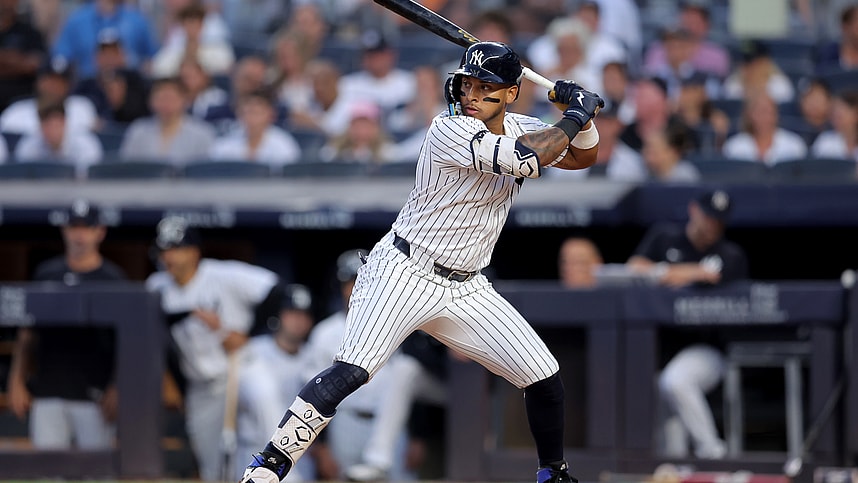
The Yankees enter Spring Training with a “good problem” that is quickly turning into a headache for General Manager Brian Cashman: too many infielders and not enough seats on the bus. While the acquisitions of Jose Caballero and Amed Rosario at last year’s trade deadline have locked down the primary utility roles, the battle for the final bench spot is evolving into a high-stakes game of musical chairs.
Oswaldo Cabrera is the incumbent, trying to fight his way back from a fractured ankle to reclaim his super-utility status. His switch-hitting ability—specifically his lefty swing—gives him a tactical edge over the right-handed Caballero and Rosario. But there is another lefty-swinging infielder in camp who is quietly forcing the Yankees into a corner: Jorbit Vivas.
The “Out of Options” Dilemma
Unlike Cabrera, who has roster flexibility, 24-year-old Jorbit Vivas is officially out of minor league options. This reality strips away the Yankees’ safety net. They cannot simply stash him in Triple-A Scranton/Wilkes-Barre if he doesn’t win the job. They have two choices: put him on the Opening Day roster or expose him to waivers, where another team would almost certainly snatch him up for free.
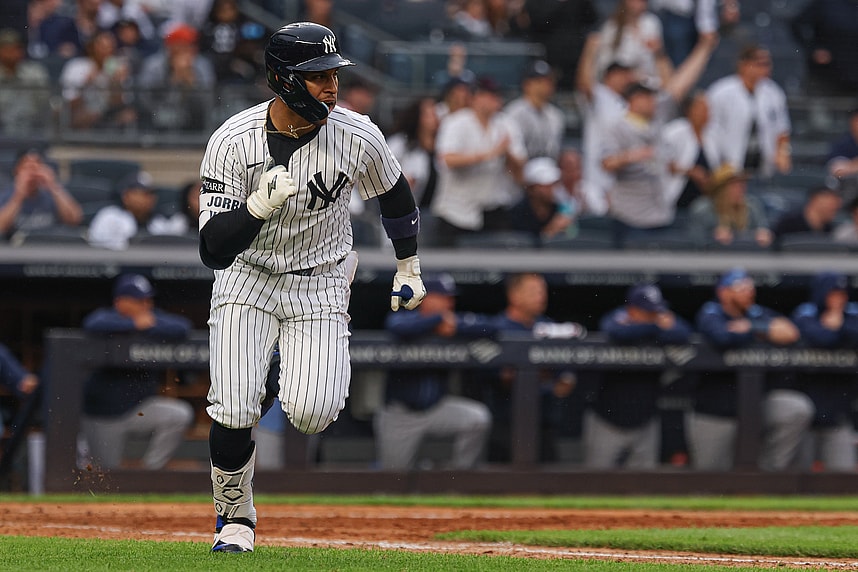
This puts immense pressure on the front office. Vivas is an enticing prospect with a “contact-first” profile that the Yankees have been trying to cultivate. He is a natural second baseman who can handle the hot corner in a pinch, but his value lies entirely in his ability to put the bat on the ball.
A Tale of Two Seasons: AAA Dominance vs. MLB Growing Pains
The Yankees are currently weighing Vivas’s elite minor league production against a rocky major league cup of coffee. In Triple-A last season, Vivas was a discipline machine. Over 100 games and 459 plate appearances, he posted a .389 on-base percentage and walked 13.9% of the time while striking out just 9.8% of the time. That nearly 1-to-1 strikeout-to-walk ratio is the kind of bat-to-ball skill that wins games in October.
However, his brief transition to the Bronx showed the gap between levels. In 66 plate appearances with the Yankees, Vivas slashed just .161/.266/.250, struggling to find holes in the defense.
The Underlying Metrics Offer Hope
Despite the poor surface stats in the majors, the underlying process remained intact. Even while struggling, Vivas maintained a Chase Rate of 18.0%, a number that sits in the elite tier of plate discipline. He wasn’t flailing at bad pitches; he was just missing his pitch or hitting into bad luck.
The concern, however, is the lack of explosive tools. His Sprint Speed sat in the 24th percentile, meaning he isn’t going to beat out many infield singles or steal bases like Caballero. He has to hit to survive.
As noted in a recent breakdown of the Yankees’ tough decision regarding Oswaldo Cabrera, the roster crunch is real. If the Yankees believe Vivas’s Triple-A discipline is the real deal, they might have to make a painful cut elsewhere to keep him. If not, Vivas’s time in pinstripes could end before it truly begins.

More about:New York Yankees