
 Alexander Wilson
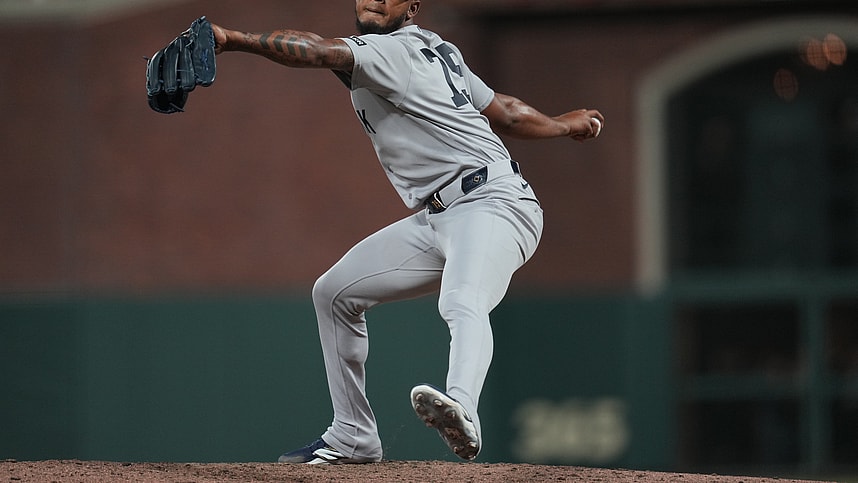
Friday night at Oracle Park looked like a baseball clinic. The New York Yankees held the San Francisco Giants to one hit over nine innings, walked two batters, and struck out 13 in a 3-0 shutout that made the home crowd very quiet very quickly.
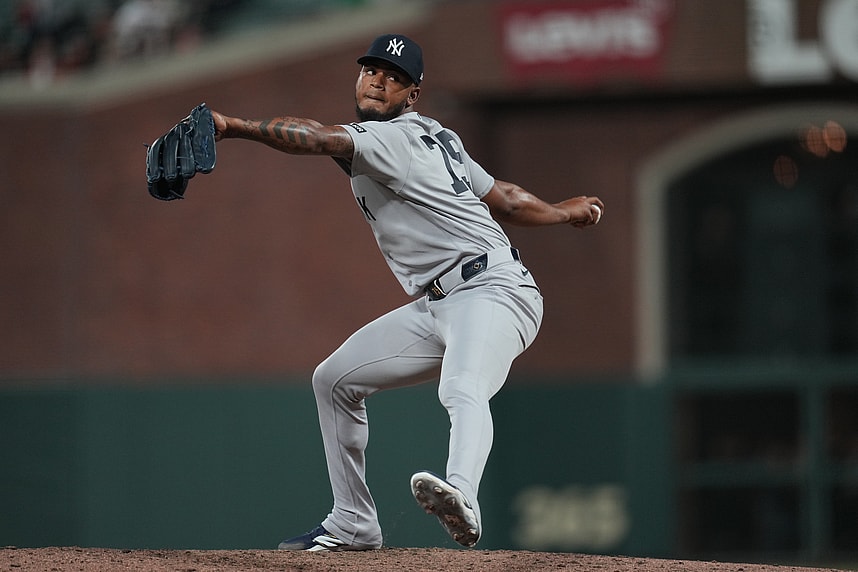
Cam Schlittler was excellent, punching out eight across 5.1 innings and making a strong case that his spring momentum was not a mirage. But the moment that stuck with me came late, when Camilo Doval walked to the mound and retired all three batters he faced on strikeouts. It was one clean inning against his former team, and it was exactly what the Yankees needed to see from a pitcher they are counting on to anchor their late-inning structure.
Two Games In and Already a Different Pitcher
The numbers Doval put up in San Francisco last season were a study in contradiction. He posted a 3.58 ERA over 65.1 innings with a ground ball rate in the 91st percentile, which sounds like someone you want pitching the eighth inning every night. Then you see the 12.6% walk rate and the whole picture shifts. That is not a rounding error. For a high-leverage reliever, a walk rate that high is a liability that compounds over the course of a season, turning what should be clean innings into white-knuckle situations the closer has to bail him out of.
The Yankees knew all of that going in and traded for him anyway, because what lives underneath the ERA and the walks is a pitch mix that genuinely punishes hitters. His Statcast data shows elite spin rates, above-average movement profiles, and contact suppression numbers that suggest hitters are genuinely uncomfortable when he is locked in. The raw material was never in question. The delivery of it was.
What the Yankees have been working on since the moment he arrived in camp is straightforward in theory and difficult in practice: lean on the sinker, improve the spin rate on it, and get more downward movement out of a pitch that was already solid. When a reliever gets more vertical drop on his best ground-ball pitch, hitters lose the visual margin that allows them to square it up. They start protecting a zone below the one they think the ball is heading for, and suddenly the cutter, already hard to handle, becomes twice as disruptive because the sinker has forced their hands lower.
Friday was the first real evidence that the work is translating. The sinker was sharper than anything Doval showed in his San Francisco days, generating the kind of late downward action that produces swing-and-miss at the bottom of the zone rather than contact. His cutter velocity is tracking slightly lower than his career norms through two appearances, but that is a March reality for most pitchers and nothing to lose sleep over. The weapon that matters is working, and that is the only early-season data point worth carrying forward.
What This Means Going Forward
David Bednar handles closing duties and that conversation is settled. What the Yankees need is a reliever who can hand Bednar a clean game in the eighth without the inning already unraveling. Doval has the profile for that role and the contract to match, with team control running through 2028. The investment the organization made in acquiring him only pays off if he becomes that arm.
Two appearances is not a verdict. But watching him work through San Francisco’s lineup on Friday, attacking the zone and making hitters look awkward, it was easy to see the version of Doval the Yankees were betting on when they made the deal. He showed up right on time.

More about:New York Yankees
