
 Alexander Wilson
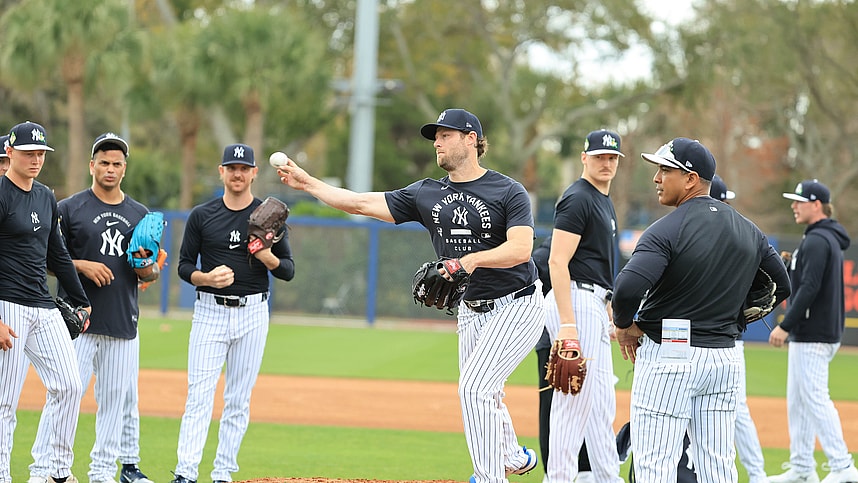
The Yankees‘ rotation will be thin to open the 2026 season with both Gerrit Cole and Carlos Rodon rehabilitating from their respective injuries. Aaron Boone confirmed on Wednesday that Cole has already thrown multiple bullpen sessions in California and is scheduled to begin live batting practice within the next couple of weeks, targeting a late May or early June return. But here’s the question nobody in the Bronx wants to answer: What version of Gerrit Cole will the Yankees actually get when he returns?
Cole didn’t pitch in 2025, recovering from Tommy John surgery he underwent in March after his elbow finally gave out. His elbow was already on life support in 2024, when he managed just 95 innings with a 3.41 ERA before the Yankees shut him down.
The front office knew the situation was precarious—that’s partially why they opted not to pick up the final year of his contract, which would’ve paid him another $36 million in 2029.
Instead, after Cole exercised his opt-out clause in November 2024, both sides agreed to void that fifth-year option and revert to the original four-year, $144 million deal through 2028. The Yankees and Cole essentially hit the reset button, canceling the contract extension rather than committing $180 million over five years to a pitcher coming off major elbow surgery.
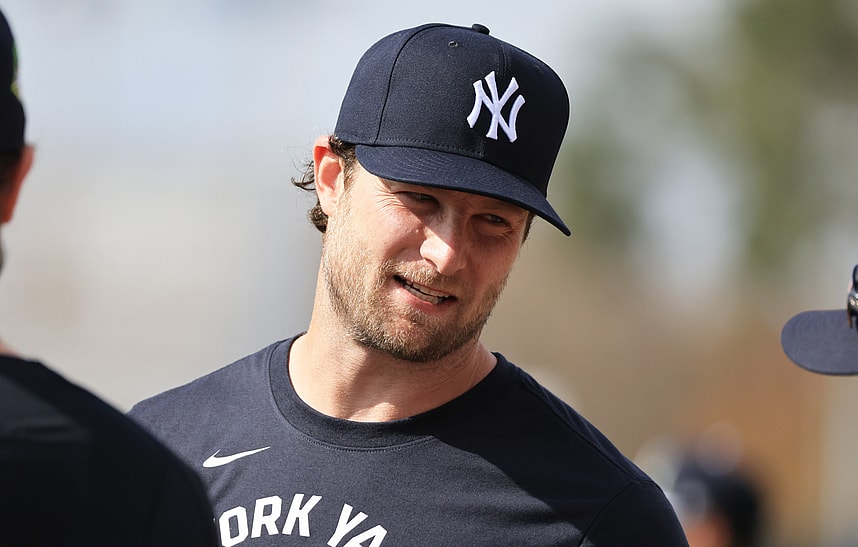
The Tommy John Reality Check Nobody Wants to Hear
Let’s be brutally honest: Cole is now two full seasons removed from his Cy Young-winning campaign in 2023, when he posted a 2.63 ERA over 209 innings. That version of Cole—the dominant, 200-inning workhorse who could carry a rotation—is probably gone. Research on Tommy John surgery recovery shows that while approximately 83% of MLB pitchers return to play, their performance measured by fastball velocity, innings pitched, and ERA tends to decrease slightly in the first two years following surgery. The data is clear: velocity typically drops 1-2 mph, command suffers in the first year, and durability is limited.
For Cole, who was sitting 96-97 mph in his prime, I’m projecting his fastball to hover around 95 mph when he returns. That’s still major-league caliber, but it fundamentally changes his profile. Cole has always been a power pitcher who attacked hitters with high-velocity heaters and wipeout sliders. If he loses even one tick, he transitions from ace to mid-rotation arm—a guy who needs to pitch to contact rather than blow fastballs past elite hitters.
The Contract Situation Tells You Everything
The Yankees’ decision to void Cole’s fifth year rather than commit $36 million for 2029 speaks volumes about their internal projections. General manager Brian Cashman and managing partner Hal Steinbrenner were involved in discussions about a potential extension, but ultimately both sides agreed to remove the opt-out and keep the deal at four years, $144 million. That’s a financial hedge—the Yankees are betting Cole can contribute through 2028, but they’re not willing to guarantee a 38-year-old coming off Tommy John surgery through age 39.
Compare that to how teams typically handle their aces. When the Dodgers extended Clayton Kershaw or when the Astros kept Justin Verlander, they were all-in. The Yankees’ willingness to let that fifth year disappear suggests their medical staff has concerns about Cole’s long-term durability, and frankly, the data supports that caution.
What the Research Says About Post-Tommy John Performance
A 2024 study examined 91 MLB pitchers who underwent Tommy John surgery and found some troubling trends. In the first year back, fastball usage dropped approximately 5%, FIP increased roughly 19%, and fastball run value—a measure of pitch effectiveness—decreased by 250%. The velocity and spin rate remained the same, but pitchers threw their best pitch less often and with less conviction. By the second season post-surgery, metrics normalized, but that first year is essentially a lost season in terms of elite performance.
For Cole, that timeline is critical. If he returns in late May or early June 2026, he’s roughly 14-15 months removed from surgery—right at that first-year threshold where velocity returns but command and confidence lag. The Yankees shouldn’t expect him to be their ace in 2026; they should expect him to be a backend starter who can eat 5-6 innings and keep them in games. If they get more than that, it’s a bonus.
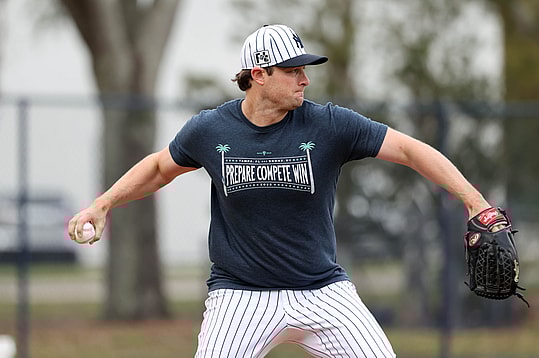
The Age Factor Complicates Everything
Cole will be 35 years old when he returns, which makes him one of the older pitchers to come back from Tommy John surgery. Studies show that pitchers typically experience a slight reduction in velocity after returning from Tommy John surgery, with the decrease often less than 2 mph but impacting performance, especially for pitchers who rely heavily on fastballs. For a 35-year-old, that velocity loss is compounded by natural age-related decline. When you’re 28, losing 1 mph still leaves you elite. When you’re 35, that same drop pushes you from dominant to merely competent.
Justin Verlander is the outlier everyone points to—he came back from Tommy John surgery at age 39 in 2022 and won the Cy Young Award with a 1.75 ERA. But Verlander is the exception, not the rule. Most pitchers who undergo Tommy John surgery struggle in their first season back, many of them younger than Cole. Banking on a Cole-as-Verlander scenario is wishful thinking, not smart roster construction.
The Realistic 2026 Projection
Here’s what I’m expecting from Cole in 2026: a 3.41 ERA (matching his 2024 performance), roughly 100 innings across 15-18 starts, and a fastball that sits 94-95 mph instead of 96-97. He’ll be effective enough to stabilize the backend of the rotation alongside Cam Schlittler and Will Warren, but he won’t be the pitcher who anchors a World Series run. Max Fried is the de facto ace now, and Carlos Rodon—who’s targeting a late April or early May return—will slot in as the number two when healthy.
The Yankees are essentially running it back with depth arms and hoping Cole and Rodon can contribute in the second half. That’s not a terrible strategy if Fried continues his elite form and if Warren takes the leap the advanced metrics suggest he’s capable of. But it’s a risky one, because the margin for error is razor-thin. If Cole comes back and looks like a $36 million-per-year pitcher, great. If he looks like a guy struggling to locate 94 mph fastballs, the rotation becomes a liability by August.
The Command and Confidence Lag
Command, or the ability to locate pitches accurately, is often diminished in the first year following Tommy John surgery, attributed to altered biomechanics and strength imbalance that may develop during rehabilitation. This is the hidden danger for Cole. He’s always been a meticulous strike-thrower who lived on the edges of the zone. If his command is even slightly off—if he’s missing spots by 2-3 inches instead of painting corners—elite hitters will punish him.
The Yankees’ medical staff will monitor his workload carefully, but they can’t manufacture confidence. Cole has to trust his elbow again, and that’s a psychological hurdle that data can’t predict. Some pitchers come back and attack hitters immediately. Others nibble and pitch scared for months. Given Cole’s competitive nature and track record, I’m betting on the former, but the risk is real.
The Rotation Context Makes This Manageable
The good news is that the Yankees aren’t asking Cole to be their savior. Fried went 19-5 with a 2.86 ERA in 2025 and is the unquestioned ace. Rodon, when healthy, has back-end ace upside. Schlittler showed flashes of dominance in his Game 3 Wild Card start, and Warren’s elite metrics suggest he’s ready for a breakout. If Cole slots in as the number four or five starter by mid-season, that’s a luxury most teams don’t have.
But here’s the catch: Schlittler is already dealing with an injury early in camp, which means the depth is being tested before Opening Day. The Yankees need Cole to be functional, not dominant. They need 115 innings of low-3.00 ERA pitching, not 180 innings of Cy Young-caliber work. That’s the realistic expectation, and anything beyond that is gravy.
The Yankees made the right call by not extending Cole through 2029. They’re hedging their bets on a 35-year-old pitcher coming off a major surgery, and the data supports that caution. Cole will be good enough to help, but he won’t be the ace who carries them. That burden falls on Fried now, and the rest of the rotation has to step up. If Cole gives them 100 solid innings and a mid-3.00 ERA, that’s a win. Anything more is a bonus—anything less is a problem they don’t have the depth to solve.

More about:New York Yankees
